ToolMage
Sign in

Best 4 Voice Agents AI tools for Customer Support

Popular Voice Agents AI tools in Customer Support include Retell AI, Millis AI, SonicLM, and Hey Revia, helping you work more efficiently.

Retell AI
Freemium

Retell AI

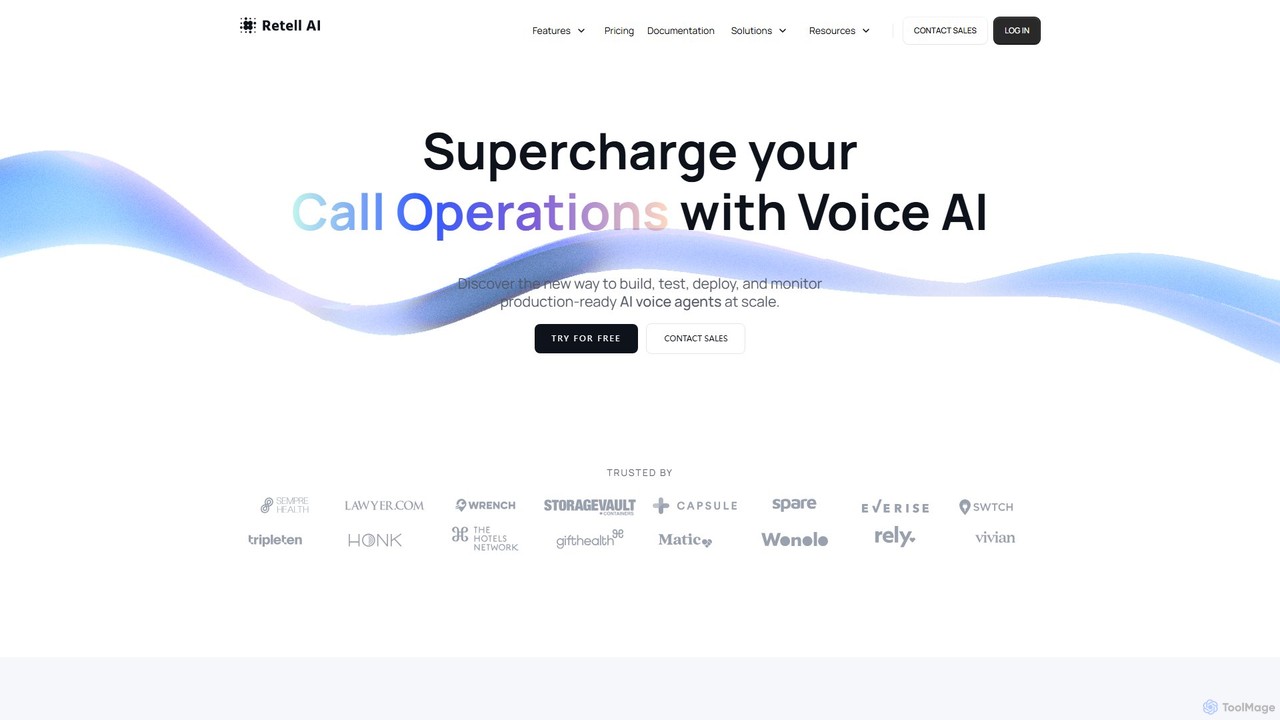
Retell AI is an advanced platform for creating and deploying production-ready AI voice agents. It enables businesses to automate call operations with human-like, low-latency conversations. Features include knowledge base sync, intelligent call transfers, appointment booking, and seamless integration with CRMs and telephony systems, supporting over 18 languages.

Voice Agents
Visits 686.9KFavorites 114Likes 96
SonicLM
Freemium

SonicLM

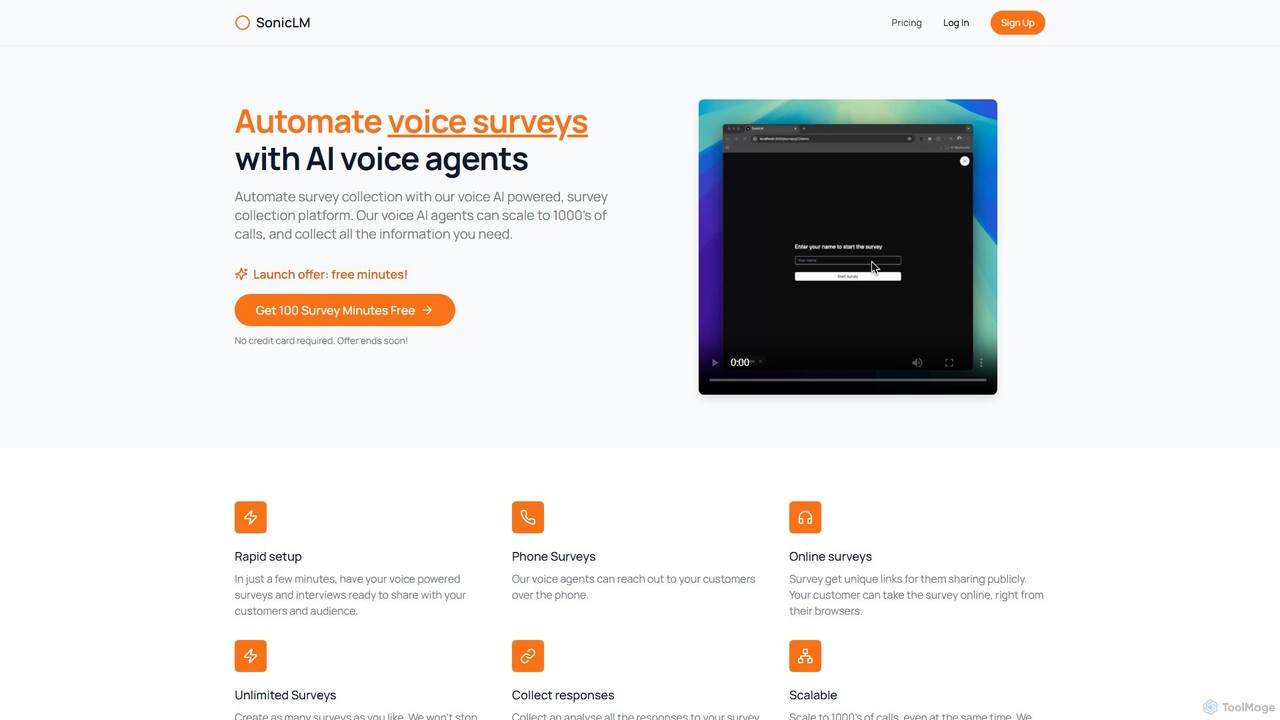
SonicLM is an AI-powered platform that automates voice surveys and interviews. Using advanced voice AI agents, it can conduct thousands of calls simultaneously for customer feedback, market research, lead qualification, and recruitment screening. It offers both phone-based and web-based surveys with rapid setup and a user-friendly dashboard for analyzing responses.

Voice Agents
Visits 9.3KFavorites 112Likes 120
Hey Revia
Paid

Hey Revia

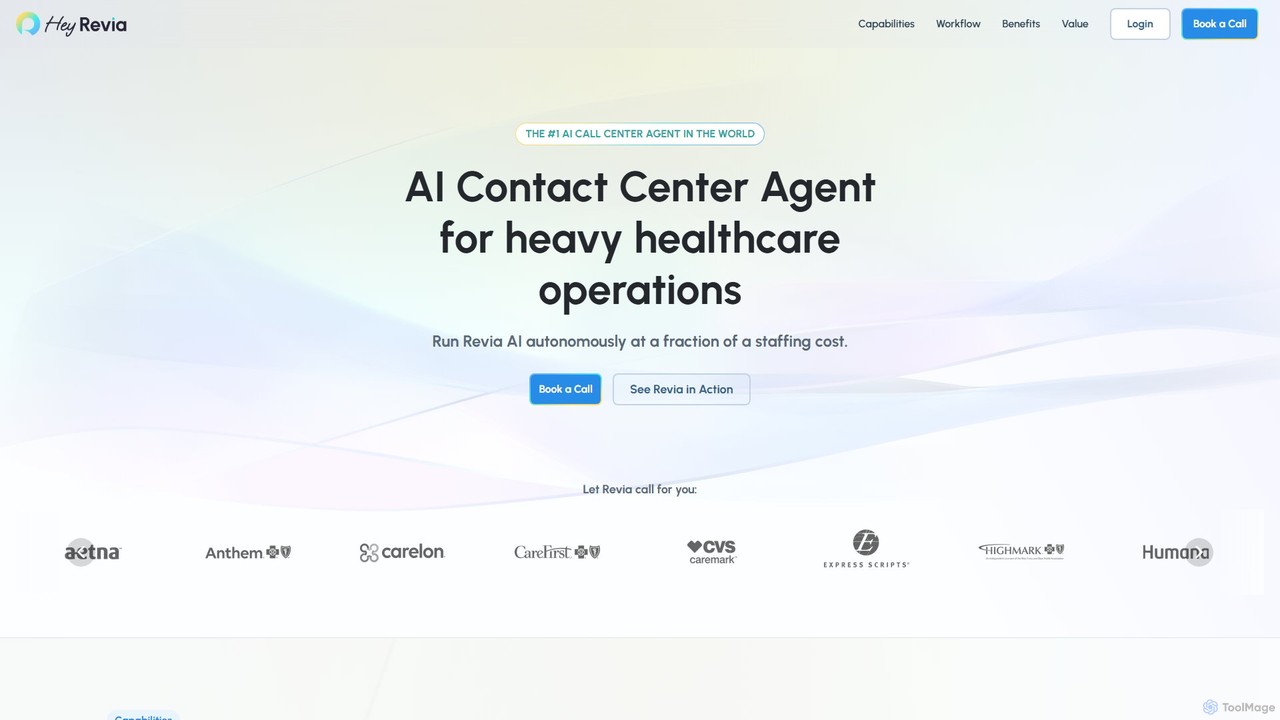
Hey Revia is an advanced AI contact center agent designed to automate complex communication workflows, particularly in the healthcare industry. It autonomously handles calls, emails, and SMS for tasks like insurance verification, prior authorizations, and billing inquiries. By converting SOPs into automated processes, Revia significantly boosts productivity, reduces operational costs, and offers 24/7 scalability, outperforming traditional call centers.

Voice Agents
Visits 5.2KFavorites 142Likes 139
Millis AI
Paid

Millis AI

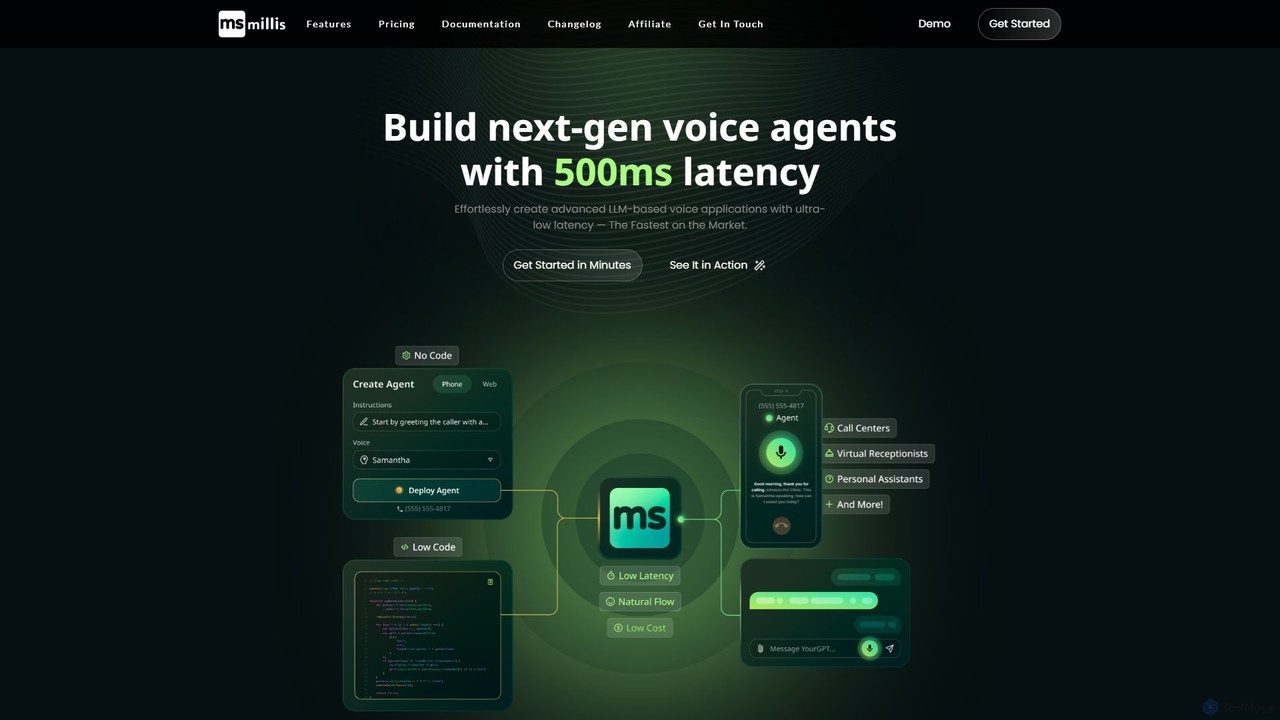
Millis AI is a platform for building next-generation voice agents with ultra-low 600ms latency. It enables both developers and non-technical users to create and deploy human-like, affordable voice agents for inbound and outbound calls in minutes, with easy integration capabilities.

Voice Agents
Visits 13.1KFavorites 169Likes 152

About Voice Agents

Voice Agents are AI-powered tools specifically designed to interact with users through spoken language, automating and enhancing voice-based customer support. They leverage advanced Natural Language Understanding (NLU) and Speech-to-Text (STT) technologies to comprehend spoken queries and respond naturally using Text-to-Speech (TTS). These agents provide efficient, 24/7 assistance, significantly reducing call volumes and improving customer satisfaction within the broader Customer Support ecosystem.

Core Features

  • Natural Language Understanding (NLU): Accurately interprets spoken user intent and extracts key information from conversations.
  • Speech-to-Text (STT) & Text-to-Speech (TTS): Converts spoken words into text for processing and generates natural-sounding voice responses.
  • Dialogue Management: Maintains context across turns, guides conversations, and handles complex multi-step interactions.
  • CRM & Knowledge Base Integration: Connects with existing systems to access customer data and provide relevant, personalized information.
  • Sentiment Analysis: Detects customer emotions during calls, allowing for adaptive responses or timely escalation to human agents.

Applicable Scenarios

Voice Agents are ideal for businesses with high call volumes, needing to automate routine inquiries, provide 24/7 support, or improve call routing efficiency. They are widely used in telecommunications, banking, retail, and healthcare to handle common customer service tasks.

How to Choose

When selecting a Voice Agent, prioritize NLU accuracy and language support for your target audience. Evaluate its integration capabilities with your existing CRM and contact center platforms, scalability to handle peak loads, and customization options for brand voice and specific workflows. Security and compliance with data privacy regulations are also crucial considerations.

Voice Agents use cases

1

Automate Routine Customer Inquiries

A telecommunications company uses a Voice Agent to handle common customer questions about billing, data plans, or service outages. Customers can simply speak their queries, and the agent provides instant, accurate information, reducing the need for human intervention and freeing up staff for more complex issues. This ensures 24/7 support and consistent responses.

2

Intelligent Call Routing and Triage

A large enterprise implements a Voice Agent at the front end of its contact center. When a customer calls, the agent uses NLU to understand the caller's intent (e.g., 'I want to check my order status' or 'I have a technical issue'). Based on this, the agent intelligently routes the call to the most appropriate department or a specialized human agent, significantly reducing transfer rates and improving first-call resolution.

3

24/7 Multilingual Customer Support

An international e-commerce platform deploys Voice Agents capable of supporting multiple languages. This allows customers from different regions to receive immediate assistance in their native tongue, regardless of time zones. The agents can answer FAQs, provide product information, and guide users through the website, ensuring consistent global customer service without the need for a large, round-the-clock human support team.

4

Automated Order Status and Account Management

A retail company uses a Voice Agent to allow customers to check their order status, track shipments, or update their account information simply by speaking. Customers can say, 'What's the status of my last order?' or 'Change my shipping address,' and the agent retrieves the relevant data from the CRM system and confirms the action, providing a convenient, hands-free self-service option.

5

Appointment Scheduling and Reminders

A healthcare provider utilizes a Voice Agent to manage patient appointments. Patients can call in to schedule, reschedule, or cancel appointments by speaking their preferences. The agent checks availability in real-time, confirms the booking, and can even send automated voice reminders before the appointment, significantly reducing no-shows and administrative workload for staff.

6

Proactive Outbound Customer Communication

A utility company employs Voice Agents for proactive outbound communication. For instance, if there's a planned service interruption, the agent can make automated calls to affected customers, providing details and estimated resolution times. This reduces inbound calls from concerned customers, manages expectations, and enhances customer trust by keeping them informed without requiring manual outreach from staff.

Voice Agents FAQ

What are Voice Agents?

Voice Agents are AI-powered software systems designed to interact with users through spoken language, automating conversations and tasks. They leverage technologies like Natural Language Understanding (NLU) and Speech-to-Text (STT) to comprehend human speech, and Text-to-Speech (TTS) to generate natural-sounding voice responses. In customer support, they act as virtual assistants, handling inquiries, providing information, and guiding callers through processes without human intervention.

How do Voice Agents differ from traditional IVR systems?

Voice Agents differ significantly from traditional Interactive Voice Response (IVR) systems. While IVR relies on rigid, menu-driven options (e.g., "Press 1 for sales, press 2 for support"), Voice Agents use advanced Natural Language Understanding (NLU) to comprehend free-form spoken language. This allows for more natural, conversational interactions, enabling users to express their needs in their own words rather than navigating a predefined tree. Voice Agents offer greater flexibility, personalization, and a much-improved user experience compared to IVR.

What are the key benefits of using Voice Agents in customer support?

Implementing Voice Agents in customer support offers several key benefits. They provide 24/7 availability, ensuring customers can get help anytime, anywhere. They significantly reduce operational costs by automating routine inquiries and decreasing the need for human agents. Voice Agents also improve consistency in responses, reduce wait times, and can handle high call volumes efficiently, leading to higher customer satisfaction and freeing up human agents to focus on more complex, empathetic interactions.

What should I consider when choosing a Voice Agent solution?

When selecting a Voice Agent solution, consider several critical factors. First, evaluate the accuracy of its Natural Language Understanding (NLU) and Speech-to-Text (STT) for your specific language(s) and industry jargon. Second, assess its integration capabilities with your existing CRM, contact center software, and knowledge bases. Third, look for scalability to handle fluctuating call volumes and customization options to align with your brand voice and specific workflows. Finally, prioritize security, data privacy compliance, and the vendor's support and maintenance offerings.

Can Voice Agents handle complex customer issues?

Voice Agents are highly capable of handling a wide range of customer issues, especially routine and frequently asked questions, account management, and basic troubleshooting. However, for highly complex, emotionally charged, or unique problems that require deep empathy, creative problem-solving, or human-specific judgment, Voice Agents are typically designed to seamlessly escalate the interaction to a live human agent. This ensures that customers receive the best possible support, leveraging AI for efficiency and human agents for critical, nuanced situations.