
Olvy
Olvy is an AI-powered platform that centralizes and analyzes user feedback from multiple channels. It transforms qualitative data …
Olvy is an AI-powered platform that centralizes and analyzes user feedback from multiple channels. It transforms qualitative data from surveys, reviews, support tickets, and calls into actionable insights, helping product teams make smarter, data-driven decisions and build better products.

decio
Decio is an AI-powered platform for qualitative data analysis. It automates the process of analyzing unstructured text from …
Decio is an AI-powered platform for qualitative data analysis. It automates the process of analyzing unstructured text from interviews, surveys, and customer feedback to rapidly uncover key themes, sentiments, and actionable insights, empowering data-driven decisions.
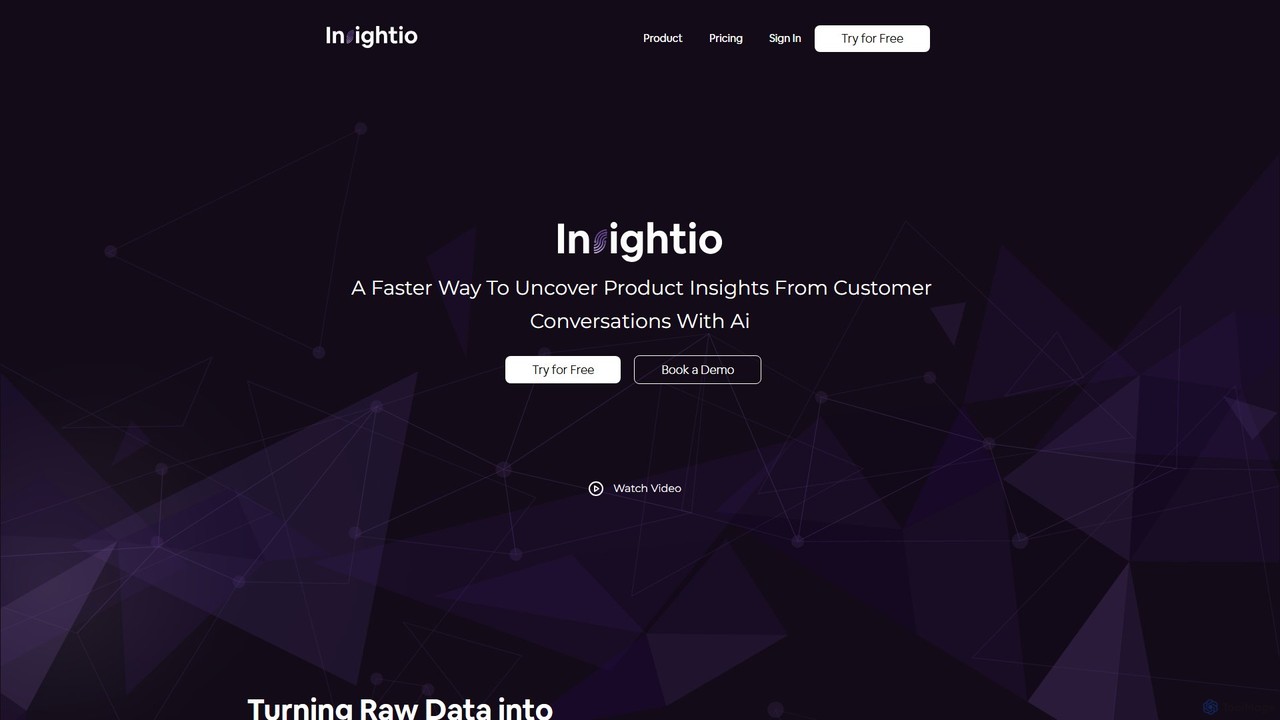
Insightio
Insightio is an AI-powered platform that analyzes customer conversations from audio, video, or text to uncover actionable product …
Insightio is an AI-powered platform that analyzes customer conversations from audio, video, or text to uncover actionable product insights. It automates transcription and analysis, helping teams quickly identify user pain points, needs, and opportunities to build better products.
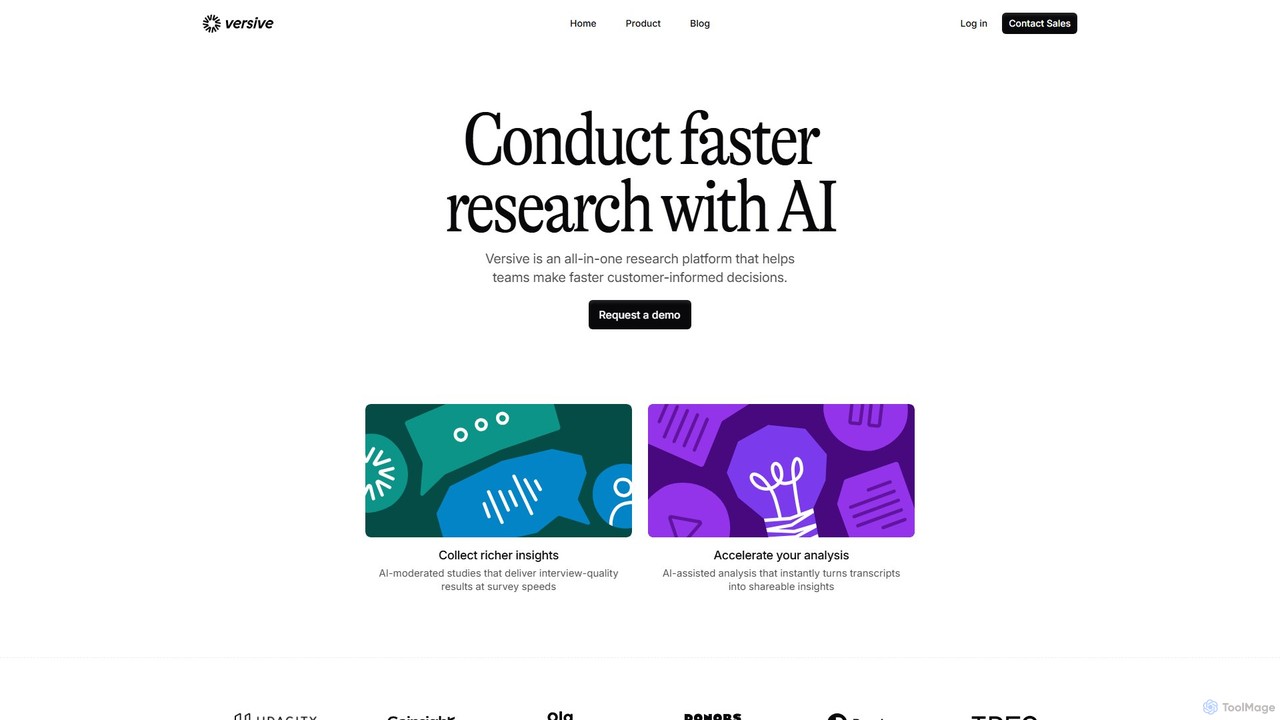
Versive
Versive is an all-in-one AI research platform that accelerates customer-informed decisions. It uses AI-moderated interviews, surveys, and usability …
Versive is an all-in-one AI research platform that accelerates customer-informed decisions. It uses AI-moderated interviews, surveys, and usability tests to deliver deep qualitative insights at the speed of quantitative surveys, complete with automated analysis and reporting.
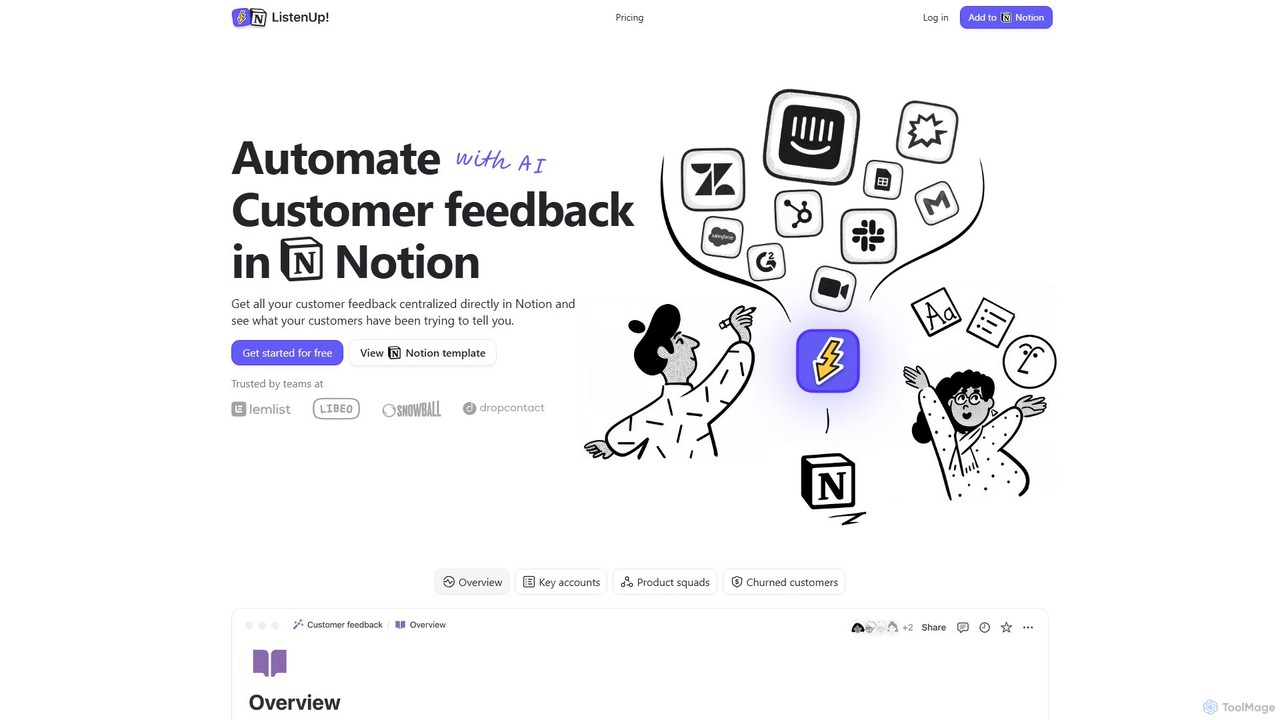
ListenUp
ListenUp is an AI-powered platform that automates customer feedback management by centralizing it directly within Notion. It connects …
ListenUp is an AI-powered platform that automates customer feedback management by centralizing it directly within Notion. It connects to various sources like sales and support tools, transcribes video feedback, and uses AI to extract, classify, and group insights. This helps product teams save time, uncover hidden patterns, and make data-driven decisions to build features customers truly want, all within their existing Notion workspace.
About Qualitative Analysis
AI Qualitative Analysis tools are a specialized category of software designed to interpret and structure non-numerical data such as text, audio, and video. These tools leverage Natural Language Processing (NLP) to automatically identify themes, sentiment, and key entities within large datasets. They empower researchers, marketers, and product managers to rapidly extract meaningful insights from sources like customer feedback, user interviews, and social media conversations, significantly reducing the time required for manual coding and analysis. This technology brings scale and speed to understanding the 'why' behind the data.
Core Features
- Automated Thematic Analysis: Automatically identifies, clusters, and quantifies recurring topics and themes from unstructured text.
- Sentiment & Emotion Analysis: Classifies text as positive, negative, or neutral, and can often detect more nuanced emotions like joy or frustration.
- Entity Extraction: Pinpoints and categorizes specific entities such as names of people, organizations, products, and locations.
- Audio/Video Transcription: Converts spoken content from interviews or focus groups into searchable, analyzable text.
- Insight Summarization: Generates concise summaries of key findings, trends, and important quotes from the entire dataset.
Use Cases
These tools are widely used in market research for analyzing open-ended survey responses, in UX research for synthesizing user interview transcripts, and in brand management for monitoring social media sentiment. HR departments also use them to analyze employee feedback, while customer support teams analyze chat logs to identify recurring issues.
How to Choose
When selecting a tool, consider the types of data it supports (e.g., text, audio, video). Evaluate the depth of its analytical features, such as thematic coding accuracy and multi-language sentiment analysis. Also, check for integration capabilities with your existing platforms (like survey tools or CRMs) and assess the user interface for ease of use, especially for team collaboration.
Qualitative AnalysisUse Cases
Analyze Customer Feedback from Open-Ended Surveys
A product manager receives thousands of open-ended responses from a recent customer satisfaction survey. Manually reading and categorizing this feedback would take weeks. By uploading the survey data into an AI qualitative analysis tool, they can instantly see the results. The AI automatically identifies and groups responses into key themes like 'feature requests,' 'pricing concerns,' and 'user interface issues.' It also applies sentiment analysis to each theme, revealing that while customers are generally positive, 'pricing concerns' carry a significantly negative sentiment. This allows the product team to prioritize addressing the most critical issues backed by clear data, all within a few hours.
Synthesize Insights from User Research Interviews
A UX research team completes twenty hour-long interviews for a new mobile app. Instead of manually transcribing and coding each interview, they upload the audio files to an AI analysis platform. The tool automatically generates accurate transcripts and allows researchers to highlight key quotes. The AI then assists in clustering these quotes and notes into emergent themes, such as 'navigation difficulties,' 'desire for personalization,' and 'security concerns.' This process creates a data-backed affinity map in a fraction of the time, accelerating the synthesis phase and providing the design team with clear, actionable insights on user pain points and needs.
Monitor Brand Perception on Social Media
A brand strategist needs to understand public sentiment following a major product launch. They connect an AI qualitative analysis tool to their brand's social media channels. The tool continuously ingests thousands of mentions, comments, and posts in real-time. It automatically categorizes conversations into topics like 'product features,' 'marketing campaign,' and 'customer service,' while also tracking sentiment trends for each. The strategist can quickly identify a negative sentiment spike related to a specific bug mentioned by users, allowing the company to issue a public acknowledgment and a fix promptly, mitigating potential brand damage.
Evaluate Employee Engagement from Annual Surveys
An HR department is analyzing thousands of written comments from an anonymous employee engagement survey. To uncover nuanced insights beyond simple ratings, they use an AI analysis tool. The platform processes all the text data, identifying key themes related to 'work-life balance,' 'management effectiveness,' and 'career growth opportunities.' The analysis reveals that while 'compensation' is a frequent topic, comments about 'lack of recognition' have a much stronger negative sentiment. This insight directs the HR team to focus on developing new recognition programs, an actionable strategy that might have been missed by only looking at quantitative scores.
Identify Root Causes from Customer Support Tickets
A customer support manager wants to reduce ticket volume by addressing recurring problems. They integrate their helpdesk software with an AI analysis tool, which processes thousands of past support conversations. The AI categorizes tickets not just by the user's initial selection, but by the actual content of the conversation. It uncovers a hidden trend: a significant number of tickets categorized as 'billing issues' are actually caused by a confusing step in the checkout UI. By identifying this root cause, the product team can fix the UI, leading to a measurable reduction in support tickets and improved customer satisfaction.
Synthesize Academic Literature for a Review
An academic researcher is conducting a literature review and needs to analyze hundreds of research papers. Using an AI qualitative tool, they upload the entire library of PDFs. The tool helps extract key information from each paper, such as methodologies, sample sizes, and key findings. More importantly, it analyzes the full text of all papers to identify overarching research themes, debates, and conceptual gaps across the field. The researcher can then use these AI-generated themes as a starting point to build their narrative, ensuring a comprehensive review and helping to formulate novel research questions based on identified gaps, saving months of manual work.