
Colab
Colab (Google Colaboratory) is a free, browser-based interactive environment that allows you to write and execute Python code. …
Colab (Google Colaboratory) is a free, browser-based interactive environment that allows you to write and execute Python code. It requires no setup and provides free access to powerful computing resources like GPUs and TPUs. Ideal for students, data scientists, and AI researchers, Colab facilitates machine learning, data analysis, and education, with seamless collaboration and Google Drive integration.
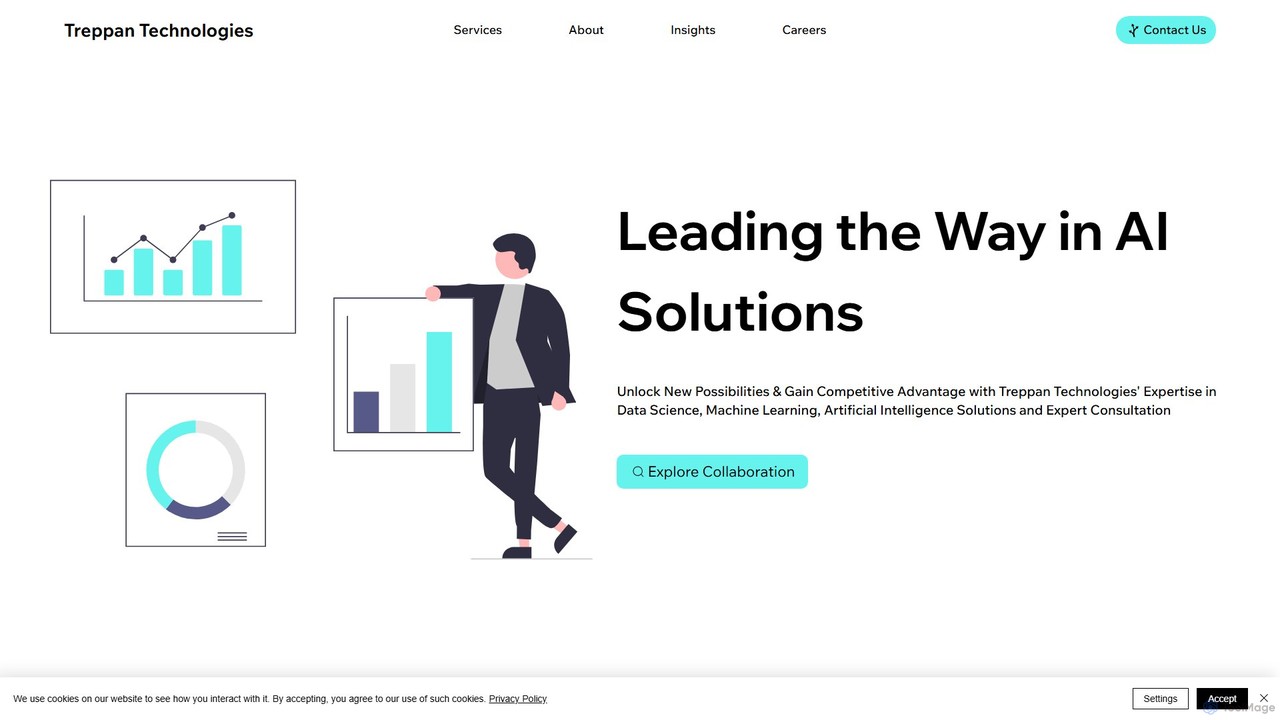
Treppan Technologies
Treppan Technologies is a premier AI development and consulting firm specializing in custom AI solutions. They offer expert …
Treppan Technologies is a premier AI development and consulting firm specializing in custom AI solutions. They offer expert services in data science, machine learning, NLP, and computer vision to help businesses across various industries modernize operations, develop intelligent applications like chatbots, and gain a competitive advantage through advanced AI integration.

dflux
dflux is a unified, no-code/low-code data science platform that empowers businesses to perform end-to-end data engineering, build machine …
dflux is a unified, no-code/low-code data science platform that empowers businesses to perform end-to-end data engineering, build machine learning models, and create interactive visualizations. It streamlines the entire data lifecycle from integration and preparation to model deployment and MLOps, making advanced analytics accessible to both technical and non-technical users.

MLflow
MLflow is an open-source platform for managing the end-to-end machine learning lifecycle. It enables developers and data scientists …
MLflow is an open-source platform for managing the end-to-end machine learning lifecycle. It enables developers and data scientists to track experiments, package code into reproducible runs, version and share models, and deploy them to production, supporting both traditional ML and modern GenAI applications.

cometcore
CometCore is an end-to-end MLOps platform designed for AI developers and data science teams. It streamlines the entire …
CometCore is an end-to-end MLOps platform designed for AI developers and data science teams. It streamlines the entire machine learning lifecycle, from experiment tracking and hyperparameter optimization to model versioning and production monitoring. By providing a centralized hub for collaboration and reproducibility, CometCore accelerates the development and deployment of robust, high-performance AI models.
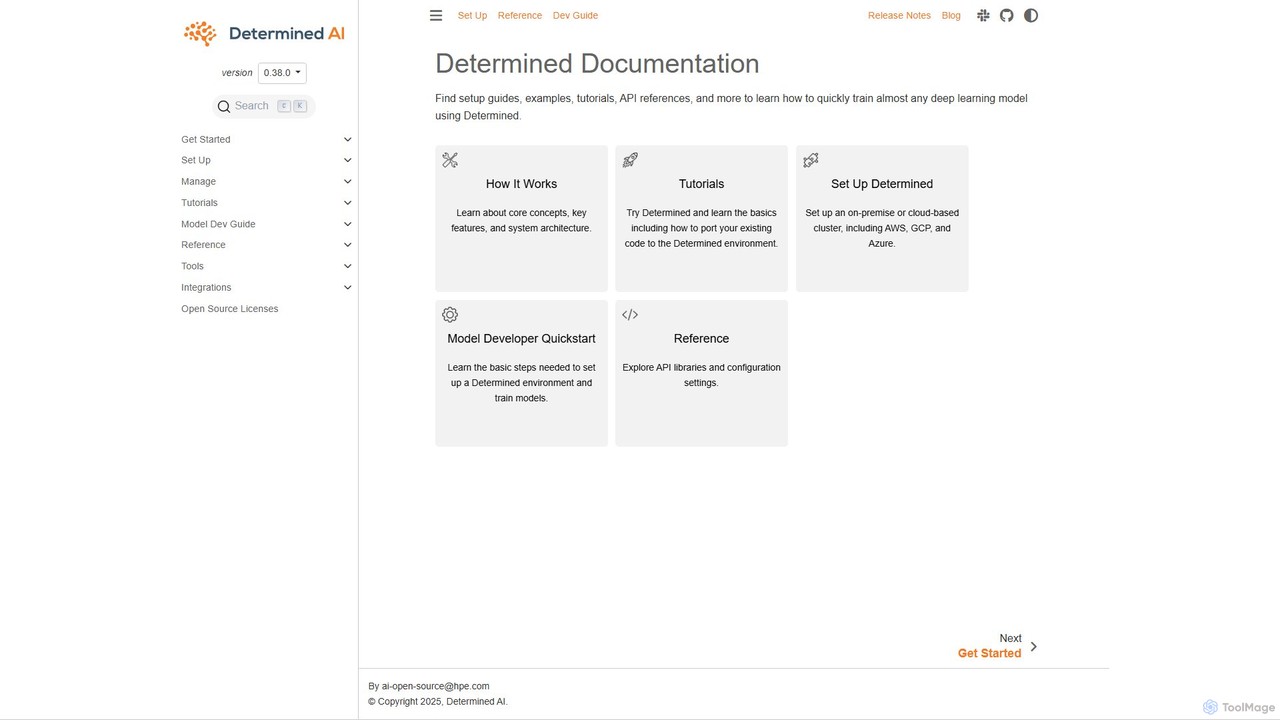
Determined AI
Determined AI is an open-source deep learning training platform that simplifies and accelerates model development. It offers integrated …
Determined AI is an open-source deep learning training platform that simplifies and accelerates model development. It offers integrated tools for hyperparameter tuning, distributed training, and experiment tracking, enabling data scientists to train better models faster and more efficiently.
About Data Science
Data Science tools are specialized platforms designed to manage the entire machine learning lifecycle, from data exploration to model deployment. They integrate functionalities for data preprocessing, statistical analysis, and building predictive models using complex algorithms. These tools empower data scientists and analysts to uncover hidden patterns, make accurate forecasts, and derive actionable insights from large datasets. Unlike general data analysis tools, they focus heavily on advanced modeling and workflow automation for creating production-ready AI solutions.
Core Features
- Interactive Development Environments: Provide notebook-style interfaces for iterative coding, visualization, and documentation.
- Machine Learning Model Building: Offer frameworks and libraries for training, validating, and tuning various ML models.
- Advanced Data Visualization: Generate complex, interactive charts and dashboards to understand data distributions and relationships.
- MLOps & Automation: Automate the entire workflow, including data pipelines, model training, deployment, and performance monitoring.
- Collaboration and Version Control: Enable teams to share projects, code, models, and track changes systematically.
Use Cases
These tools are crucial in industries like finance for fraud detection, retail for demand forecasting, and healthcare for diagnostic analysis. Data scientists, machine learning engineers, and business analysts use them to build and deploy predictive models, conduct complex statistical research, and automate data-driven decision-making processes.
How to Choose
When selecting a Data Science tool, consider the scope of its supported libraries and algorithms. Evaluate its integration capabilities with your existing data sources and cloud infrastructure. Assess the platform's scalability for handling large datasets and its MLOps features for production environments. Finally, consider the user interface's ease of use and the level of technical expertise required.
Data ScienceUse Cases
Predictive Customer Churn Analysis
A marketing analyst at a subscription service company uses a data science platform to predict customer churn. They import historical customer data, including usage patterns and support interactions. Using an interactive notebook, they perform exploratory data analysis to identify key churn indicators. They then build and train a classification model to assign a churn probability score to each customer. This allows the marketing team to proactively target at-risk customers with retention campaigns, reducing overall churn rate.
Retail Sales Forecasting
A supply chain manager for a retail chain needs to forecast product demand. Using a data science tool, they apply time-series analysis models (like ARIMA or Prophet) to historical sales data. The tool allows them to incorporate external factors such as holidays and promotional events. The resulting forecast helps optimize inventory levels, prevent stockouts or overstocking, and improve overall supply chain efficiency, directly impacting the company's bottom line.
Real-Time Fraud Detection
A data scientist at a fintech company builds a system to detect fraudulent credit card transactions. They use a data science platform to process millions of transaction records and train an anomaly detection model. The platform's MLOps capabilities are used to deploy this model into a production environment where it can score incoming transactions in real-time. When a transaction is flagged as potentially fraudulent, an alert is automatically triggered for immediate review, protecting both the customer and the company.
Sentiment Analysis of Customer Feedback
A product management team wants to understand public opinion about their new mobile app. They use a data science tool with built-in Natural Language Processing (NLP) capabilities to analyze thousands of app store reviews and social media comments. The tool automatically classifies feedback as positive, negative, or neutral and identifies recurring themes. This provides the team with structured, actionable insights to prioritize bug fixes, guide future feature development, and improve user satisfaction.
Medical Image Classification for Diagnostics
A medical researcher uses a specialized data science platform to develop a deep learning model for identifying diseases from medical scans. They upload a labeled dataset of images and use the platform's environment to build and train a Convolutional Neural Network (CNN). The tool provides powerful GPU resources to accelerate the training process. The resulting model can assist radiologists by highlighting potential areas of concern in new scans, aiming to improve diagnostic accuracy and speed.
Optimizing Marketing Campaign ROI
A digital marketing team runs multiple online campaigns. To optimize their budget, they use a data science tool to build an attribution model. The tool helps them analyze customer journey data, tracking touchpoints from initial ad view to final conversion. By building a regression model, they can quantify the impact of each channel and campaign on sales. These insights enable them to reallocate their marketing spend to the most effective channels, maximizing their return on investment (ROI).