Inoveo3D
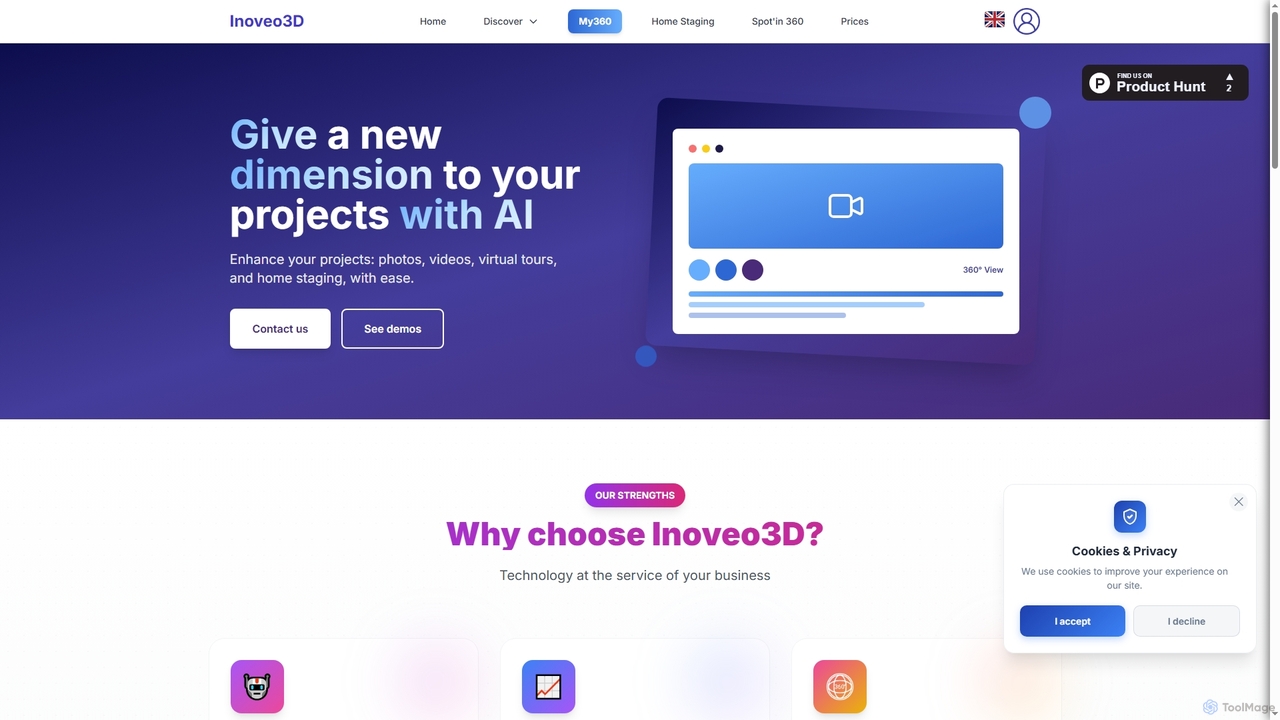
Inoveo3D is an AI-powered platform designed for real estate professionals to create immersive 360° virtual tours and enhance …
Inoveo3D is an AI-powered platform designed for real estate professionals to create immersive 360° virtual tours and enhance property visuals through advanced home staging. It helps transform photos and videos into engaging experiences, boosting visibility and accelerating sales.
About Home Staging
Home Staging AI tools are specialized platforms that utilize artificial intelligence to virtually enhance and present properties for sale or rent. These tools leverage advanced algorithms to generate realistic virtual furnishings, optimize interior layouts, and suggest decor elements, transforming empty or outdated spaces into appealing, market-ready homes. They provide real estate agents, interior designers, and homeowners with powerful capabilities to visualize potential, attract buyers, and accelerate property sales without the need for physical staging.
Core Features
- Virtual Furniture Placement: Automatically or semi-automatically place realistic 3D furniture and decor items into property photos.
- Style and Decor Suggestions: AI analyzes room characteristics and suggests suitable design styles, color palettes, and decorative elements.
- Layout Optimization: Generate optimized room layouts to maximize space utilization and visual flow.
- 3D Property Tours: Create interactive virtual tours with staged interiors, offering immersive viewing experiences for potential buyers.
- Before & After Visualization: Instantly show the transformative impact of staging with side-by-side comparisons.
Use Cases
Real estate agents use these tools to create compelling property listings that stand out in competitive markets, attracting more potential buyers online. Interior designers leverage AI for rapid design iteration and client presentations, showcasing various staging options without physical setup. Homeowners can visualize different decor styles and furniture arrangements to enhance their property's appeal before listing, making informed decisions about minor improvements.
How to Choose
When selecting a Home Staging AI tool, consider the quality and realism of its virtual renderings, the breadth of its furniture and decor library, and the ease of use for non-design professionals. Evaluate its integration capabilities with existing real estate platforms or design software, and assess the pricing model based on your project volume. Look for features like style suggestions, layout optimization, and the ability to handle various room types and lighting conditions.

Home StagingUse Cases
Enhance Real Estate Listings with Virtual Staging
Real estate agents can quickly transform photos of empty or outdated rooms into beautifully furnished spaces. By uploading property images, AI tools suggest and place furniture, decor, and lighting, creating photorealistic visuals that attract more online viewers. This eliminates the need for expensive physical staging, reduces listing time, and helps potential buyers envision themselves in the home, leading to faster sales and higher offers.
Virtually Stage Empty Properties for Online Listings
Real estate agents can upload photos of vacant homes and use AI to instantly fill them with stylish, realistic furniture and decor. This helps potential buyers visualize the space's potential, making listings more attractive and reducing time on market by up to 50% compared to empty photos.
Visualize Property Renovations and Redesigns
Homeowners or investors planning renovations can use AI home staging tools to visualize "before and after" scenarios. They can virtually change wall colors, flooring, kitchen cabinets, or even add extensions, seeing how different design choices impact the overall look and feel. This helps in making informed decisions, communicating ideas to contractors, and marketing properties with renovation potential to a wider audience.
Modernize Outdated Interiors with AI-Powered Redesigns
Interior designers or homeowners can input images of rooms with old furnishings. The AI suggests contemporary styles, removes existing clutter, and virtually replaces items, providing a fresh, appealing look that significantly enhances property value perception without costly physical renovations.
Present Interior Design Concepts to Clients
Interior designers leverage these AI tools to create compelling visual presentations for clients. Instead of relying on sketches or mood boards, designers can virtually stage a client's space with proposed furniture, finishes, and decor. This allows clients to see realistic representations of the design concept, facilitating feedback, reducing revisions, and ensuring alignment before any physical purchases or work begin, streamlining the design process.
Generate Diverse Staging Styles for Client Presentations
Design professionals can quickly create multiple virtual staging options (e.g., minimalist, bohemian, modern farmhouse) for a single property. This allows clients to choose their preferred aesthetic, streamlining the decision-making process and ensuring client satisfaction before any physical work begins.
Virtually Declutter and Depersonalize Homes
Home sellers often struggle with decluttering and depersonalizing their homes for showings. AI home staging tools can digitally remove existing furniture, personal items, and clutter from photos, presenting a clean, spacious, and neutral environment. This helps potential buyers focus on the property's features rather than the current owner's belongings, making the space feel more inviting and easier for them to imagine their own life there.
Optimize Room Layouts for Improved Functionality and Flow
Home staging AI tools can analyze room dimensions and suggest optimal furniture placement to maximize space and improve traffic flow. This is particularly useful for smaller apartments or awkwardly shaped rooms, helping to present the property in its most functional and appealing light.
Pre-visualize New Construction Model Homes
Property developers and builders can utilize AI home staging to create virtual model homes for unbuilt properties. Before construction is complete, high-quality renderings of staged interiors and exteriors can be generated for marketing materials, websites, and sales centers. This enables early marketing and pre-sales, allowing potential buyers to explore and commit to properties that are still under development, accelerating sales cycles.
Develop Immersive 3D Virtual Property Tours
Real estate marketers can utilize AI to create interactive 3D walkthroughs of virtually staged properties. This allows prospective buyers to explore every corner of a home from anywhere, providing a highly engaging experience that can increase online engagement by 30% and reduce unnecessary physical viewings.
Enhance Marketing for Rental Properties
Landlords and property managers can use AI home staging to make vacant rental units more appealing. By virtually furnishing empty apartments or houses, they can create attractive listing photos that stand out in competitive markets. This helps prospective tenants visualize the space's potential, reduces vacancy periods, and can potentially justify higher rental rates by showcasing a desirable living environment.
Receive Personalized Decor Suggestions for Homeowners
Homeowners preparing to sell can upload photos of their current living spaces and receive AI-driven recommendations for minor decor changes, color palettes, and accessory placements. This helps them make small, impactful adjustments that significantly boost curb appeal and buyer interest without professional staging costs.