TileMaker
TileMaker is a free, open-source AI tool that generates unique, seamless, and tileable textures from simple text prompts. …
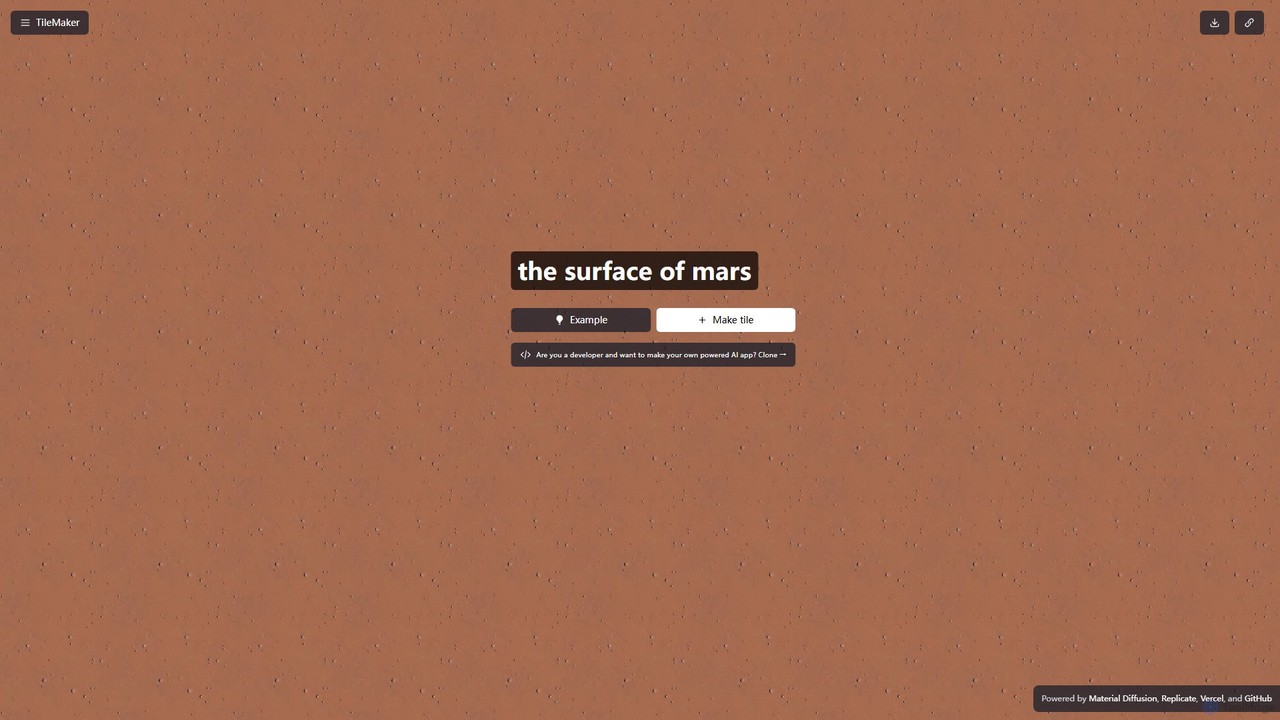
TileMaker is a free, open-source AI tool that generates unique, seamless, and tileable textures from simple text prompts. Powered by Material Diffusion, it's perfect for game developers, designers, and artists looking to create custom materials quickly and efficiently for their projects.
About Texture Generation
AI Texture Generation tools are specialized applications that use artificial intelligence to create digital surface textures for 3D models and 2D designs. These tools typically leverage generative models to produce high-quality, often seamless textures from text prompts or source images. They significantly accelerate the creative process for game developers, 3D artists, and designers by automating the creation of complex materials like wood, metal, and fabric. This allows for rapid prototyping and the generation of unique visual assets without extensive manual work.
Core Features
- Text-to-Texture: Generate detailed textures simply by describing them in natural language, such as "mossy stone wall".
- PBR Map Generation: Automatically create full sets of Physically Based Rendering maps, including Albedo, Normal, Roughness, and Metallic.
- Seamless Tiling: Produce textures that can be repeated infinitely without visible seams, essential for large surfaces in games and renders.
- Image-to-Material: Transform a single photograph into a complete, tileable material with all necessary PBR maps.
- Style Customization: Fine-tune or completely alter the artistic style of generated textures to match specific project aesthetics.
Use Cases
These tools are widely used in industries like game development for creating environment and character assets, architectural visualization for realistic material rendering, and VFX for film and animation. Product designers also use them to prototype surface finishes on 3D models before manufacturing.
How to Choose
When selecting a tool, consider its ability to generate high-resolution PBR maps, the quality of its seamless tiling algorithm, and its integration with your existing 3D software (e.g., Blender, Unreal Engine). Also, evaluate the pricing model, which may be based on credits per generation or a monthly subscription, to find what best suits your workflow.
Texture GenerationUse Cases
Rapid Prototyping for Game Environments
An indie game developer needs to create a vast, unique world but lacks the time to manually design hundreds of textures. Using an AI Texture Generation tool, they can input prompts like "mossy medieval cobblestone" or "worn sci-fi metal plating" to instantly generate high-quality, seamless PBR materials. This allows them to texture entire levels in hours instead of weeks, test different visual styles quickly, and maintain a consistent aesthetic across the game world, dramatically speeding up the development cycle.
Realistic Materials for Architectural Visualization
An architect is preparing a client presentation for a new luxury apartment. To make the 3D renders compelling, they need specific, high-end materials like "Italian marble with gold veins" or "dark walnut wood flooring." Instead of searching stock photo sites, they use an AI tool to generate these exact textures in 4K resolution. The tool also provides the necessary roughness and normal maps, ensuring the materials react realistically to light in the rendering engine, resulting in a more convincing final presentation.
Custom Textures for 3D Character Models
A 3D character artist is designing a fantasy warrior. They need unique textures for the armor and clothing that tell a story, such as "battle-scarred leather with embossed dragon scales." By feeding this prompt into an AI generator, they can create multiple variations of the texture. This process allows for rapid iteration on the character's look and feel, and the generated PBR maps ensure the materials look realistic in different lighting conditions within the game engine or animation software.
Surface Finish Visualization in Product Design
An industrial designer is developing a new line of high-end headphones. They need to visualize different material finishes, such as "brushed aluminum," "matte black plastic," and "perforated leather." Using an AI texture generator, they can quickly apply these generated materials to the product's 3D model. This enables the design team and stakeholders to review and approve realistic product mockups digitally, reducing the need for expensive and time-consuming physical prototypes.
Creating Unique Backgrounds for Digital Art
A concept artist is creating an illustration of an alien landscape. Instead of spending hours painting complex ground or rock textures, they use an AI tool to generate a base texture with a prompt like "crystalline alien rock formation with bioluminescent veins." They can then use this generated image as a foundation in their painting software, layering on top of it to add details and integrate it into the overall composition, saving significant time while achieving a unique and detailed result.
Material Creation for VFX in Film and Animation
A VFX artist is working on a scene featuring a CG creature. The creature's skin needs to be a specific, non-earthly texture, described as "iridescent, reptilian scales with a subtle glow." An AI texture generator can produce this complex material, including maps for color, roughness, and emissiveness. This allows the artist to achieve a highly specific and imaginative look that would be difficult and time-consuming to create from scratch, ensuring the digital creature integrates seamlessly into the live-action footage.