Devops Best in category 1 results Infrastructure AI Tool

Popular AI tools in the Infrastructure field of Devops include Office Kube, etc., helping you quickly improve efficiency.

Office Kube

Office Kube

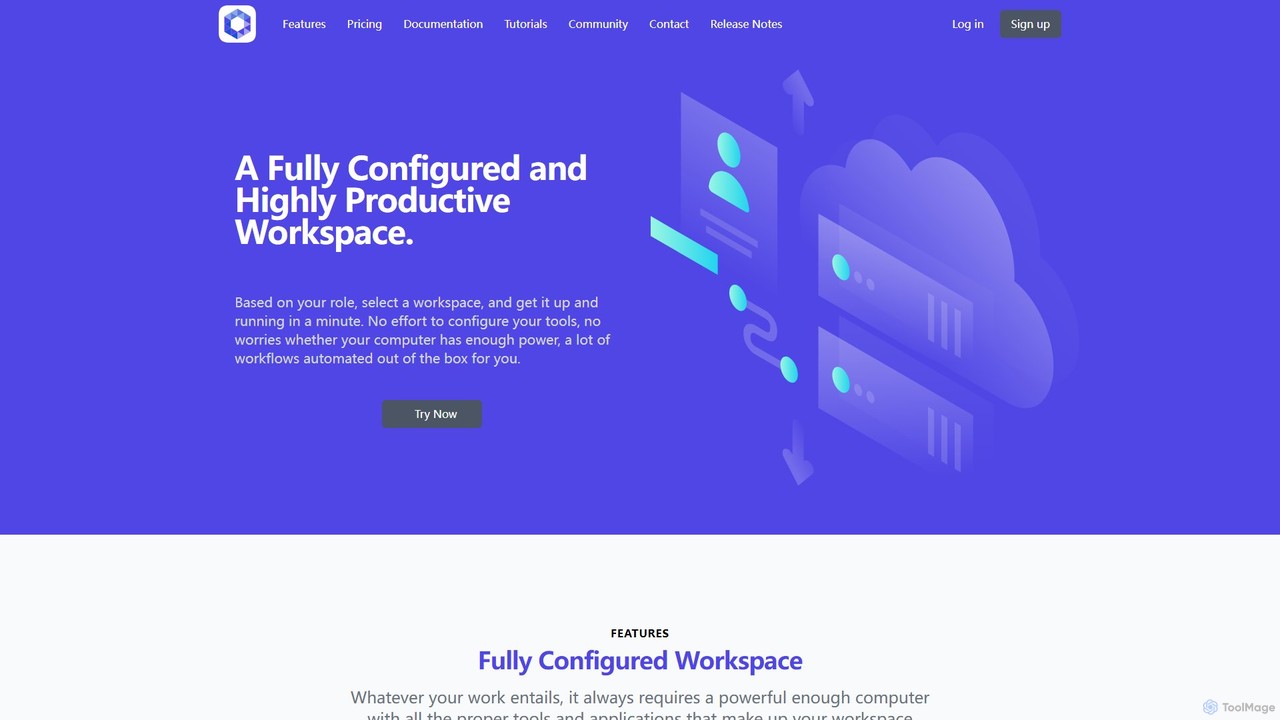
Office Kube is a cloud-native platform that provides fully configured, AI-powered workspaces accessible via a web browser. It …

2.3K

About Infrastructure

Infrastructure tools are specialized AI-powered solutions designed to provision, manage, and optimize the underlying computing resources essential for AI development and deployment. These tools leverage automation and orchestration to ensure scalable, reliable, and cost-effective environments for training machine learning models, running inference, and managing large datasets. They are critical for organizations building robust AI applications, providing the foundational stability and performance required for complex AI workloads within a broader DevOps framework.

Core Features

  • Automated Resource Provisioning: Automatically allocates and configures servers, GPUs, storage, and networks on demand.
  • Scalability & Elasticity: Dynamically adjusts computing resources to match varying AI workload demands, preventing bottlenecks.
  • Container Orchestration: Manages and deploys containerized AI applications efficiently across clusters, often using Kubernetes.
  • Performance Monitoring: Tracks resource utilization, model performance, and system health to ensure optimal operation.
  • Infrastructure as Code (IaC): Defines and manages infrastructure using code, enabling version control, repeatability, and faster deployment.

Use Cases

Infrastructure tools are vital for data science teams and MLOps engineers who require robust and scalable environments. They enable the rapid setup of GPU clusters for deep learning, streamline the deployment of AI models into production, and ensure efficient management of data storage and processing pipelines. These tools are crucial for maintaining high availability and performance for critical AI services.

How to Choose

When selecting Infrastructure tools, consider the specific AI workload requirements, such as GPU needs and data volume. Evaluate integration capabilities with existing MLOps platforms and cloud providers. Assess the level of automation offered, cost optimization features, and the ease of managing complex deployments. Prioritize solutions that offer strong security, compliance, and comprehensive monitoring capabilities.

InfrastructureUse Cases

1

Automated GPU Cluster Provisioning for Model Training

Data scientists often need high-performance GPU clusters for training large deep learning models. Infrastructure tools automate the provisioning and scaling of these clusters on cloud platforms, ensuring that researchers have immediate access to necessary computational power without manual setup, significantly reducing training time and operational overhead.

2

Scalable Deployment of AI Inference Services

MLOps engineers use infrastructure tools to deploy trained AI models as highly available and scalable inference services. These tools manage container orchestration (e.g., Kubernetes), load balancing, and auto-scaling, ensuring that AI applications can handle fluctuating user demand efficiently while maintaining low latency and high throughput.

3

Optimizing Cloud Costs for AI Workloads

Cloud architects and finance teams leverage infrastructure tools to monitor and optimize spending on AI-related cloud resources. These tools identify idle resources, suggest rightsizing opportunities, and provide detailed cost breakdowns for GPU instances, storage, and network usage, leading to substantial cost savings for large-scale AI operations.

4

Managing Data Storage and Processing for ML Pipelines

Data engineers utilize infrastructure solutions to provision and manage scalable storage (e.g., object storage, distributed file systems) and processing engines (e.g., Spark clusters) for massive datasets. These tools ensure data availability, integrity, and efficient access for machine learning pipelines, supporting both training data and feature stores.

5

Establishing Reproducible AI Development Environments

Development teams use Infrastructure as Code (IaC) tools within the infrastructure category to define and provision consistent development, staging, and production environments. This ensures that AI models behave identically across different stages, minimizing "it works on my machine" issues and accelerating the CI/CD pipeline for AI applications.

6

Edge AI Infrastructure Management

IoT and edge computing specialists employ infrastructure tools to manage the deployment and lifecycle of AI models on distributed edge devices. These tools facilitate remote provisioning, updates, and monitoring of compute resources on edge gateways or devices, enabling real-time inference closer to data sources with minimal latency.

InfrastructureFrequently Asked Questions