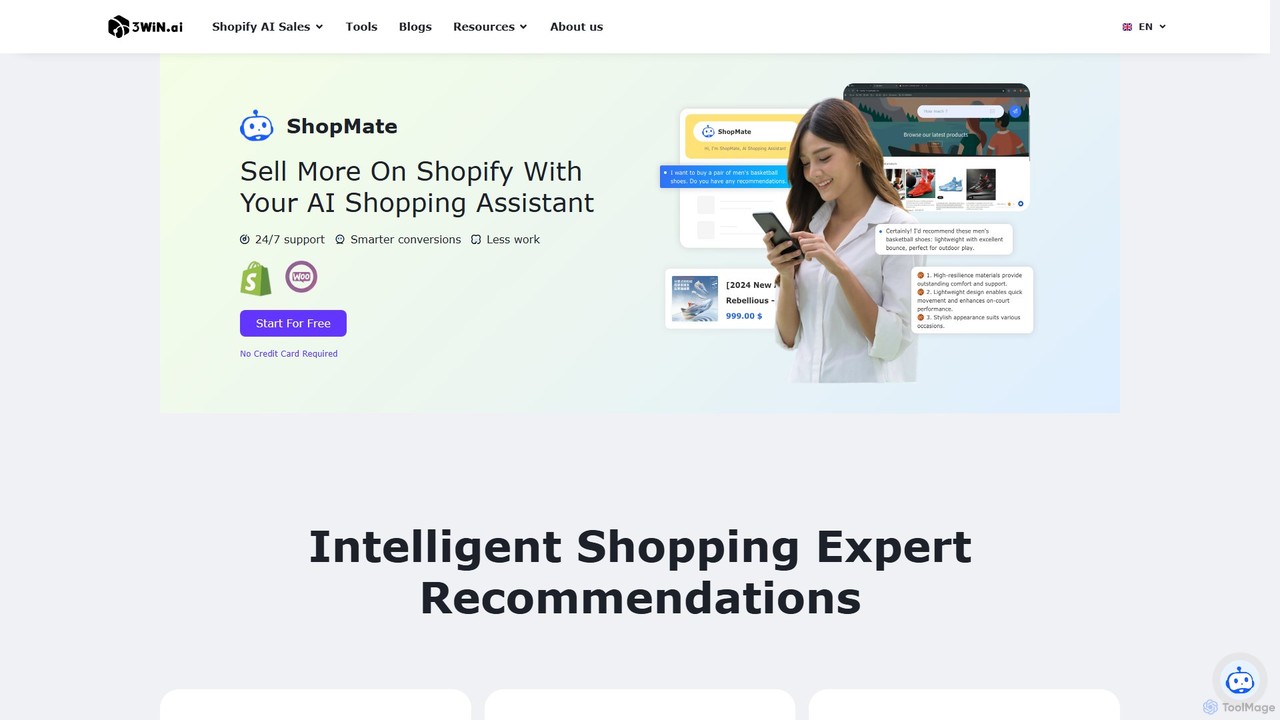
AI Assistants are intelligent software tools designed to automate and enhance various tasks, particularly within the e-commerce sector. These tools leverage advanced natural language processing (NLP), machine learning, and data analytics to provide intelligent support, streamline operations, and improve customer engagement. They act as virtual team members, offering personalized interactions and data-driven insights to boost efficiency and sales for online businesses.
Core Features
- Automated Customer Support: Handles routine inquiries, provides instant answers, and guides customers through purchasing processes via chatbots.
- Personalized Recommendations: Analyzes user behavior and preferences to suggest relevant products, increasing conversion rates and average order value.
- Content Generation: Assists in creating product descriptions, marketing copy, and social media posts, saving time and ensuring consistency.
- Data Analysis & Insights: Processes vast amounts of e-commerce data to identify trends, customer pain points, and opportunities for optimization.
- Task Automation: Manages scheduling, email responses, and inventory updates, freeing up human staff for more complex tasks.
Applicable Scenarios
E-commerce businesses utilize AI Assistants across various departments to enhance efficiency and customer satisfaction. They are crucial for automating customer service inquiries, providing 24/7 support, and offering personalized shopping experiences. Marketing teams use them for generating campaign content and analyzing performance, while sales teams leverage them for lead qualification and nurturing. Operations benefit from automated data retrieval and reporting, streamlining daily workflows.
How to Choose
When selecting an AI Assistant for e-commerce, consider its integration capabilities with existing platforms (CRM, ERP, e-commerce platforms) to ensure seamless data flow. Evaluate the accuracy and naturalness of its NLP for customer interactions, and assess its customization options to align with your brand voice and specific business rules. Scalability, data security protocols, and the pricing model are also critical factors to ensure the tool grows with your business and protects sensitive information.