
ToolMage
Sign in

Best 1 Automotive AI tools for E Commerce

Popular Automotive AI tools in E Commerce include Nexu, helping you work more efficiently.

Nexu
Free

Nexu

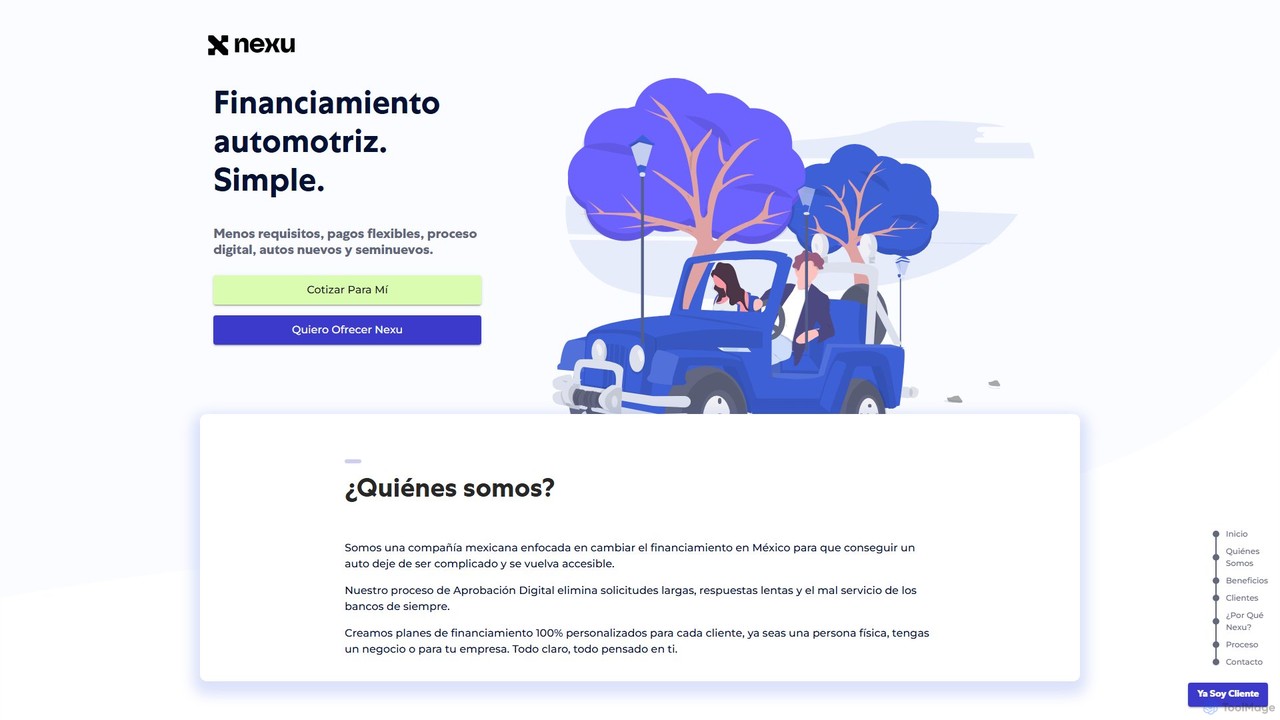
Nexu is an AI-powered FinTech platform that revolutionizes automotive financing. It offers a fast, fully digital process for securing car loans and leases in Mexico, providing pre-authorization in seconds and full approval in hours. Nexu simplifies the car buying journey with its user-friendly interface and convenient at-home services.

Automotive
Visits 165KFavorites 99Likes 104

About Automotive

AI Automotive tools are a specialized category of e-commerce solutions designed to streamline the online buying and selling of vehicles and parts. These tools leverage AI, including computer vision and natural language processing, to automate complex tasks like vehicle data entry and customer interaction. They enhance the digital car shopping experience by providing detailed, accurate listings and personalized recommendations, ultimately helping dealerships and marketplaces increase efficiency and sales. This specialization makes them distinct from general e-commerce platforms.

Core Features

  • VIN-to-Listing Automation: Instantly generates detailed vehicle listings, including specifications, features, and descriptions, directly from a Vehicle Identification Number (VIN).
  • AI-Powered Vehicle Search: Enables customers to use natural language queries to find vehicles that match complex criteria, improving the discovery process.
  • Dynamic Pricing & Valuation: Analyzes market data, competitor pricing, and vehicle condition to recommend optimal prices for new and used cars.
  • Virtual Showroom & 360° Tours: Creates immersive, interactive digital tours of vehicle interiors and exteriors from a set of images or videos.
  • Specialized Automotive Chatbots: Deploys conversational AI trained on automotive terminology to answer customer questions, qualify leads, and schedule test drives.

Use Cases

These tools are primarily used by online car dealerships, used vehicle marketplaces, auto parts e-commerce stores, and automotive classifieds websites. They assist inventory managers in rapidly listing new stock, help sales teams by pre-qualifying leads, and empower marketing teams to create engaging online shopping experiences that mirror a physical showroom visit.

How to Choose

When selecting an AI Automotive tool, consider its integration capabilities with your existing Dealership Management System (DMS) or CRM. Evaluate the accuracy of its VIN decoding and data sources. Assess the quality of the visual outputs for virtual tours and the chatbot's ability to understand industry-specific terminology. Finally, consider the pricing model and whether it aligns with your sales volume.

Automotive use cases

1

Automated Vehicle Listing Creation

For a used car dealership manager, listing new inventory is a time-consuming daily task. Using an AI Automotive tool, they simply input the Vehicle Identification Number (VIN) for each car. The AI instantly pulls data from multiple databases to auto-populate all specifications, standard features, and optional packages. It also generates a compelling, SEO-friendly marketing description. This process reduces the time to get a car listed online from 30 minutes to under 5, ensuring faster inventory turnover and consistent, high-quality listings across the entire inventory.

2

Intelligent Lead Qualification with Chatbots

An online car marketplace receives thousands of visitors daily, many with vague inquiries. An AI automotive chatbot is deployed on the website to engage visitors 24/7. It asks qualifying questions about budget, preferred body style (SUV, sedan), key features (e.g., sunroof, safety tech), and trade-in details. Based on the responses, it provides initial vehicle recommendations and identifies high-intent buyers. The chatbot then seamlessly transfers the conversation, along with a full transcript, to a live sales agent, who can immediately have a productive, informed conversation. This automates top-of-funnel interactions and increases lead conversion rates.

3

Dynamic Pricing for Used Car Inventory

An inventory manager at a large dealership needs to price hundreds of unique used vehicles competitively. Using an AI dynamic pricing tool, they upload their inventory data. The AI analyzes real-time market data, including competitor listings, recent sales data, seasonal trends, and the specific vehicle's condition and mileage. It then recommends an optimal starting price for each vehicle to maximize profit while ensuring a quick sale. The tool can also suggest price adjustments over time if a vehicle isn't selling, removing guesswork and emotional bias from pricing decisions.

4

Creating Virtual Showrooms and 360° Tours

A marketing team for a new electric vehicle brand wants to create an engaging online launch experience. They use an AI tool to process a series of photos and videos of their flagship model. The AI stitches these assets together to create a high-fidelity, interactive 360° tour of the car's interior and exterior. Users can click on hotspots to learn about specific features, change paint colors in real-time, and view the car in different virtual environments. This provides a rich, immersive experience that helps customers explore the vehicle in detail from home, bridging the gap between online browsing and a physical dealership visit.

5

AI-Powered Parts Compatibility Finder

An online auto parts retailer struggles with high return rates due to customers ordering incorrect parts. They integrate an AI compatibility tool into their website's search function. A customer enters their vehicle's year, make, and model (or VIN). The AI then cross-references this with a massive database of parts specifications and manufacturer data to filter the entire product catalog, showing only parts that are guaranteed to fit. This significantly reduces ordering errors, decreases return rates, and improves customer satisfaction and trust in the brand.

6

Personalized Vehicle Recommendations

A customer on a large car marketplace website has browsed several mid-size SUVs but hasn't found the perfect one. An AI recommendation engine, working in the background, analyzes their behavior: models viewed, features they clicked on (e.g., third-row seating, fuel efficiency), and price range. The system then proactively displays a personalized 'You might also like' section, featuring not only similar SUVs but also a crossover vehicle with excellent fuel economy and a minivan with superior third-row space, options the customer might not have considered. This personalized discovery path increases user engagement and the likelihood of finding a suitable vehicle.

Automotive FAQ

What are AI Automotive tools?

AI Automotive tools are specialized software solutions designed for the automotive e-commerce sector. They use artificial intelligence to automate and enhance the online vehicle buying and selling process. Key functions include automatically generating detailed vehicle listings from a VIN, providing intelligent search capabilities for customers, creating virtual 360° tours, and offering dynamic pricing recommendations based on market data. Their primary goal is to make online dealership and marketplace operations more efficient and improve the customer's digital shopping experience.

How do AI Automotive tools differ from general E-commerce tools?

The key difference lies in their domain-specific data and functionality. While general e-commerce tools manage products, AI Automotive tools are built to handle the unique complexities of vehicles. This includes:

  • VIN Decoding: They can interpret a Vehicle Identification Number to automatically populate dozens of specific data points.
  • Automotive Ontology: They understand the relationships between makes, models, trims, years, and compatible parts.
  • Specialized Visuals: They often include features for creating 360° vehicle tours, which are not standard in general e-commerce.
  • Industry-Specific Language Models: Their chatbots and search functions are trained on automotive jargon, financing terms, and sales processes.
General tools lack this deep, industry-specific knowledge, making them less effective for selling cars or parts online.

How to choose the right AI Automotive tool for a dealership?

To choose the right tool, focus on your specific business needs. Consider these factors:

  • Integration: Does the tool integrate smoothly with your existing Dealership Management System (DMS), CRM, and website platform?
  • Data Accuracy: How reliable is its VIN decoding and vehicle data? Request a demo with your own inventory to test it.
  • Feature Set: Do you need listing automation, a chatbot, dynamic pricing, or all of the above? Choose a tool that matches your priorities.
  • User Experience: Is the tool easy for your staff to use? For customer-facing features like virtual tours, is the experience high-quality and intuitive for shoppers?
  • Support and Training: What level of support and training does the provider offer to ensure successful implementation and adoption?

What are the main benefits of using AI in automotive e-commerce?

Using AI in automotive e-commerce offers several significant benefits. Firstly, it dramatically increases operational efficiency by automating repetitive tasks like creating listings and answering basic customer questions. Secondly, it enhances the customer experience by providing personalized recommendations, interactive virtual tours, and intelligent search functions that make finding the right car easier. Thirdly, it enables data-driven decision-making for tasks like inventory pricing, leading to better profit margins and faster sales cycles. Finally, it improves lead quality by using chatbots to pre-qualify potential buyers before they speak to a sales representative.

Can these tools help sell auto parts online?

Yes, absolutely. AI Automotive tools are highly effective for auto parts e-commerce. Their core strength is ensuring customers buy the correct part for their specific vehicle, which is a major challenge in this industry. They achieve this through:

  • AI-Powered Fitment Checkers: Customers enter their vehicle details (make, model, year, or VIN), and the AI filters the catalog to show only compatible parts.
  • Visual Search: Some tools allow users to upload a photo of a part they need to replace, and the AI identifies and finds it in the store's inventory.
  • Personalized Recommendations: Based on a customer's vehicle, the AI can suggest related parts, accessories, or performance upgrades, increasing the average order value.
These features reduce return rates, build customer trust, and simplify the complex process of buying auto parts.