E Commerce Best in category 1 results Amazon AI Tool

Popular AI tools in the Amazon field of E Commerce include AdAstra, etc., helping you quickly improve efficiency.

AdAstra

AdAstra

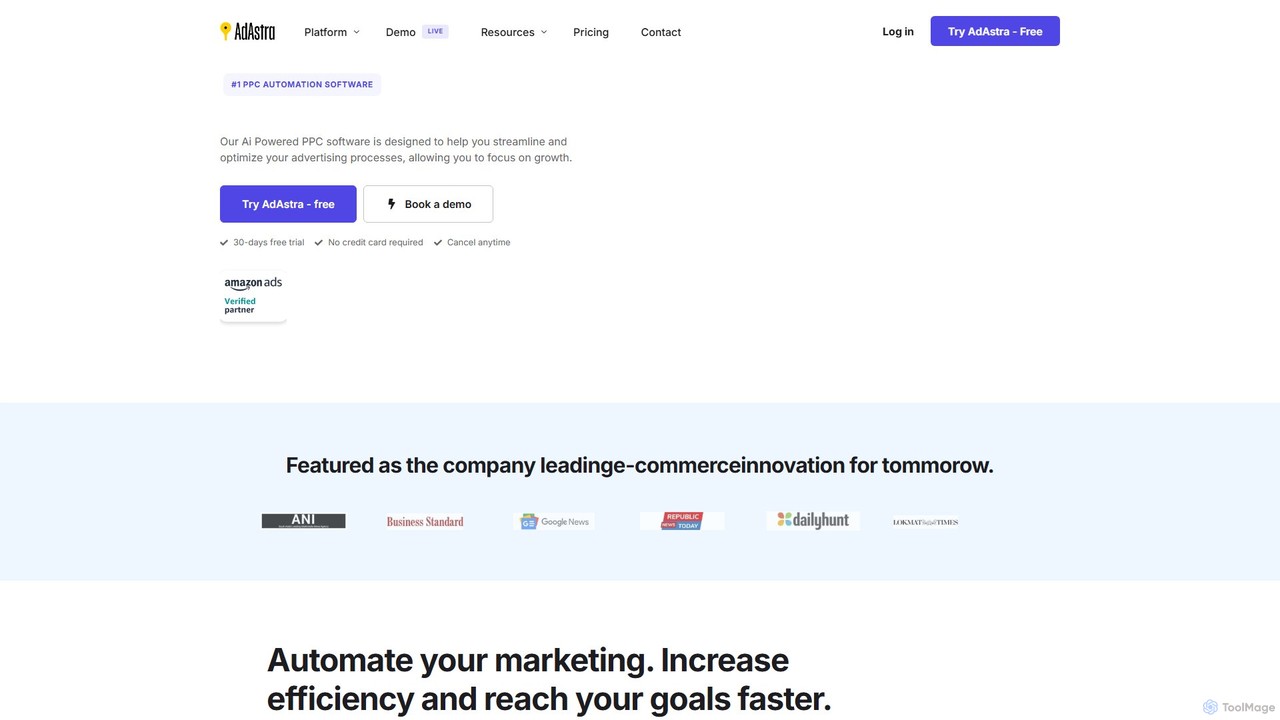
AdAstra is an AI-powered PPC automation platform designed for e-commerce businesses. It streamlines and optimizes advertising on platforms …

2.2K

About Amazon

AI tools for Amazon are specialized solutions designed to empower sellers, vendors, and brands to optimize their operations and maximize sales on the Amazon marketplace. These tools leverage machine learning, natural language processing, and data analytics to automate complex tasks and provide actionable insights. They help streamline everything from product research and listing creation to advertising management, inventory forecasting, and customer service. By transforming vast amounts of data into strategic recommendations, Amazon AI tools significantly enhance efficiency and competitiveness for businesses operating within the e-commerce giant.

Core Features

  • Product Research & Sourcing: Identify profitable niches, analyze market trends, and discover high-demand products with low competition.
  • Listing Optimization: Generate SEO-friendly product titles, bullet points, descriptions, and A+ content to improve visibility and conversion rates.
  • PPC Advertising Management: Automate bid adjustments, keyword targeting, and campaign optimization for Amazon Ads to maximize ROI.
  • Inventory & Demand Forecasting: Predict future sales trends to optimize stock levels, prevent stockouts, and reduce carrying costs.
  • Competitor Analysis: Monitor competitor pricing, keyword strategies, and sales performance to identify opportunities and maintain a competitive edge.

Applicable Scenarios

Amazon AI tools are indispensable for a wide range of users. Amazon sellers and vendors utilize them to automate daily tasks, scale their businesses, and make data-driven decisions for product launches and marketing. E-commerce agencies leverage these tools to provide advanced optimization services, enhancing their clients' performance on the platform. Brand managers also use them to maintain brand consistency, protect intellectual property, and drive sustainable growth within the competitive Amazon ecosystem.

How to Choose

When selecting an AI tool for Amazon, consider its core feature set—does it align with your primary needs like product research, listing, or advertising? Evaluate its integration capabilities with Amazon Seller Central and other existing e-commerce platforms for seamless workflow. Assess the accuracy and depth of its data insights and predictive analytics, ensuring it provides actionable recommendations. Finally, compare pricing models and scalability options to ensure the tool offers long-term value and can grow with your business.

AmazonUse Cases

1

Automated Amazon Product Research

An aspiring Amazon seller uses an AI tool to scan millions of products, identifying niches with high demand and low competition. The tool analyzes sales velocity, review counts, and keyword search volume, providing data-backed recommendations for profitable product ideas. This saves hundreds of hours of manual research, allowing the seller to quickly launch products with a higher probability of success.

2

AI-Powered Amazon Listing Optimization

An e-commerce brand manager employs an AI tool to generate and optimize product listings for new items. The tool analyzes top-performing competitor listings, suggests high-ranking keywords, and crafts compelling titles, bullet points, and descriptions that resonate with Amazon's algorithm and potential buyers. This ensures maximum visibility and conversion rates, reducing the time spent on manual copywriting and SEO analysis.

3

Optimizing Amazon PPC Campaigns

An Amazon advertising specialist utilizes an AI tool to manage complex PPC campaigns. The tool automates bid adjustments in real-time based on performance data, identifies negative keywords to reduce wasted spend, and optimizes ad placements for maximum visibility and ROI. This allows the specialist to manage multiple campaigns efficiently, achieving better ACoS (Advertising Cost of Sale) without constant manual intervention.

4

Predictive Amazon Inventory Management

A large Amazon FBA seller integrates an AI tool to forecast demand for their entire product catalog. The tool analyzes historical sales data, seasonality, and market trends to predict future sales, recommending optimal reorder points and quantities. This proactive approach minimizes stockouts, reduces excess inventory holding costs, and ensures products are always available for purchase, maintaining high customer satisfaction.

5

Generating Amazon Review Responses

A customer service team uses an AI tool to automate personalized responses to customer reviews on Amazon. The tool analyzes the sentiment and content of each review, generating appropriate, brand-aligned replies for both positive and negative feedback. This significantly speeds up response times, improves customer engagement, and helps maintain a positive brand image on the platform.

6

Competitive Analysis on Amazon

A new brand entering the Amazon marketplace deploys an AI tool to conduct in-depth competitive analysis. The tool monitors competitor pricing strategies, tracks their keyword rankings, analyzes their sales performance, and identifies their top-selling products. This intelligence helps the brand refine its own pricing, optimize its keyword strategy, and uncover untapped market opportunities, gaining a strategic advantage.

AmazonFrequently Asked Questions