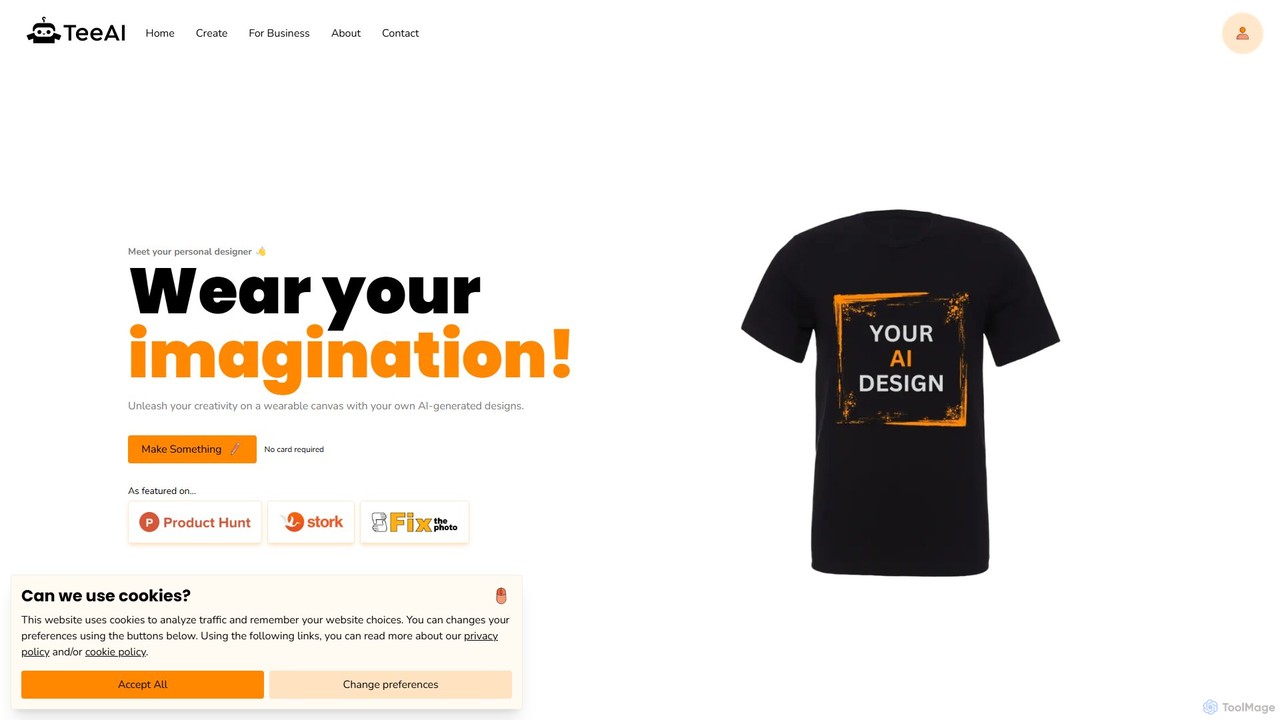
AI Custom Merchandise tools are applications that use generative artificial intelligence to create unique designs for physical products. These tools translate text prompts or simple images into intricate graphics, patterns, and illustrations. They empower e-commerce entrepreneurs, creators, and businesses to design and visualize personalized items like apparel, accessories, and home decor at scale, significantly reducing the need for manual design work. This technology streamlines the entire process from concept to a ready-to-sell product mockup.
Core Features
- Text-to-Image Generation: Creates original artwork and designs from simple text descriptions, enabling endless creative possibilities.
- Automated Mockup Creation: Automatically applies generated designs onto a wide range of product templates (e.g., t-shirts, mugs, phone cases) for realistic previews.
- Style and Variation Control: Allows users to specify artistic styles (e.g., watercolor, cartoon, photorealistic) and generate multiple design variations from a single idea.
- Seamless Pattern Generation: Produces tileable patterns ideal for products requiring continuous designs, such as fabric, wrapping paper, or phone skins.
- Print-on-Demand (POD) Integration: Offers direct connections to e-commerce platforms and POD services to automate order fulfillment.
Use Cases
These tools are primarily used in the e-commerce sector, especially by print-on-demand store owners on platforms like Shopify or Etsy. Marketing teams also use them to quickly create branded corporate merchandise (swag) for events and campaigns. Individual creators and influencers leverage them to launch unique product lines for their audience without upfront inventory costs.
How to Choose
When selecting an AI Custom Merchandise tool, consider the quality and style diversity of the AI image generator. Evaluate the breadth and realism of the available product mockup catalog. Check for seamless integration with your preferred e-commerce platforms or print-on-demand providers. Finally, assess the pricing model, whether it's based on credits, subscriptions, or pay-per-use, to ensure it aligns with your business volume.