ToolMage
Sign in

Best 2 Custom Products AI tools for E Commerce

Popular Custom Products AI tools in E Commerce include Starving Robots and Holover, helping you work more efficiently.

Holover
Paid

Holover

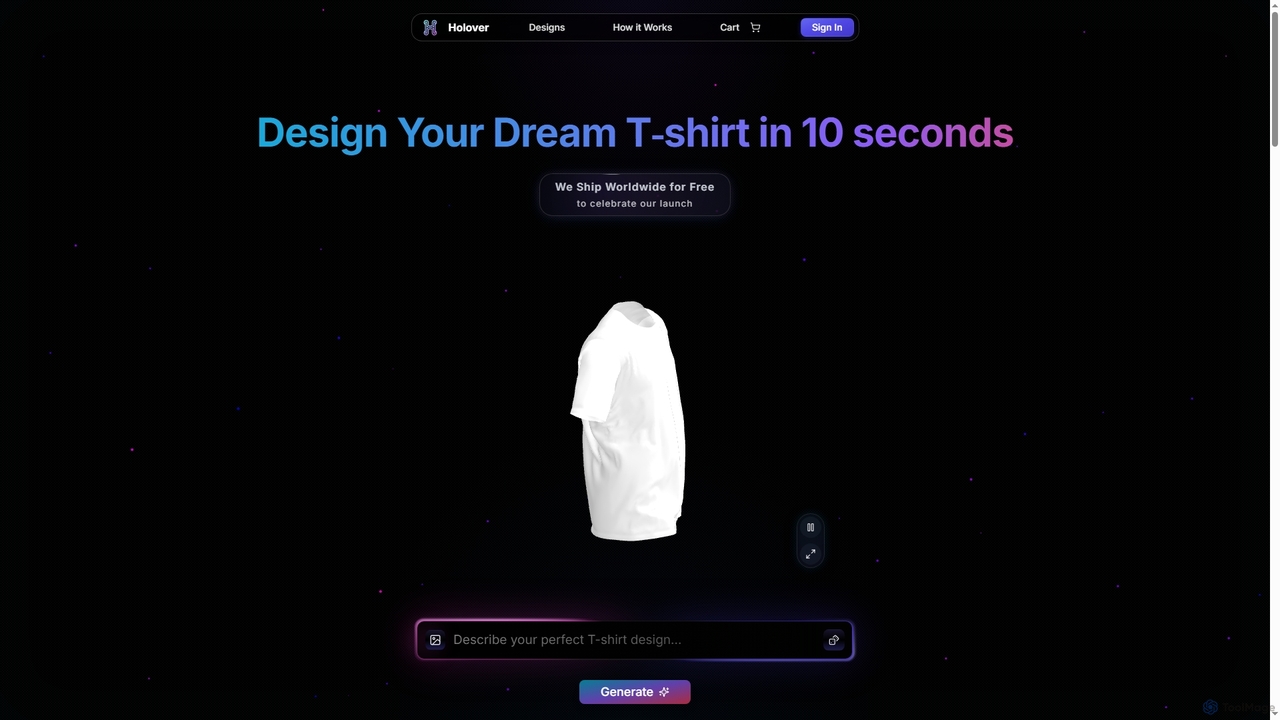
Holover is an AI-powered T-shirt generator that transforms your text prompts into unique, wearable art. Describe your idea, and the AI creates multiple designs in seconds. You can preview, edit, and order high-quality, custom-printed T-shirts made with premium materials, delivered worldwide.

Image Generator
Visits 5.4KFavorites 94Likes 97
Starving Robots
Paid

Starving Robots

Starving Robots is an all-in-one platform that bridges digital creativity and physical art. It allows users to generate unique artwork using advanced text-to-image AI or upload their own images. The platform specializes in transforming these digital creations into high-quality, museum-grade prints through cutting-edge upscaling technology, making it easy for artists, designers, and enthusiasts to bring their visions to life.

Image Generation
Visits 5.5KFavorites 113Likes 111

About Custom Products

AI Custom Products tools are applications that empower e-commerce customers to generate unique, personalized designs for physical items directly on a storefront. These tools utilize generative AI models to translate text prompts, user inputs, or style selections into visual designs in real-time. This allows businesses in the e-commerce space to offer a virtually infinite catalog of customizable products, from apparel to home decor, without holding physical inventory. The core value lies in transforming passive shoppers into active creators, significantly increasing engagement and product appeal.

Core Features

  • AI Design Generation: Creates unique graphics, patterns, or text styles from user prompts.
  • Real-time Mockup Visualization: Instantly applies the generated design onto a 2D or 3D product model for preview.
  • Style Transfer & Filters: Allows users to apply artistic styles (e.g., watercolor, cartoon) to their own uploaded images.
  • Automated Print-File Preparation: Generates high-resolution, print-ready files and sends them to Print-on-Demand (POD) services.
  • Personalization Options: Offers advanced customization beyond simple text, including color palettes, object placement, and design variations.

Use Cases

These tools are primarily used by e-commerce businesses, particularly in the Print-on-Demand (POD) sector. They are ideal for entrepreneurs selling custom apparel (t-shirts, hoodies), accessories (phone cases, tote bags), home goods (mugs, posters, cushions), and stationery. Both small independent creators and larger brands use them to differentiate their offerings and tap into the growing market for personalized goods.

How to Choose

When selecting an AI Custom Products tool, first consider its integration capabilities with your e-commerce platform (e.g., Shopify, WooCommerce). Evaluate the quality and variety of the AI generation models offered. Assess the user-friendliness of the customer-facing design interface. Finally, analyze the pricing structure—whether it's a monthly subscription, a per-design fee, or a revenue share—to ensure it aligns with your business model.

Custom Products use cases

1

Launch a Print-on-Demand T-Shirt Business

An entrepreneur aims to start an online t-shirt store with minimal upfront investment. Instead of pre-designing hundreds of graphics, they integrate an AI Custom Products tool into their Shopify store. Customers can visit the site, type a descriptive prompt like 'a cyberpunk cat wearing sunglasses,' and the AI generates several unique designs. The customer chooses their favorite, places it on the t-shirt mockup, and completes the purchase. The tool automatically creates a print-ready file and sends the order to a POD partner for printing and shipping, enabling a fully automated, highly personalized business model.

2

Create a Personalized Phone Case Design Studio

A mobile accessory retailer wants to stand out from competitors. They use an AI customizer that allows customers to upload their own photos and apply various artistic styles, such as 'Van Gogh' or 'comic book'. The AI processes the image, applies the chosen style, and instantly displays a 3D preview of the phone case from all angles. This interactive experience not only boosts customer engagement but also allows the retailer to charge a premium for these unique, co-created products, increasing average order value.

3

Offer Custom Poster Art for Home Decor

A home decor brand wants to offer unique wall art. They integrate an AI art generator into their product page for posters. A customer can describe a scene, for example, 'a serene Japanese garden with a koi pond in minimalist style,' and select a color palette. The AI generates several high-resolution art pieces based on the prompt. The customer can then preview the chosen artwork in different frame styles and room settings before ordering. This provides a highly personalized product that perfectly matches the customer's interior design vision.

4

Automate Corporate Swag Customization

A B2B company specializing in promotional products uses an AI tool to streamline the design process for corporate clients. A client can upload their company logo and brand colors. The AI then automatically generates mockups of the logo on various products like mugs, pens, and notebooks. It can also suggest design variations, such as creating a pattern from the logo or placing it in different positions. This self-service model reduces the back-and-forth between designers and clients, speeding up the approval process from days to minutes.

5

Generate Custom Patterns for Fabrics

A textile or fashion designer uses an AI tool to create unique, seamless patterns for fabrics. Instead of manually drawing motifs, the designer can input prompts like 'art deco geometric pattern with gold and navy blue' or 'whimsical forest animals for a children's collection'. The AI generates multiple tileable pattern options instantly. The designer can then fine-tune the scale, colors, and element spacing before sending the final high-resolution file for digital fabric printing. This dramatically accelerates the creative process for developing new textile collections.

6

Personalize Greeting Cards and Stationery

An online stationery shop empowers customers to create one-of-a-kind greeting cards. A user selects an occasion, such as 'Birthday,' and can then use an AI text-to-image generator to create custom cover art by describing an image, like 'a cute corgi wearing a party hat on the moon.' Additionally, they can use an AI writing assistant to help draft a personalized message inside the card. This combination of visual and textual AI provides a comprehensive customization experience, turning a simple card into a memorable, personal gift.

Custom Products FAQ

What are AI Custom Products tools?

AI Custom Products tools are software applications that integrate with e-commerce platforms to allow customers to create their own unique product designs using artificial intelligence. Unlike traditional customizers limited to text or image uploads, these tools use generative AI to create entirely new graphics, patterns, and styles from text descriptions or other inputs. This enables businesses to offer mass personalization at scale, where every product sold can be a one-of-a-kind creation co-designed by the customer.

What's the difference between a standard product customizer and an AI-powered one?

The key difference lies in creation versus configuration. A standard customizer allows users to configure pre-set options, like adding text in a specific font, choosing from a list of colors, or placing an uploaded image in a fixed area. An AI-powered customizer enables creation, allowing users to generate entirely new, unique designs from scratch using text prompts or by applying complex artistic styles. It moves from 'pick an option' to 'describe your vision,' offering limitless design possibilities instead of a finite set of choices.

How do I choose the right AI tool for my custom product store?

To choose the right tool, consider these factors:

  • Platform Integration: Ensure the tool seamlessly integrates with your e-commerce platform (e.g., Shopify, WooCommerce, BigCommerce).
  • AI Model Quality: Review the quality, style, and diversity of the designs the AI can generate. Some tools specialize in photorealism, while others excel at cartoons or patterns.
  • User Experience: The customer-facing interface should be intuitive, fast, and mobile-friendly to prevent frustration and cart abandonment.
  • Product Compatibility: Check if the tool supports the specific products you sell and provides accurate, high-quality mockups for them.
  • Pricing Structure: Analyze the cost. Is it a flat monthly fee, a per-generation charge, or a percentage of sales? Choose a model that aligns with your expected sales volume and profit margins.
What kind of products can be customized with these AI tools?

AI custom product tools are versatile and can be applied to a wide range of items, primarily in the print-on-demand (POD) market. Common product categories include:

  • Apparel: T-shirts, hoodies, hats, and socks.
  • Accessories: Phone cases, tote bags, backpacks, and mousepads.
  • Home & Living: Mugs, posters, canvases, cushions, and blankets.
  • Stationery: Greeting cards, notebooks, stickers, and journals.
  • Footwear: Sneakers and custom-printed shoes.

Essentially, any product with a printable surface can be a candidate for AI-powered customization, allowing businesses to offer a diverse and unique product catalog.

Do I need technical skills to integrate an AI custom product tool?

It depends on the tool and your e-commerce platform. Many modern AI customization tools are designed for non-technical users and offer simple, one-click integrations or apps for popular platforms like Shopify. These often require no coding. For other platforms or more complex custom implementations, you might need a developer to help with API integration. It's best to check the specific tool's documentation and support for your platform before committing. Most providers aim to make the setup process as straightforward as possible.