
ToolMage
Sign in

Best 1 Merchandise Design AI tools for E Commerce

Popular Merchandise Design AI tools in E Commerce include Made By AI, helping you work more efficiently.

Made By AI
Freemium

Made By AI

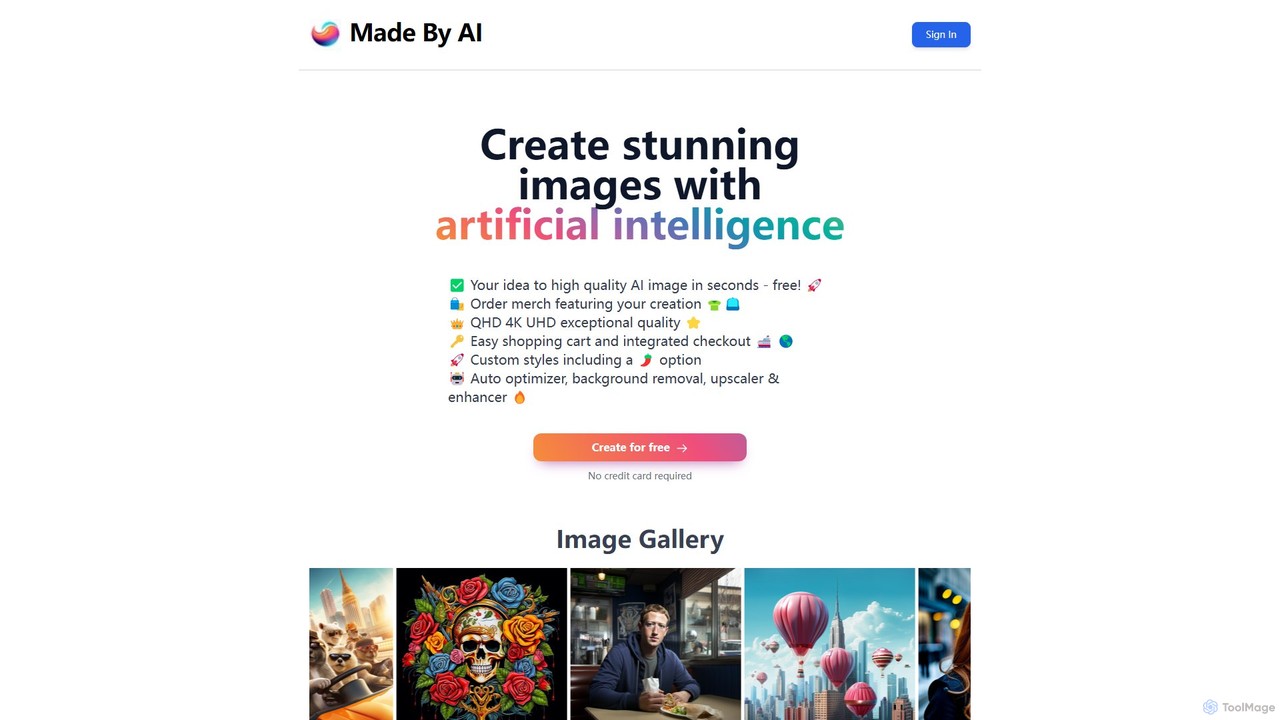
Made By AI is a free AI image generator that transforms your text prompts into stunning, high-quality images. It uniquely integrates a print-on-demand service, allowing you to instantly order your creations on merchandise like t-shirts and hats. Features include image upscaling, background removal, and various art styles.

Image Generation
Visits 10.1KFavorites 181Likes 179

About Merchandise Design

AI Merchandise Design tools are specialized platforms that leverage artificial intelligence to streamline and enhance the creation of designs for physical products. These tools utilize advanced algorithms, including generative AI and machine learning, to automate design processes, generate unique visual assets, and create realistic product mockups. They empower e-commerce businesses, independent creators, and brands to rapidly develop compelling product visuals, accelerate design iterations, and bring custom merchandise to market more efficiently.

Core Features

  • Generative Design: Automatically creates unique patterns, graphics, and visual elements based on user input or themes.
  • Mockup Generation: Instantly applies designs to realistic 3D product models (e.g., T-shirts, mugs, phone cases) for visual presentation.
  • Design Variation & Iteration: Generates multiple design alternatives and stylistic variations from a single concept, aiding creative exploration.
  • Text-to-Image Design: Transforms textual descriptions into visual designs, allowing for rapid concept visualization.
  • Brand Asset Integration: Seamlessly incorporates existing logos, brand colors, and typography into new merchandise designs.

Applicable Scenarios

These tools are invaluable for e-commerce entrepreneurs launching new product lines, allowing them to quickly visualize and test various designs without extensive manual effort. Graphic designers can use them to accelerate concept development and present diverse options to clients. Small businesses benefit from creating professional-grade custom merchandise for branding or promotional events without needing advanced design skills.

How to Choose

When selecting an AI merchandise design tool, consider its design flexibility and the range of product types it supports. Evaluate its integration capabilities with your existing e-commerce platforms or design software. Assess the quality and realism of its mockup generation, and check for features like asset management and collaboration. Finally, compare pricing models and the learning curve to ensure it aligns with your budget and team's technical proficiency.

Merchandise Design use cases

1

Generating Unique Apparel Graphics

An independent clothing brand owner needs to launch a new T-shirt collection with unique, trend-driven graphics. Using an AI merchandise design tool, they input keywords like "vintage cyberpunk" or "minimalist nature," and the AI generates dozens of distinct graphic concepts. This allows them to quickly explore diverse styles, select the most promising designs, and prepare them for print, significantly reducing the time spent on initial concept creation and iteration.

2

Creating Diverse Product Mockups for E-commerce

An online store manager is preparing to list new products like mugs, phone cases, and tote bags. Instead of manually photoshopping designs onto each product image, they upload their core design to an AI tool. The tool then automatically generates high-quality, realistic mockups across various product types and angles, complete with shadows and textures, ensuring a consistent and appealing visual presentation for their entire product catalog.

3

Automating Pattern Design for Fabric & Accessories

A textile designer or accessory brand wants to create unique patterns for scarves, blankets, or phone grips. They use an AI merchandise design tool to generate intricate or abstract patterns based on specific themes, colors, or geometric styles. The AI can produce seamless, repeatable patterns that are ready for production, saving hours of manual pattern creation and offering a fresh, innovative aesthetic.

4

Designing Promotional Merchandise for Events

A marketing team needs to quickly design branded merchandise like pens, notebooks, and keychains for an upcoming corporate event. They upload their company logo and brand guidelines to an AI merchandise design tool. The AI then suggests optimal placements, color schemes, and design variations for each item, ensuring brand consistency and professional appearance across all promotional goods, even with tight deadlines.

5

Personalizing Custom Gifts & Print-on-Demand Items

A print-on-demand service provider offers personalized gifts for customers. With an AI merchandise design tool, customers can input text, upload photos, or select themes, and the AI assists in arranging these elements into an aesthetically pleasing design on a chosen product. This automation simplifies the customization process, making it easier for users to create unique, personalized items without needing design expertise.

6

Optimizing Designs for Specific Printing Methods

A product designer needs to ensure their designs are optimized for different manufacturing processes, such as screen printing, direct-to-garment (DTG), or embroidery. Some advanced AI merchandise design tools can analyze a design and suggest modifications or generate variations that are best suited for a particular printing technique, considering color limitations, line thickness, or stitch counts, thereby reducing production errors and costs.

Merchandise Design FAQ

What are AI Merchandise Design tools?

AI Merchandise Design tools are software applications that use artificial intelligence to help create designs for physical products. They leverage technologies like generative AI and machine learning to automate design tasks, generate new visual concepts, and produce realistic product mockups. These tools are particularly valuable for e-commerce, print-on-demand, and branding, enabling faster design cycles and greater creative output.

How do AI tools assist in merchandise design?

AI tools assist in merchandise design by automating various stages of the creative process. They can generate unique patterns and graphics from text prompts, create multiple design variations from a single input, and instantly apply designs to 3D product mockups. This significantly reduces manual effort, accelerates design iteration, and allows designers and businesses to explore a wider range of creative possibilities more efficiently.

What are the benefits of using AI for product design in e-commerce?

For e-commerce, AI merchandise design offers several key benefits. It dramatically speeds up the design-to-market process, allowing businesses to launch new products faster. AI can generate a vast array of design options, helping identify popular trends and cater to diverse customer preferences. It also reduces design costs by automating tasks that would traditionally require skilled designers, making professional-grade design accessible to smaller businesses and individual creators.

How to choose the best AI merchandise design tool?

To choose the best AI merchandise design tool, consider your specific needs. Look for tools that offer the design flexibility and product categories relevant to your business (e.g., apparel, home goods). Evaluate the quality of its generative AI capabilities and mockup realism. Check for ease of use, integration with your existing e-commerce platforms or design workflows, and the pricing structure. Reading user reviews and trying free trials can also be beneficial.

Can AI merchandise design tools integrate with e-commerce platforms?

Yes, many AI merchandise design tools are built with e-commerce integration in mind. They often provide direct integrations or API access to popular platforms like Shopify, WooCommerce, or Etsy. This allows for seamless transfer of designs, automated product listing creation with mockups, and streamlined order fulfillment for print-on-demand services. Such integrations significantly enhance efficiency for online businesses.