ToolMage
Sign in

Best 1 Personal Shopper AI tools for E Commerce

Popular Personal Shopper AI tools in E Commerce include hulkhelper_ai, helping you work more efficiently.

hulkhelper_ai

hulkhelper_ai

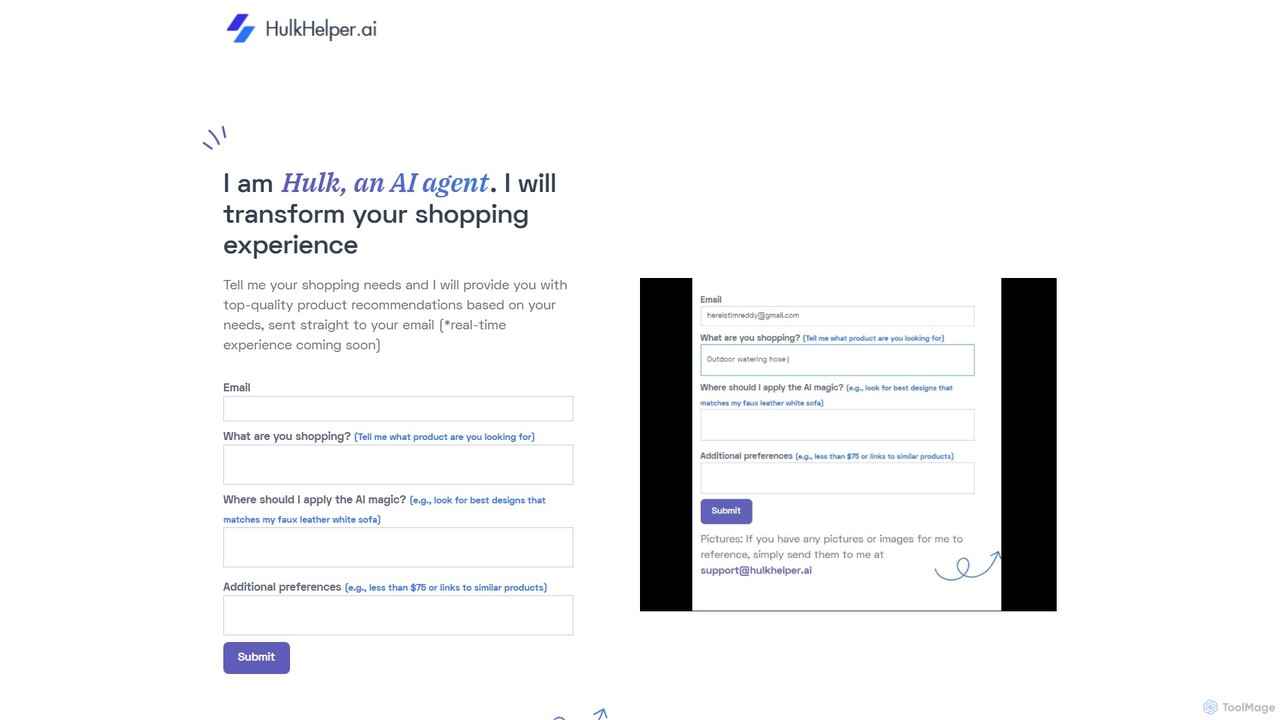
hulkhelper_ai is an AI-powered personal shopping assistant that automates the entire online shopping process. By conversing through email or a web interface, it understands your needs, scours e-commerce sites, analyzes product reviews, and finds the perfect items for you, from search to checkout.

Personal Assistant
Visits 6KFavorites 130Likes 121

About Personal Shopper

AI Personal Shopper tools are conversational platforms that replicate the experience of a human shopping assistant for online retail. They utilize Natural Language Processing (NLP) and machine learning to understand a customer's specific needs, style preferences, and context through dialogue. This allows them to provide highly curated product recommendations, moving beyond simple keyword matching to offer personalized guidance. These tools enhance the customer journey, increase conversion rates, and build brand loyalty by making online shopping more intuitive and engaging.

Core Features

  • Conversational Understanding: Interprets complex user queries, preferences, and context using advanced NLP.
  • Dynamic User Profiling: Builds and refines individual customer profiles based on interactions and purchase history.
  • Outfit & Collection Curation: Suggests complete looks or complementary product bundles, not just single items.
  • Context-Aware Recommendations: Provides suggestions tailored to specific occasions, seasons, or user-stated goals.
  • Visual Search Integration: Allows users to find products by uploading images of items they like.

Use Cases

These tools are primarily deployed in the e-commerce sector, especially in industries where personal taste is crucial, such as fashion, beauty, home decor, and jewelry. Online retailers use them to guide customers through large catalogs, helping them discover products they might otherwise miss. They are also valuable for creating interactive gift-finding guides or specialized advisory services.

How to Choose

When selecting an AI Personal Shopper, consider its integration capabilities with your e-commerce platform (e.g., Shopify, Magento). Evaluate the depth of its customization options for branding and conversation flows. Assess the quality of its analytics dashboard for tracking user engagement and sales impact. Finally, review its language support and the sophistication of its NLP model to ensure it can handle your target audience's queries effectively.

Personal Shopper use cases

1

Personalized Fashion Styling for Online Apparel Stores

An online fashion retailer integrates an AI Personal Shopper into their website. When a customer visits, the AI initiates a conversation, asking about the occasion, preferred styles, colors, and budget. For example, a user might type 'I need a comfortable but stylish outfit for a weekend trip.' The AI then presents a curated selection of outfits, including tops, bottoms, and accessories that match the criteria. This guided experience helps customers navigate a large inventory, leading to a notable increase in average order value and a significant reduction in cart abandonment.

2

Guided Furniture and Home Decor Discovery

A home goods marketplace uses an AI Personal Shopper to help customers furnish their spaces. A user can describe their room dimensions, existing decor style (e.g., 'minimalist,' 'bohemian'), and functional needs. The AI can then ask clarifying questions like 'Are you looking for pet-friendly fabrics?' before recommending specific sofas, rugs, and lighting fixtures. It can even use uploaded photos of the user's room to suggest items that would complement the space, simplifying complex purchasing decisions and boosting customer confidence.

3

Curated Cosmetic and Skincare Recommendations

A beauty brand employs an AI Personal Shopper to act as a virtual beauty advisor. Customers can detail their skin type (e.g., oily, combination), concerns (e.g., acne, fine lines), and desired outcomes. The AI analyzes this information to recommend a personalized skincare routine, from cleansers to serums. It can also help users find the perfect foundation shade by asking about undertones and desired coverage, replicating an in-store consultation and increasing sales of multi-product regimens.

4

Interactive Gift Finding Assistant for Holidays

During peak shopping seasons, an online gift store deploys an AI Personal Shopper to alleviate choice paralysis. Customers are prompted with questions about the recipient's interests (e.g., 'Loves cooking,' 'Is a tech enthusiast'), their relationship to the recipient, and the budget. Based on the answers, the AI generates a short, curated list of suitable gift ideas. This streamlines the shopping process, improves the user experience during high-traffic periods, and helps convert undecided shoppers into buyers.

5

High-Consideration Electronics Purchase Consultation

An electronics retailer uses an AI Personal Shopper to guide customers through complex purchases like laptops or cameras. A user can state their primary use case, such as 'a laptop for graphic design work under $1500.' The AI will then compare relevant models, explaining the differences in processors, RAM, and screen quality in simple terms. This consultative approach demystifies technical specifications, builds trust, and helps users make informed decisions, reducing returns and increasing satisfaction.

6

Automated Wine and Food Pairing Suggestions

An online gourmet food and wine shop implements an AI Personal Shopper to enhance its offering. A customer can input what meal they are planning to cook, for instance, 'grilled steak with mushrooms.' The AI assistant then recommends several wine options across different price points that would pair well, explaining the flavor profile of each choice. This adds value beyond a simple transaction, educating the customer and encouraging cross-sells of complementary items.

Personal Shopper FAQ

What is an AI Personal Shopper?

An AI Personal Shopper is a sophisticated tool that uses conversational AI to provide personalized product recommendations on e-commerce websites. Unlike basic chatbots, it engages users in a natural dialogue to understand their specific needs, style preferences, and the context of their search. Its primary goal is to simulate the helpful, tailored advice of a human sales associate, guiding customers to the perfect products and improving their overall shopping experience.

How does an AI Personal Shopper differ from a standard recommendation engine?

The key difference lies in interaction and personalization. A standard recommendation engine is typically passive, showing 'customers also bought' or 'trending' items based on aggregate user data. An AI Personal Shopper is interactive and individual-focused. It actively asks questions to build a unique profile for each user in real-time and provides recommendations based on that specific conversation, making the discovery process feel more like a personal consultation rather than automated filtering.

How do I choose the right AI Personal Shopper for my business?

When selecting a tool, consider four main factors. First, check its integration capabilities with your existing e-commerce platform (like Shopify or WooCommerce). Second, evaluate its customization level—can you tailor its appearance, personality, and conversation logic to match your brand? Third, assess its analytical features to measure performance and ROI. Finally, ensure its Natural Language Processing (NLP) is robust enough to understand your customers' unique phrasing and intent.

What are the main benefits of integrating an AI Personal Shopper?

Integrating an AI Personal Shopper offers several key advantages for e-commerce businesses. It significantly enhances the customer experience by providing instant, personalized guidance 24/7. This leads to higher conversion rates as customers find what they want faster. It also tends to increase the average order value (AOV) by effectively cross-selling and up-selling complementary items or complete outfits. Finally, it provides valuable insights into customer preferences and behavior.

Which types of businesses benefit most from AI Personal Shoppers?

Businesses with large or complex product catalogs benefit the most, as these tools help customers navigate the options. Industries where personal taste and detailed specifications are critical, such as fashion, beauty, jewelry, home decor, and consumer electronics, see particularly strong results. Any online retailer looking to move beyond a transactional relationship and build a more engaging, consultative experience with their customers can leverage this technology effectively.