shoppackage
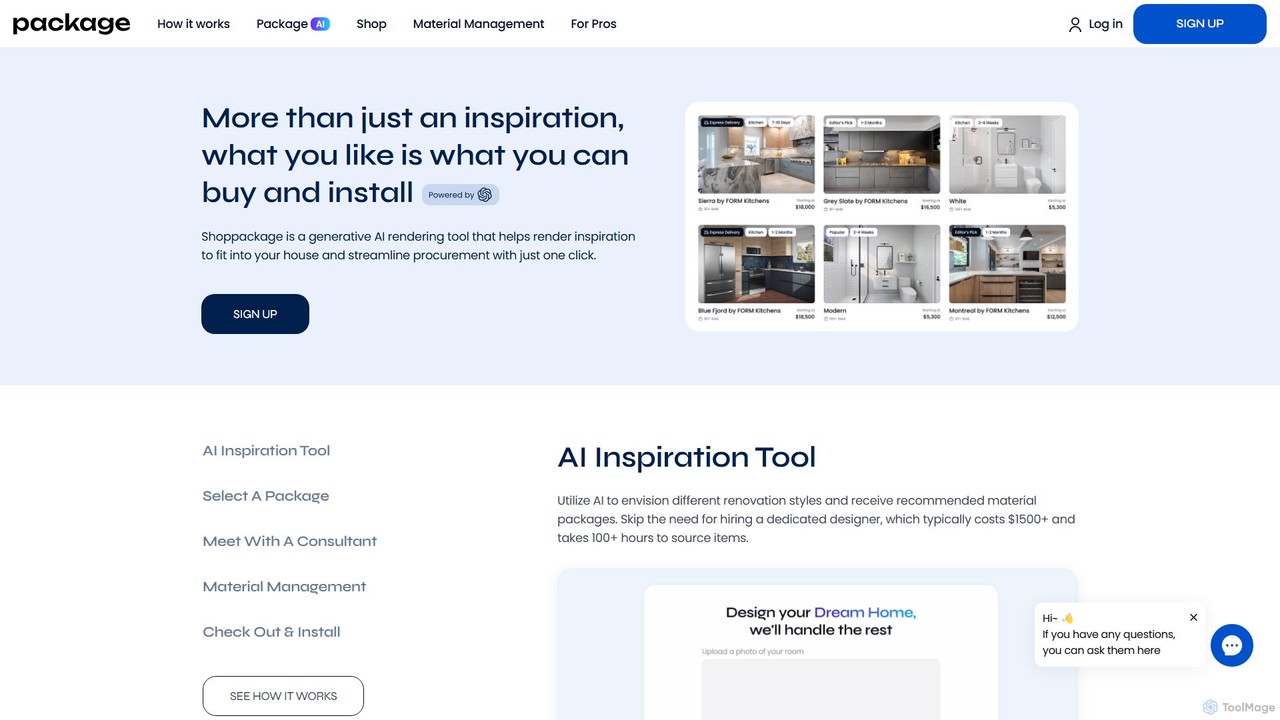
shoppackage is a generative AI platform that transforms home renovation. It allows users to visualize kitchen and bathroom …
shoppackage is a generative AI platform that transforms home renovation. It allows users to visualize kitchen and bathroom designs, receive shoppable material packages, and manage the entire procurement and installation process in one place, saving time and money.
About Product Curation
Product Curation tools are AI-powered applications designed to identify high-potential products for e-commerce businesses. They leverage machine learning to analyze vast datasets, including market trends, competitor sales, and consumer behavior, to forecast product viability. This enables online retailers to make data-driven decisions, reducing the risk of sourcing unpopular items and optimizing inventory. By automating the research process, these tools help sellers discover profitable niches and winning products more efficiently.
Core Features
- Trend Analysis: Identifies emerging product trends by analyzing social media, search data, and sales velocity.
- Profitability Prediction: Calculates potential profit margins by factoring in product cost, shipping fees, and competitor pricing.
- Competitor Monitoring: Tracks the product catalogs, pricing strategies, and stock levels of competing stores.
- Niche Discovery: Uncovers underserved market segments with high demand and low competition.
- Supplier Matching: Recommends vetted suppliers from platforms like AliExpress based on product quality and reliability.
Use Cases
These tools are primarily used by e-commerce entrepreneurs, dropshippers, Amazon FBA sellers, and product managers. They are essential for tasks such as finding the first product for a new store, expanding an existing product line with complementary items, and planning seasonal inventory based on predictive trend analysis. Marketing teams also use them to validate new product ideas before launch.
How to Choose
When selecting a Product Curation tool, consider the data sources it integrates with (e.g., Amazon, Shopify, social media platforms). Evaluate the accuracy of its predictive analytics and the depth of its market analysis. Also, assess its ease of use, the clarity of its reports, and whether its pricing model (typically a monthly subscription) aligns with your business scale and budget.

Product CurationUse Cases
Finding Winning Products for a Dropshipping Store
A new dropshipping entrepreneur wants to launch a store but is unsure which products to sell. They use an AI Product Curation tool to analyze real-time data from AliExpress, social media platforms like TikTok, and Google Trends. The tool identifies a rising trend in 'eco-friendly kitchen gadgets' with high engagement but relatively low competition. It provides a list of specific products, such as reusable silicone food bags and bamboo utensil sets, along with their potential profit margins and links to reliable suppliers. This data-driven approach allows the entrepreneur to confidently select a niche and products with a higher probability of success, avoiding costly trial and error.
Expanding an Existing E-commerce Product Line
An established online store selling high-quality coffee beans wants to expand its offerings. The store manager uses a product curation tool to analyze their own customer data and broader market trends. The AI identifies that customers who buy premium single-origin coffee are also frequently searching for 'manual coffee grinders' and 'pour-over coffee makers'. The tool validates this by showing high search volume and positive sentiment for these products on social media. Based on this insight, the store adds a curated selection of grinders and brewers to its catalog, successfully increasing the average order value and customer loyalty by offering complementary products.
Seasonal Inventory Planning for a Fashion Retailer
A manager for an online fashion boutique needs to plan inventory for the upcoming summer season. Instead of relying solely on past sales data, they use a product curation tool to analyze forward-looking trend data from fashion blogs, Instagram, and Pinterest. The AI predicts that 'linen wide-leg pants' and 'crochet tops' will be top-trending items. It also provides color palette suggestions based on runway analysis. This allows the boutique to pre-order the right styles and quantities, minimizing the risk of overstocking on items that won't sell and ensuring they have the most sought-after pieces when the season begins.
Competitive Product Gap Analysis
A product manager for a consumer electronics brand uses a curation tool to monitor key competitors. The tool automatically tracks new product launches, price changes, and customer reviews for competing brands. The AI aggregates this data and highlights a 'product gap': competitors offer smartwatches with advanced sleep tracking, but customer reviews frequently mention poor battery life. This insight presents an opportunity. The manager can now pitch a new product development project for a smartwatch with both superior sleep tracking and a long-lasting battery, addressing a specific, unmet need in the market and creating a strong competitive advantage.
Validating a Niche Market Idea
An entrepreneur has an idea for a new e-commerce store focused on 'smart home devices for pet owners'. Before investing heavily, they use a product curation tool to validate the niche. The tool analyzes search volume for keywords like 'automatic pet feeder' and 'pet monitoring camera', social media sentiment, and the number of existing competitors on Amazon and Shopify. The data confirms high and growing interest, but also identifies a sub-niche with less competition: 'smart toys for cats'. This allows the entrepreneur to refine their business plan, focusing on a more specific and potentially more profitable segment from the start.
Optimizing Product Sourcing for Amazon FBA
An Amazon FBA seller wants to find a new product to add to their portfolio. They use a product curation tool that not only identifies trending products with high demand and low competition on Amazon but also integrates with supplier databases. After the tool suggests 'portable travel blenders', it provides a list of potential manufacturers on Alibaba. The seller can compare supplier ratings, minimum order quantities (MOQs), and estimated costs directly within the tool. This streamlines the entire process from product discovery to sourcing, saving significant time and helping the seller negotiate better terms with pre-vetted suppliers.