SharpAPI
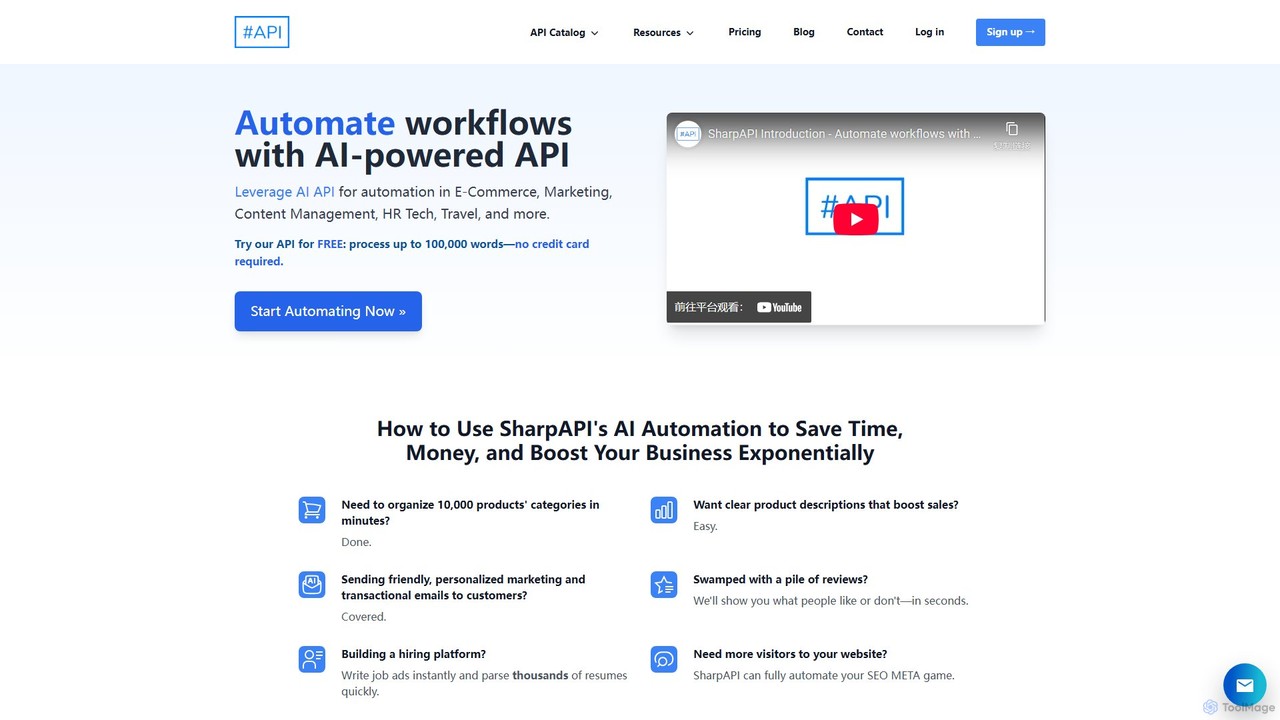
SharpAPI is an all-in-one AI-powered workflow automation API for developers. It provides a comprehensive suite of tools for …
SharpAPI is an all-in-one AI-powered workflow automation API for developers. It provides a comprehensive suite of tools for e-commerce, HR tech, marketing, and content management, enabling easy integration of features like resume parsing, content generation, text analysis, and multi-language translation into any application via a simple RESTful API and dedicated SDKs.
translateimages
translateimages is an AI-powered tool that translates text within images into over 130 languages. It uses advanced OCR …
translateimages is an AI-powered tool that translates text within images into over 130 languages. It uses advanced OCR technology to accurately detect and translate text while preserving the original layout, fonts, colors, and formatting, making it ideal for localizing marketing materials, e-commerce products, and technical documents.
About Product Management
AI Product Management tools are a specialized class of software that uses artificial intelligence to streamline and enhance decision-making throughout the product lifecycle. These platforms leverage machine learning and natural language processing (NLP) to analyze vast amounts of data, such as user feedback, market trends, and competitor activities. By automating data synthesis and generating insights, they empower product managers, especially in dynamic sectors like e-commerce, to build strategic roadmaps, prioritize features with greater accuracy, and accelerate development cycles. This data-driven approach helps align product development with customer needs and business goals.
Core Features
- Automated Roadmap Generation: Creates dynamic product roadmaps based on strategic goals, user feedback, and resource constraints.
- User Feedback Analysis: Automatically categorizes and summarizes customer feedback from sources like reviews, surveys, and support tickets to identify key pain points and opportunities.
- Feature Prioritization Scoring: Uses frameworks like RICE or custom models to objectively score and rank features based on potential impact and effort.
- Competitive Intelligence: Monitors competitors' product updates, feature releases, and market positioning to inform strategic decisions.
- AI-Powered Idea Management: Gathers and analyzes product ideas from internal teams and external sources, identifying promising concepts.
Use Cases
These tools are invaluable for e-commerce product managers, startup founders, and enterprise product teams. They are used to distill insights from thousands of customer reviews to guide the next feature release, to continuously monitor competitor pricing and feature strategies, and to create objective, data-backed business cases for new product initiatives, moving beyond intuition-based planning.
How to Choose
When selecting an AI Product Management tool, consider its integration capabilities with your existing stack (e.g., Jira, Slack, Zendesk). Evaluate the breadth and quality of data sources it can analyze. Assess the sophistication of its AI models for prioritization and insight generation. Finally, consider the user interface's intuitiveness and the platform's scalability to match your team's growth.

Product ManagementUse Cases
Automate Analysis of Customer Feedback
An e-commerce product manager is tasked with improving user satisfaction. Instead of manually reading thousands of app store reviews and support tickets, they use an AI tool. The tool connects to these data sources, automatically processes the text using NLP, and groups feedback into themes like 'checkout process issues,' 'slow page load,' and 'request for loyalty program.' This provides a quantified view of top user frustrations in hours instead of weeks, allowing the team to prioritize fixes that have the biggest impact on user experience.
Create Data-Driven Product Roadmaps
A startup is planning its product strategy for the next year. The product lead inputs the company's high-level objectives (e.g., 'increase user retention by 15%'). The AI tool then analyzes existing user data, feature requests, and market trends to suggest a series of initiatives and features that align with this goal. It visualizes these on a timeline, creating a draft roadmap. This serves as a powerful starting point for strategic discussions, ensuring the roadmap is grounded in data rather than solely on opinions or assumptions.
Objectively Prioritize Feature Backlogs
A product team has a backlog of over 100 feature ideas and technical debt items. Prioritization meetings are often contentious and subjective. By implementing an AI product management tool, they can score each item using a consistent framework like RICE (Reach, Impact, Confidence, Effort). The AI assists by pulling data to estimate reach and impact, and learns from past projects to refine effort estimates. This transforms the prioritization process from a debate into a data-informed discussion, helping the team focus on what truly matters for business growth.
Monitor Competitor Product Strategies
A product marketing manager for an e-commerce platform wants to stay ahead of the competition. They configure an AI tool to track key competitors' websites, app updates, and press releases. The tool automatically detects changes, such as a new feature launch or a pricing model adjustment, and sends a summary alert. It can also analyze the sentiment of user reviews for competitor products, highlighting their strengths and weaknesses. This provides continuous, automated competitive intelligence, enabling faster strategic responses.
Draft User Stories and Specifications
A product manager needs to define a new 'Wishlist' feature for their e-commerce site. They provide a high-level prompt to an AI tool, such as 'Create user stories for a customer wishlist feature that allows saving products, creating multiple lists, and sharing lists.' The AI generates a set of detailed user stories (e.g., 'As a shopper, I want to add a product to my wishlist from the product page so I can save it for later') and acceptance criteria. This accelerates the documentation process, reduces writer's block, and ensures comprehensive requirements are captured from the start.
Validate Product Ideas with Market Data
Before investing heavily in developing a new subscription box feature, a product team wants to validate the idea. They use an AI tool to analyze market data, including search engine trends for 'subscription boxes,' social media conversations about similar services, and competitor offerings. The AI synthesizes this information into a concise report, highlighting the potential market size, target demographics, and key features customers expect. This data-driven validation provides the team with the confidence to proceed or the insight to pivot before significant resources are committed.