ToolMage
Sign in

Best 2 Shopify AI tools for E Commerce

Popular Shopify AI tools in E Commerce include Gadget and Vennie, helping you work more efficiently.

Vennie
Paid

Vennie

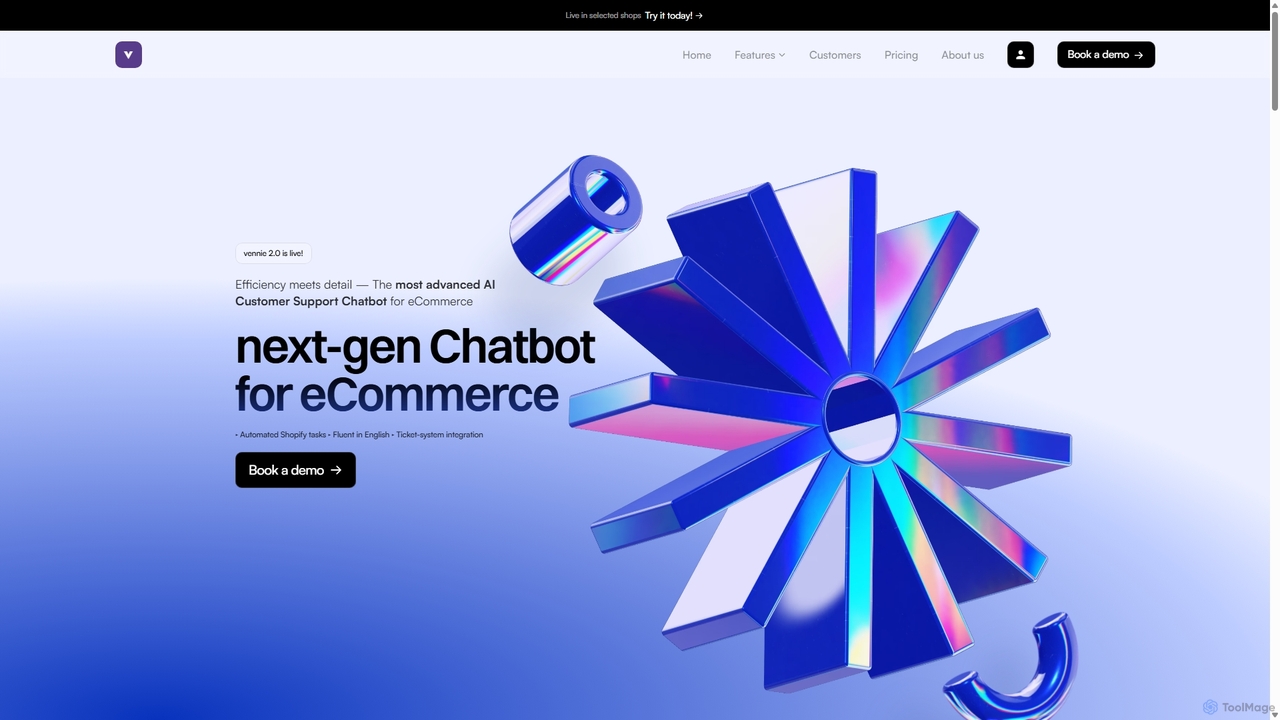
Vennie is an advanced AI customer support chatbot designed for eCommerce businesses using Shopify and Zendesk. It automates up to 70% of customer inquiries, handles tasks like order changes and returns, and provides human-like, multilingual support 24/7 to boost efficiency and customer satisfaction.

Chatbot
Visits 4.5KFavorites 119Likes 126
Gadget
Freemium

Gadget

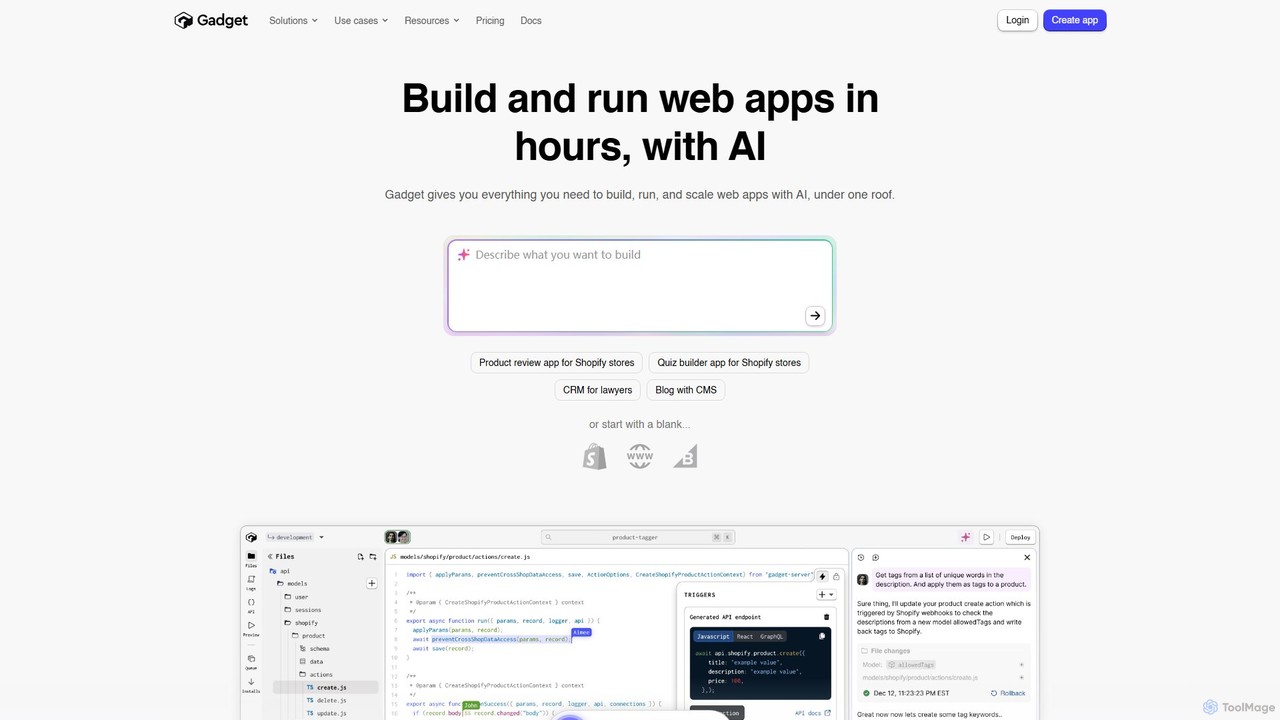
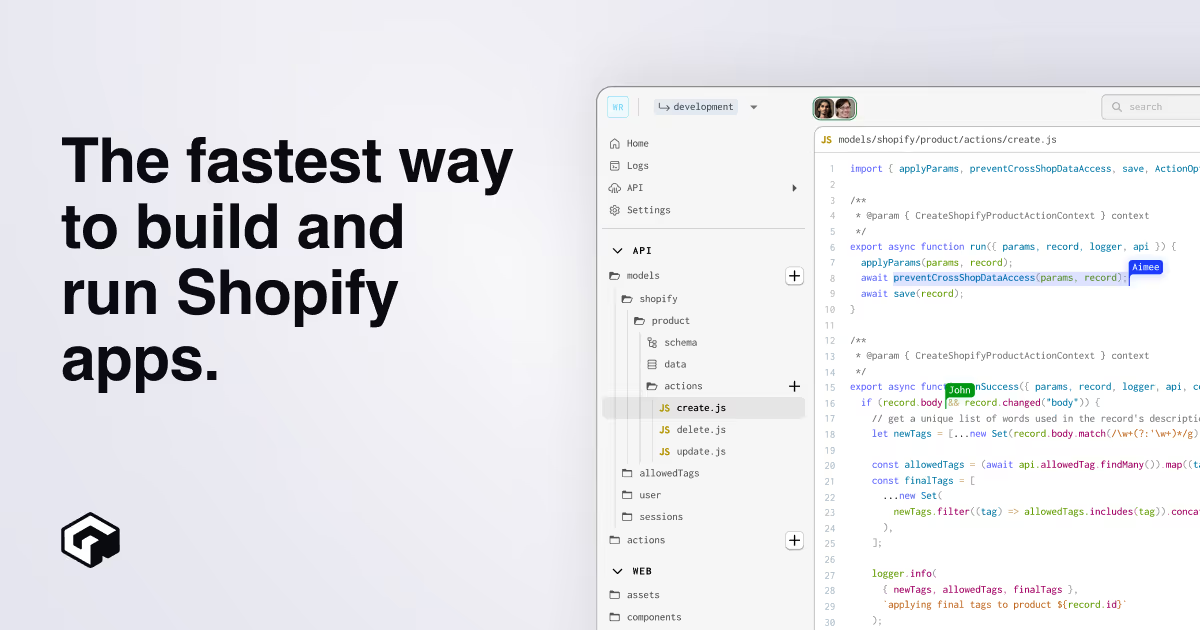
Gadget is an all-in-one, serverless development platform designed to accelerate full-stack web application development, especially for the Shopify ecosystem. It automates backend infrastructure, including databases, APIs, and authentication, allowing developers to build and launch scalable apps, like Shopify apps, significantly faster. An integrated AI assistant further streamlines the coding process.

Backend
Visits 51.8KFavorites 119Likes 119

About Shopify

Shopify AI tools are specialized applications designed to integrate directly with the Shopify platform, automating and enhancing e-commerce operations. These tools leverage machine learning for tasks like product description writing, customer support automation, and personalized marketing. By analyzing store data, they help merchants increase sales, improve customer experience, and optimize daily workflows. Their seamless integration within the Shopify ecosystem is a key advantage over generic e-commerce solutions.

Core Features

  • Automated Content Creation: Generates unique product descriptions, blog posts, and ad copy based on product data.
  • AI-Powered Customer Support: Deploys chatbots that understand and resolve customer queries 24/7 using store information.
  • Personalized Recommendations: Analyzes customer behavior to display relevant products, increasing average order value.
  • Marketing Automation: Optimizes email campaigns, segments audiences, and generates ad creatives automatically.
  • Fraud Detection: Identifies and flags high-risk orders in real-time to prevent chargebacks.

Use Cases

These tools are essential for Shopify store owners, e-commerce managers, and digital marketers seeking to scale operations efficiently. For example, a fashion brand can use an AI writer to create descriptions for hundreds of new arrivals instantly. A home goods store can deploy an AI chatbot to handle shipping and return inquiries, freeing up human agents for complex issues.

How to Choose

When selecting a Shopify AI tool, first assess its core function and ensure it solves a specific business problem. Check the depth of its integration with Shopify's API and other apps in your stack. Evaluate the pricing model—whether it's a flat monthly fee, usage-based, or tied to store revenue. Finally, consider the user interface and ease of setup, especially for non-technical teams.

Featured tool rankings

Shopify use cases

1

Automate Product Description Writing

A Shopify store manager for a fast-fashion brand needs to upload 50 new items weekly. Manually writing unique, SEO-friendly descriptions is time-consuming. Using a Shopify AI content generator, they input key product attributes like material, color, and style. The tool generates multiple description variants in seconds, optimized for search engines and brand voice. This reduces content creation time by over 80% and ensures all product pages are populated quickly and consistently.

2

Provide 24/7 AI-Powered Customer Support

An electronics store on Shopify receives numerous customer queries about order status, warranty, and product specs outside of business hours. By integrating an AI chatbot specifically for Shopify, they automate responses to these common questions. The bot can pull order information directly from Shopify, providing real-time updates to customers. This improves customer satisfaction and reduces support ticket volume by 40%, allowing the human support team to focus on more complex issues.

3

Personalize Product Recommendations

A Shopify merchant selling skincare products wants to increase average order value. They install an AI personalization app. The tool analyzes a visitor's browsing history, past purchases, and items in their cart to display a 'You might also like' section with highly relevant products. This dynamic recommendation engine adapts in real-time to user behavior, leading to a 15% increase in conversion rates for recommended items and a higher overall customer lifetime value.

4

Optimize Email Marketing Campaigns

A digital marketer for a Shopify-based subscription box service aims to improve email engagement. They use an AI marketing tool that integrates with their email platform and Shopify data. The AI segments customers based on purchasing behavior, predicts the best time to send emails, and even generates subject lines with the highest open-rate potential. This data-driven approach results in a 25% higher click-through rate and reduces customer churn by re-engaging at-risk subscribers with personalized offers.

5

Automate Ad Creative Generation for Social Media

A small business owner running a Shopify store for handmade jewelry needs to create compelling ads for Facebook and Instagram but lacks design skills. They use an AI ad creative tool from the Shopify App Store. By providing a product link, the tool automatically pulls images, generates persuasive ad copy, and creates dozens of visual variations in different formats. The owner can launch targeted ad campaigns in minutes instead of hours, testing various creatives to find the most effective ones.

6

Detect and Prevent Fraudulent Orders

A high-volume Shopify store faces challenges with chargebacks from fraudulent transactions. They install an AI-powered fraud detection app. The tool analyzes hundreds of data points for each order in real-time, including IP address, proxy usage, and behavioral patterns, to assign a risk score. It automatically flags or cancels high-risk orders before they are fulfilled, significantly reducing financial losses from chargebacks and saving the team manual review time.

Shopify FAQ

What are Shopify AI tools?

Shopify AI tools are applications, often found in the Shopify App Store, that use artificial intelligence to automate or enhance tasks for e-commerce stores. They integrate directly with your store's data to perform functions like generating product descriptions, powering customer service chatbots, personalizing shopping experiences, and detecting fraud. Their main purpose is to increase efficiency, improve customer engagement, and boost sales for Shopify merchants.

How do I choose the right AI tool for my Shopify store?

To choose the right tool, consider these key factors:

  • Specific Need: Clearly identify your biggest pain point. Is it time-consuming content creation, high volume of customer queries, or low marketing ROI? Choose a tool that directly addresses this.
  • Integration Depth: Ensure the app has a seamless, deep integration with Shopify's products, orders, and customer data. Check for compatibility with other essential apps you use.
  • Ease of Use: Look for a tool with an intuitive interface that doesn't require extensive technical knowledge. Check reviews for feedback on the setup process.
  • Pricing Model: Compare pricing structures (e.g., subscription, usage-based) and ensure it aligns with your budget and offers a clear return on investment.
What's the difference between a Shopify AI tool and a general e-commerce AI tool?

The primary difference is integration and data context. Shopify AI tools are built specifically for the Shopify platform, allowing them to seamlessly access and understand your product catalog, customer data, and order history without complex setup. This native integration enables more accurate and context-aware automation. General e-commerce AI tools may offer broader features but often require custom API integration, which can be technically challenging and may not fully leverage the specific data structure of a Shopify store.

Can AI tools help with my Shopify store's SEO?

Yes, many Shopify AI tools are designed to improve SEO. AI content generators can create unique, keyword-rich product descriptions and blog posts at scale, which helps avoid duplicate content issues and targets relevant search terms. Some tools can also analyze your site to suggest SEO improvements, automatically optimize image alt-tags, or even help build an internal linking structure. By automating these often-tedious tasks, AI tools allow you to enhance your store's search engine visibility more efficiently.

Are Shopify AI tools difficult to set up?

Most Shopify AI tools are designed for ease of use and can be installed directly from the Shopify App Store with just a few clicks. The setup process is typically guided and requires minimal technical skill. For example, installing an AI chatbot might involve customizing its appearance and adding your store's FAQ data, but it doesn't usually require any coding. It's always a good practice to check user reviews on the App Store for feedback on the setup process and the quality of customer support provided by the app developer.