ToolMage
Sign in

Best 4 Virtual Reality AI tools for Entertainment

Popular Virtual Reality AI tools in Entertainment include djay, Avatar.One, AeonChat, and insiver, helping you work more efficiently.

AeonChat

AeonChat

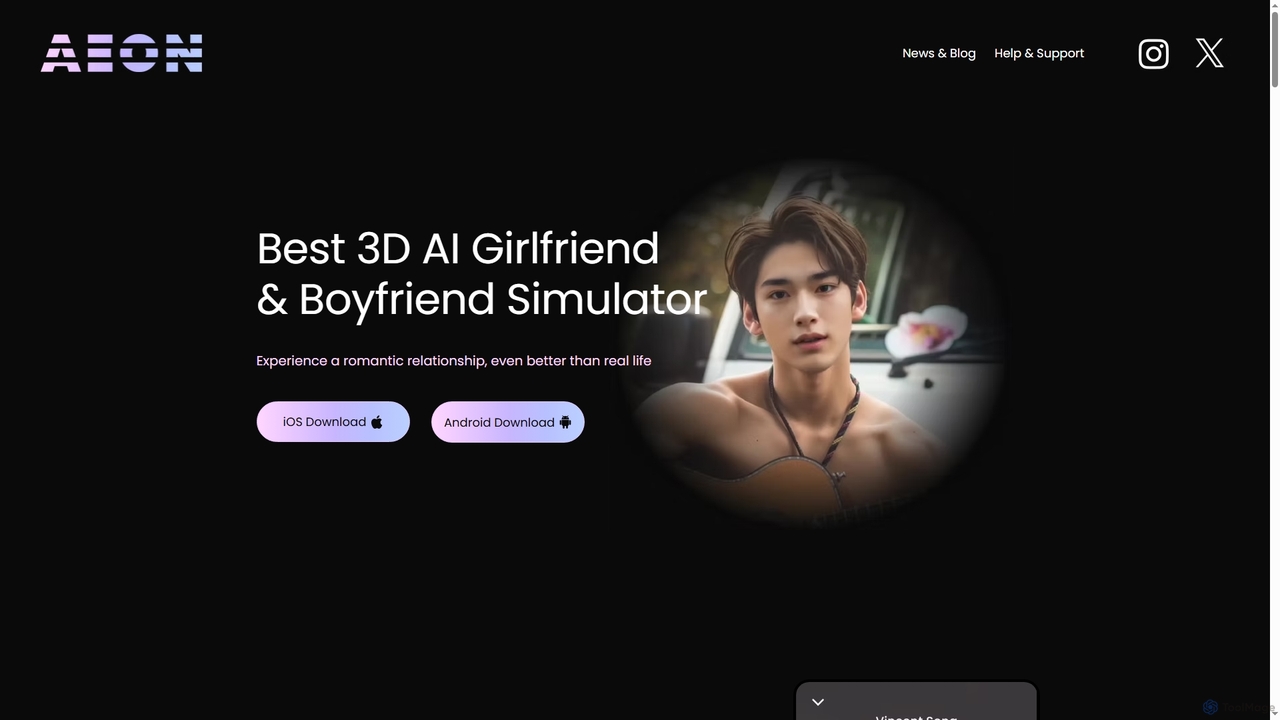
AeonChat is a 3D AI companion app designed for lifelike interactions, emotional support, and building personalized relationships. Chat, flirt, and role-play with your AI girlfriend or boyfriend, enjoy exclusive photos, and experience a companion that remembers your unique details and evolves with you.

Virtual Reality
Visits 6.5KFavorites 148Likes 153
insiver
Paid

insiver

insiver is a pioneering studio specializing in creating immersive virtual reality (VR) experiences that transport users back in time. By combining meticulous historical research with cutting-edge VR technology, insiver produces educational and entertaining "time travel festivals" and custom exhibitions for museums and cultural sites, allowing audiences to witness history from a new perspective.

History
Visits 5.4KFavorites 154Likes 141
Avatar.One
Freemium

Avatar.One

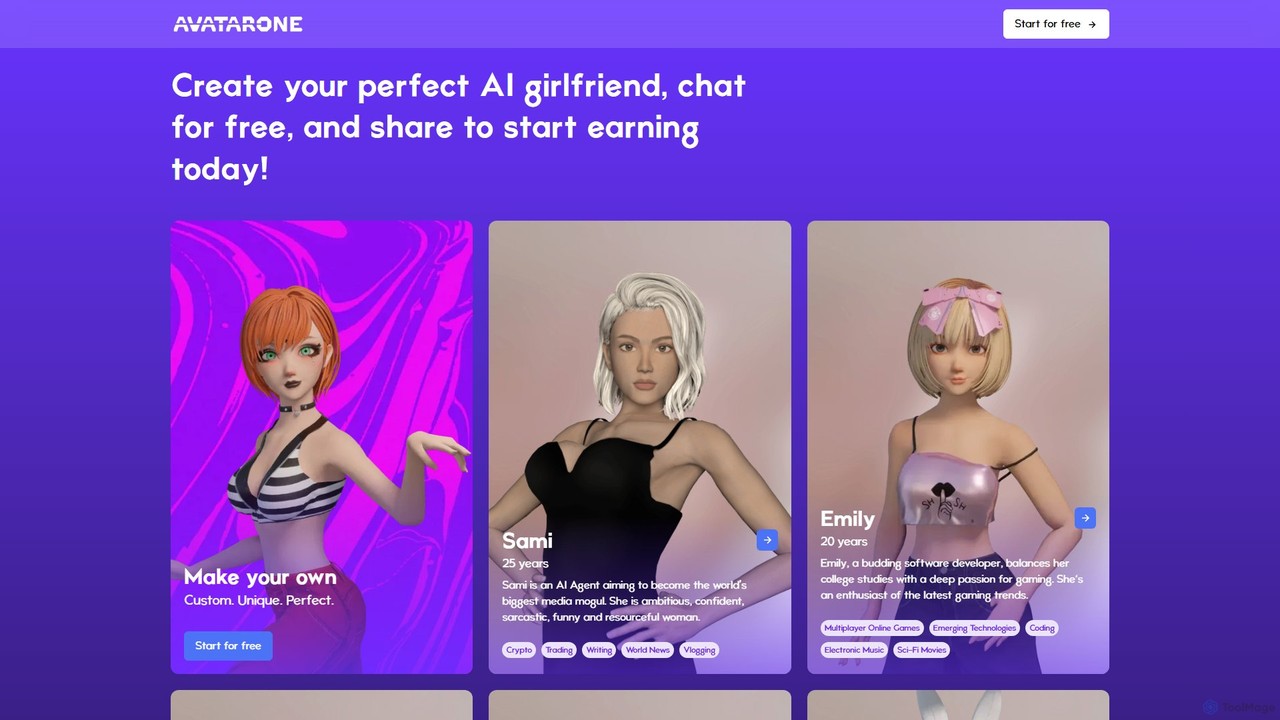
Avatar.One is a platform for creating, customizing, and interacting with your own dream AI girlfriend in an immersive 3D environment. Start for free, engage in deep conversations, share your unique companion with a global community, and even earn rewards based on her popularity.

Ai Companion
Visits 7.6KFavorites 116Likes 110
djay
Freemium

djay

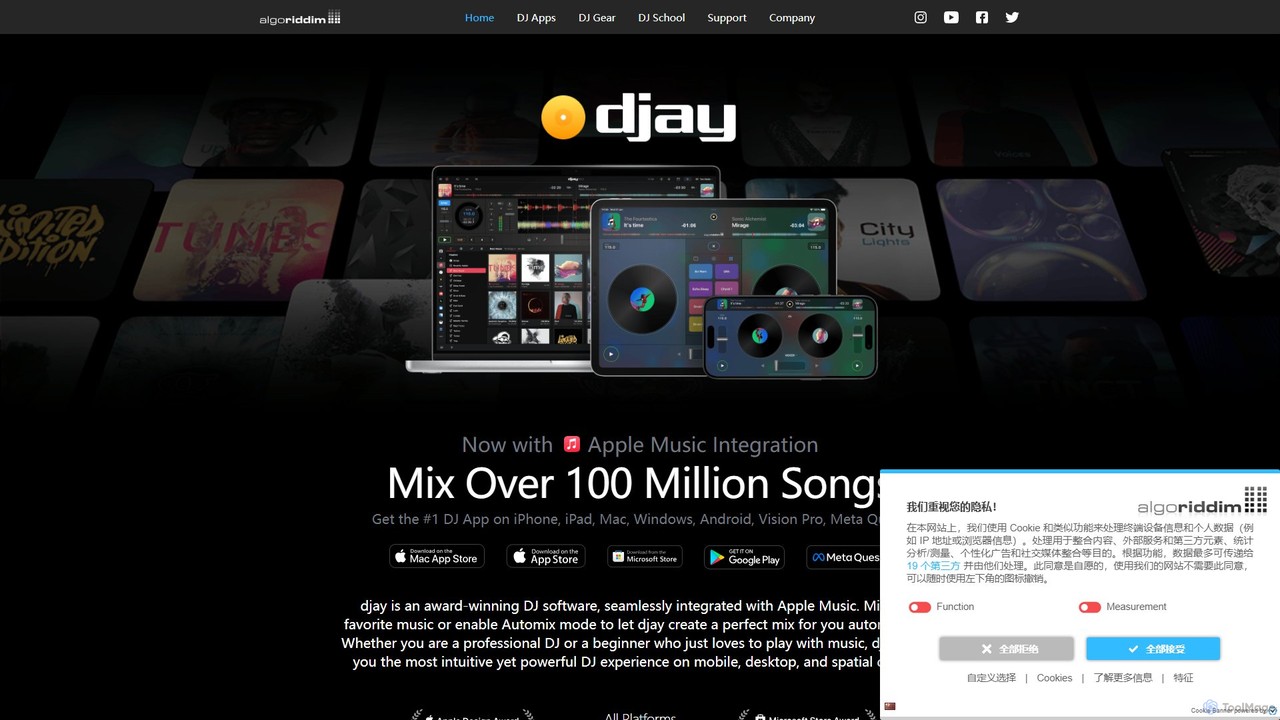
djay is an award-winning DJ software and app from Algoriddim, available on iOS, Android, Mac, Windows, and VR/AR platforms. It features the revolutionary Neural Mix™ AI for real-time track separation, seamless integration with streaming services like Apple Music, and a powerful interface for both beginners and professional DJs. Experience the future of DJing with intuitive controls and immersive spatial environments.

Audio Editing
Visits 524.4KFavorites 135Likes 136

About Virtual Reality

Virtual Reality (VR) tools are a class of software that use AI to create and manage immersive, computer-generated environments. These tools leverage advanced 3D rendering, spatial audio, and motion tracking to simulate a user's physical presence in a digital world. They are primarily used for developing interactive experiences in entertainment, training, and design, allowing users to engage with digital content in a highly realistic way. AI enhances these experiences by enabling dynamic NPC behavior, procedural content generation, and personalized user interactions.

Core Features

  • Immersive Environment Creation: Build detailed 3D worlds, from realistic architecture to fantastical landscapes.
  • Interactive Object Scripting: Define how users and objects behave and interact within the VR space.
  • AI-Powered Avatars & NPCs: Create responsive and intelligent non-player characters that enhance realism.
  • Multi-User Collaboration: Enable multiple users to interact simultaneously in the same shared virtual space.
  • Haptic Feedback Integration: Support for devices that provide physical sensations like vibration or resistance.

Use Cases

As a key part of the entertainment industry, VR tools are fundamental for game development and interactive storytelling. Beyond entertainment, they are crucial in professional training for creating simulations (e.g., surgical or flight training), architectural visualization for client walkthroughs, product design prototyping, and virtual tourism experiences.

How to Choose

When selecting a VR tool, consider the target hardware platform (e.g., Meta Quest, SteamVR). Evaluate the required level of graphical fidelity and the ease of use for your team's skill set. Assess its support for AI features like procedural generation and intelligent agents, and check its asset library, community support, and integration capabilities with other design software.

Virtual Reality use cases

1

Developing Immersive Training Simulations

Corporate trainers and safety officers use VR tools to create realistic simulations of hazardous work environments, such as operating heavy machinery or performing complex medical procedures. AI can introduce unpredictable scenarios, testing trainee responses in a safe, controlled setting. This approach reduces physical risk and training costs while improving skill retention through hands-on practice in a consequence-free environment.

2

Creating Interactive Architectural Visualizations

Architects and real estate developers use VR to build full-scale, walkable models of their projects. Clients can explore a building before construction begins, experiencing space, light, and materials firsthand. AI can be used to simulate different times of day, weather conditions, or even populate the space with AI-driven crowds to assess foot traffic and flow, providing deeper insights than traditional 2D blueprints or renders.

3

Prototyping and Designing Products in 3D

Product designers and engineers build and manipulate 3D prototypes of new products in a shared virtual space. This allows for rapid iteration on ergonomics, assembly processes, and aesthetics without the cost and time of creating physical models. Team members from different global locations can collaborate in real-time, holding and inspecting a virtual product as if they were in the same room, accelerating the design cycle significantly.

4

Building Next-Generation VR Games

Game developers leverage VR tools to create deeply immersive gaming experiences. They build expansive worlds, design intuitive interaction mechanics, and use AI to power intelligent enemies and dynamic non-player characters (NPCs). This results in games where players feel truly present and their actions have a meaningful impact on the virtual world, moving beyond traditional screen-based entertainment into a new realm of interactivity.

5

Crafting Virtual Art and Exhibitions

Digital artists and museum curators create virtual galleries and interactive art installations. This allows art to be experienced in new ways, free from physical constraints of space and gravity. Viewers can explore sculptures from all angles, step 'inside' paintings, or interact with dynamic, AI-driven art pieces that evolve over time. This medium makes art more accessible to a global audience and opens up new frontiers for creative expression.

6

Enhancing Remote Collaboration and Meetings

Businesses use VR platforms for virtual meetings and collaborative workspaces. Instead of a grid of faces on a screen, teams can gather in a shared virtual room as avatars. They can interact with 3D data models, use infinite whiteboards, and experience a stronger sense of presence and engagement. This is particularly effective for creative brainstorming, complex project reviews, and fostering team cohesion for remote-first companies.

Virtual Reality FAQ

What are AI-powered Virtual Reality (VR) tools?

AI-powered Virtual Reality (VR) tools are software applications used to create, manage, and experience immersive digital worlds. They go beyond simple 3D modeling by integrating artificial intelligence to enable features like realistic character behavior, procedural content generation, and adaptive environments that respond to user actions. These tools are the foundation for creating everything from complex video games to professional training simulations and collaborative virtual workspaces.

How do I choose the right VR development tool?

Choosing the right VR tool depends on your project's needs. Consider these key factors:

  • Target Platform: Ensure compatibility with the headsets you are targeting, such as Meta Quest, HTC Vive, or PlayStation VR.
  • Programming Skills: Some tools like Unity or Unreal Engine require coding knowledge, while others offer no-code or visual scripting interfaces for easier access.
  • Asset Store & Community: A robust asset store and an active developer community can significantly speed up development and provide crucial support.
  • AI Capabilities: Evaluate the built-in support for AI features if your project requires intelligent NPCs, adaptive environments, or procedural generation.
What is the difference between Virtual Reality (VR) and Augmented Reality (AR)?

The main difference is immersion. Virtual Reality (VR) replaces your real-world view with a completely computer-generated environment, fully immersing you in a digital world. It requires a headset that blocks out your surroundings. In contrast, Augmented Reality (AR) overlays digital information or objects onto your real-world view, enhancing your current reality rather than replacing it. AR is often experienced through smartphones or transparent smart glasses.

What are the key features of modern VR tools?

Modern VR tools typically include a suite of powerful features. Key among them are a 3D world editor for building environments, a physics engine for realistic object interactions, and support for spatial audio to create immersive soundscapes. They also provide robust integration with various VR hardware (headsets and controllers). Increasingly, they feature AI toolkits for creating intelligent agents and procedurally generating content, which adds depth and replayability to experiences.

Who can benefit from using Virtual Reality tools?

A wide range of professionals and creators can benefit from VR tools. In the entertainment sector, game developers and filmmakers use them to create immersive content. In education and training, instructors build realistic simulations for pilots, surgeons, and technicians. Architects and designers visualize projects for clients, while businesses use VR for remote collaboration, virtual product showcases, and data visualization, making it a versatile technology across many industries.