Lyvia
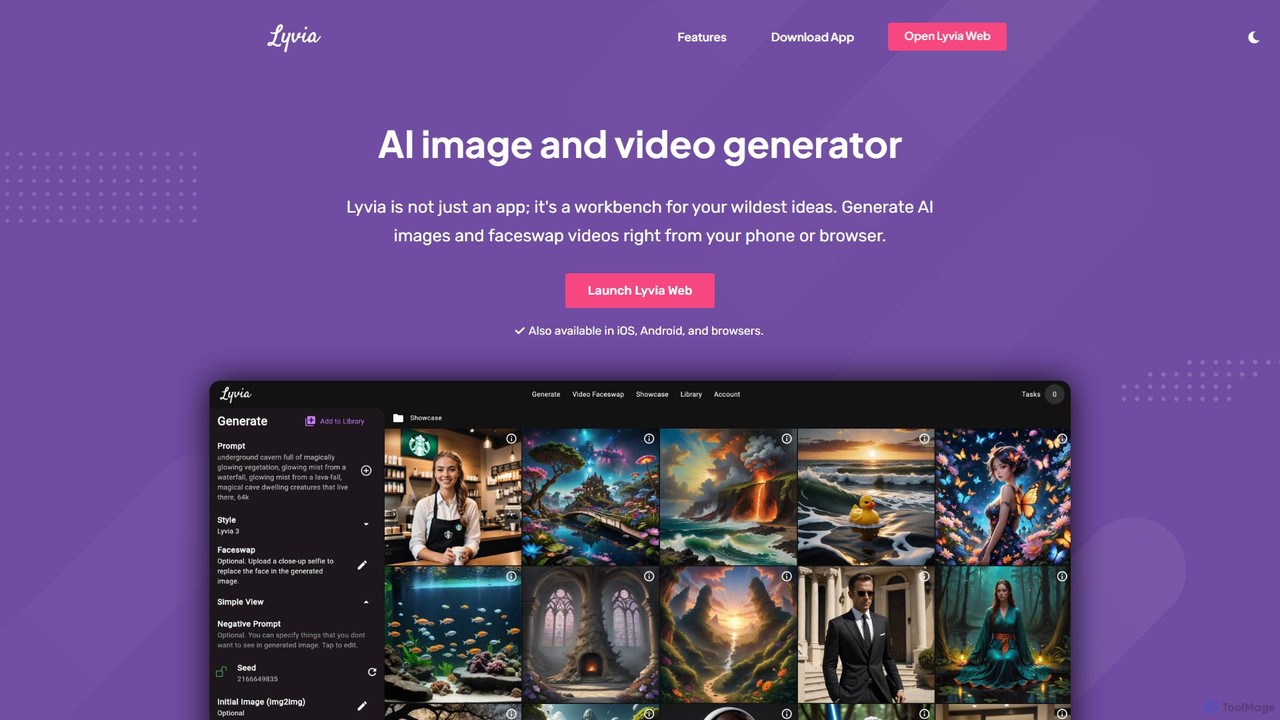
Lyvia is a versatile AI-powered creative suite for generating stunning images from text and creating realistic faceswap videos …
Lyvia is a versatile AI-powered creative suite for generating stunning images from text and creating realistic faceswap videos and images. Available on web, iOS, and Android, it provides an intuitive workbench for artists, content creators, and anyone looking to bring their wildest ideas to life with ease.
Deep Live Cam
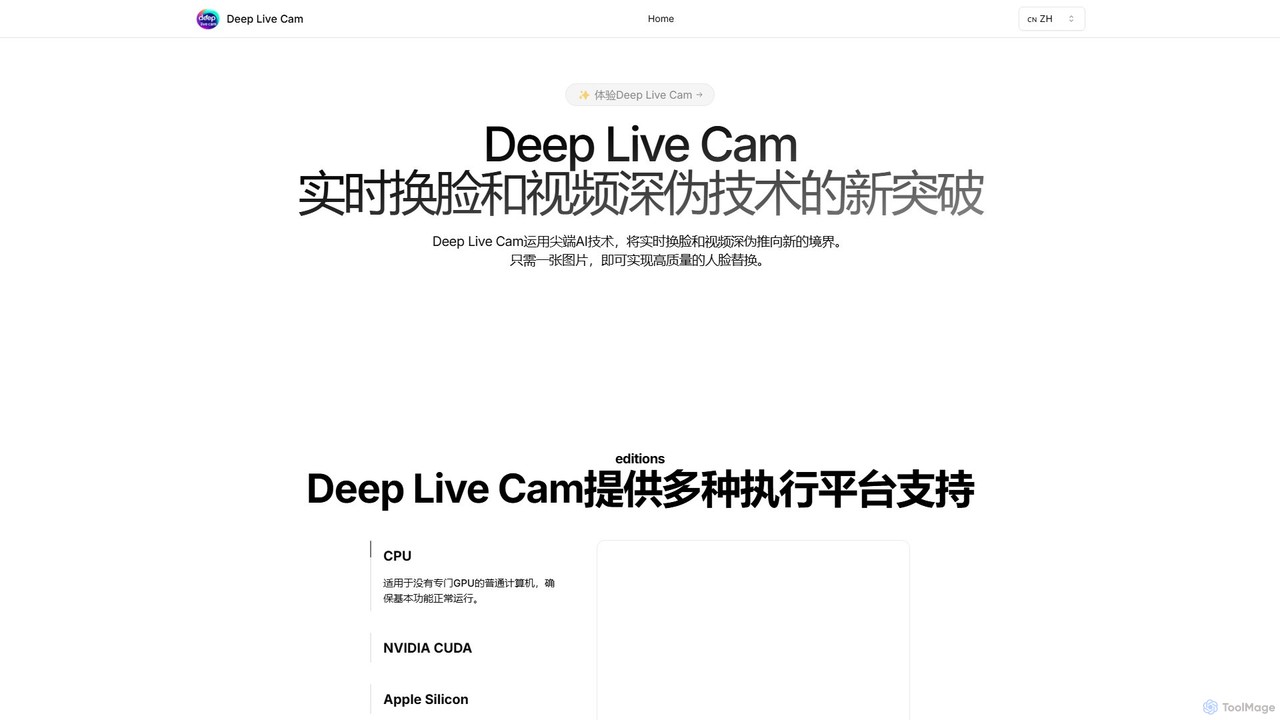
Deep Live Cam is a free, open-source AI tool for creating high-quality, real-time face swaps and video deepfakes. …
Deep Live Cam is a free, open-source AI tool for creating high-quality, real-time face swaps and video deepfakes. Using just a single image, it enables seamless face replacement in live video streams and pre-recorded footage. It supports multiple platforms, including CPU, NVIDIA CUDA, and Apple Silicon, making advanced AI video effects accessible to everyone.
About Deepfake
Deepfake tools are a class of AI software that synthesize, replace, or superimpose images and videos to create highly realistic but artificial media. These tools leverage deep learning models, particularly Generative Adversarial Networks (GANs), to analyze and reconstruct facial features, expressions, and voice patterns. Their primary application is creating convincing face swaps, animating static photos, or cloning voices. While part of the Fun Tools category due to their popularity in creating memes and parodies, Deepfake technology also has significant applications in film, art, and education.
Core Features
- Face Swapping: Seamlessly replaces a person's face in a video or image with another's while preserving expressions and movements.
- Voice Cloning: Generates a synthetic voice that mimics a target person's speech patterns, tone, and accent from a small audio sample.
- Photo Animation: Animates a still photograph, making the subject appear to talk, smile, or look around, often driven by a source video.
- Lip Syncing: Alters a video to make a person's lip movements match a different audio track, useful for dubbing or creating humorous content.
Use Cases
Deepfake tools are widely used by social media content creators for producing viral parodies and memes. In the film industry, they are employed for digital de-aging of actors or for completing scenes after an actor is unavailable. Educators and artists also use this technology to create engaging historical simulations or innovative digital art projects.
How to Choose
When selecting a Deepfake tool, first evaluate the realism and quality of the output, checking for visual artifacts. Consider the ease of use—some are simple mobile apps, while others are complex desktop software requiring technical skills. Assess the pricing model, which may be subscription-based or use a credit system per video. Finally, prioritize platforms with clear ethical guidelines and watermarking features to prevent misuse.

DeepfakeUse Cases
Creating Viral Social Media Parodies
A content creator aims to produce a humorous, shareable video for their social media channels. Using a Deepfake tool, they swap the face of a well-known celebrity onto the main character of a famous movie clip. The tool's AI analyzes the celebrity's facial features from source images and maps them onto the target video, preserving the original actor's expressions. The resulting short video is a high-quality, funny parody that quickly gains traction, increasing the creator's engagement and follower count.
Personalized Animated Greeting Cards
An individual wants to create a unique birthday message for a friend. Instead of a standard e-card, they use a photo animation Deepfake tool. They upload a funny photo of their friend and an audio recording of themselves singing 'Happy Birthday'. The tool animates the friend's face in the photo, synchronizing the lip movements to the recorded audio. This creates a highly personal and memorable animated greeting that is far more engaging than a static image or generic video.
Affordable Digital De-aging for Indie Films
An independent filmmaker needs to shoot a flashback scene requiring a lead actor to appear 20 years younger. Traditional CGI de-aging is beyond their budget. They turn to a professional Deepfake tool. By training the AI model on footage of the actor from their younger years, the tool can convincingly de-age the actor in the new footage. This allows the small production to achieve a high-quality visual effect that was previously only accessible to major studios, saving significant time and money.
Engaging Educational Content with Historical Figures
A history teacher wants to make lessons about famous scientists more interactive. They use a Deepfake tool that can animate portraits. The teacher finds a high-resolution portrait of Albert Einstein and writes a short script explaining the theory of relativity in simple terms. Using a voice cloning feature, they generate audio in a voice resembling Einstein's. The tool then animates the portrait, making 'Einstein' narrate his own theory. This brings history to life, capturing students' attention far more effectively than a textbook.
Creating an AI Avatar for Video Presentations
A marketing professional needs to create several training videos but lacks the time and resources for repeated filming sessions. They use a Deepfake tool to create a digital avatar of themselves. After an initial recording session to capture their likeness and voice, the tool can generate new videos from text scripts alone. The professional can now produce polished, consistent video presentations by simply typing the content, with their AI avatar delivering the lines perfectly every time. This streamlines the production process, saving hours of recording and editing.
Artistic Expression and Digital Art Creation
A digital artist is exploring themes of identity and time in their new project. They use a Deepfake face-swapping tool as their medium. The artist combines portraits from different historical eras, swapping faces between a 17th-century noblewoman and a 21st-century tech CEO. The AI seamlessly blends the features, creating a surreal and thought-provoking image that questions the nature of portraiture and identity across centuries. This use of Deepfake technology pushes creative boundaries, enabling a new form of digital collage and artistic commentary.