
Avatar Best in category 1 results Real Time Avatar AI Tool

Popular AI tools in the Real Time Avatar field of Avatar include Deep Live Cam, etc., helping you quickly improve efficiency.

Free
Deep Live Cam

Deep Live Cam

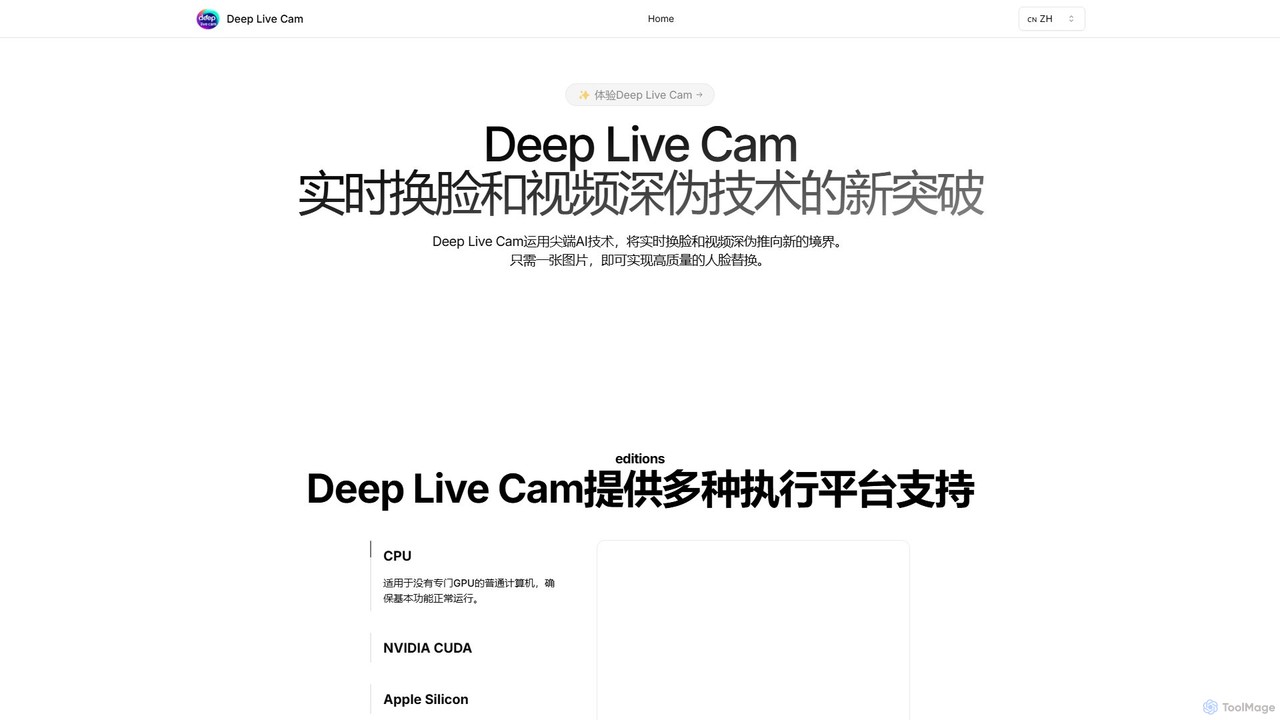
Deep Live Cam is a free, open-source AI tool for creating high-quality, real-time face swaps and video deepfakes. …

36.1K

About Real Time Avatar

Real Time Avatar tools are AI-powered solutions that generate and animate virtual characters instantly, often mirroring user input. These tools leverage advanced AI for facial tracking, voice synthesis, and motion capture, enabling dynamic and interactive digital presence. They provide a seamless way to embody a digital persona for various live applications, enhancing engagement and immersion.

Core Features

  • Real-time Facial & Voice Sync: Captures user facial expressions and voice to drive the avatar's expressions and lip-sync in real time.
  • Dynamic Body & Gesture Tracking: Maps user body movements and hand gestures to the virtual avatar via cameras or sensors.
  • Multi-platform Integration: Supports seamless integration into live streaming platforms, video conferencing tools, and virtual event environments.
  • Personalized Customization: Allows users to customize the avatar's appearance, clothing, and style to match their brand or preference.
  • Interactive Engagement: Enables direct interaction with audiences through the avatar, responding to comments or questions dynamically.

Applicable Scenarios

Real Time Avatar tools are invaluable for professionals and organizations seeking to enhance their digital interactions. They are widely adopted in live broadcasting for virtual presenters, in online education for interactive lecturers, and in customer service for intelligent virtual assistants. These tools also find significant use in virtual meetings and immersive entertainment experiences.

How to Choose

When selecting a Real Time Avatar tool, consider its real-time performance and latency, the breadth of customization options available, and its compatibility with your existing platforms (e.g., OBS, Zoom). Evaluate the accuracy of facial and body tracking, the quality of voice synthesis, and the overall ease of use for setup and operation. Pricing models and the availability of technical support are also crucial factors.

Real Time AvatarUse Cases

1

Virtual Presenter for Live Streaming

Content creators or brands can use a Real Time Avatar as a virtual presenter for live streams on platforms like Twitch or YouTube. By tracking their own facial expressions and voice, they can animate a digital persona, maintaining anonymity while engaging with their audience. This allows for unique branding, consistent on-screen presence, and the ability to experiment with different characters without needing a physical setup, potentially increasing viewer retention and brand recognition.

2

Interactive Virtual Customer Service Agent

Businesses can deploy Real Time Avatars as intelligent customer service agents on their websites or in virtual kiosks. These avatars can greet customers, answer frequently asked questions, and guide them through services using natural language processing and real-time animation. This provides a more engaging and human-like interaction than traditional chatbots, improving customer satisfaction and reducing the workload on human support staff by handling routine inquiries efficiently.

3

Engaging Online Education & Training

Educators and trainers can utilize Real Time Avatars to deliver engaging online lessons or corporate training modules. By controlling an avatar with their own voice and expressions, they can create a more dynamic and visually appealing learning experience. This can help maintain student attention, simplify complex concepts through visual storytelling, and allow instructors to teach without revealing their personal appearance, offering privacy and flexibility in content creation.

4

Enhanced Virtual Meetings & Collaboration

Teams and remote workers can use Real Time Avatars in virtual meeting platforms to represent themselves. Instead of relying solely on static profile pictures or turning off cameras, participants can use an animated avatar that mirrors their expressions and speech. This fosters a more engaging and less fatiguing meeting environment, especially for long sessions, while still respecting privacy and reducing bandwidth usage compared to full video feeds.

5

Interactive Entertainment & Gaming

Game developers and entertainment companies can integrate Real Time Avatars into their applications to create more immersive and personalized experiences. Players could use their own facial movements to control in-game characters' expressions, or virtual concert attendees could embody unique avatars that react to the music and other participants. This deepens user engagement and offers novel forms of self-expression within digital worlds, pushing the boundaries of interactive entertainment.

6

Virtual Event Hosting & Moderation

Organizers of virtual conferences, webinars, or product launches can leverage Real Time Avatars to host or moderate events. A virtual host can deliver presentations, introduce speakers, and facilitate Q&A sessions with a dynamic and engaging presence. This adds a layer of professionalism and innovation to online events, making them more memorable and accessible, especially for global audiences where a human presenter might face time zone or language barriers.

Real Time AvatarFrequently Asked Questions