ToolMage
Sign in

Best 1 Game Creation AI tools for Game Development

Popular Game Creation AI tools in Game Development include Veltos, helping you work more efficiently.

Veltos
Freemium

Veltos

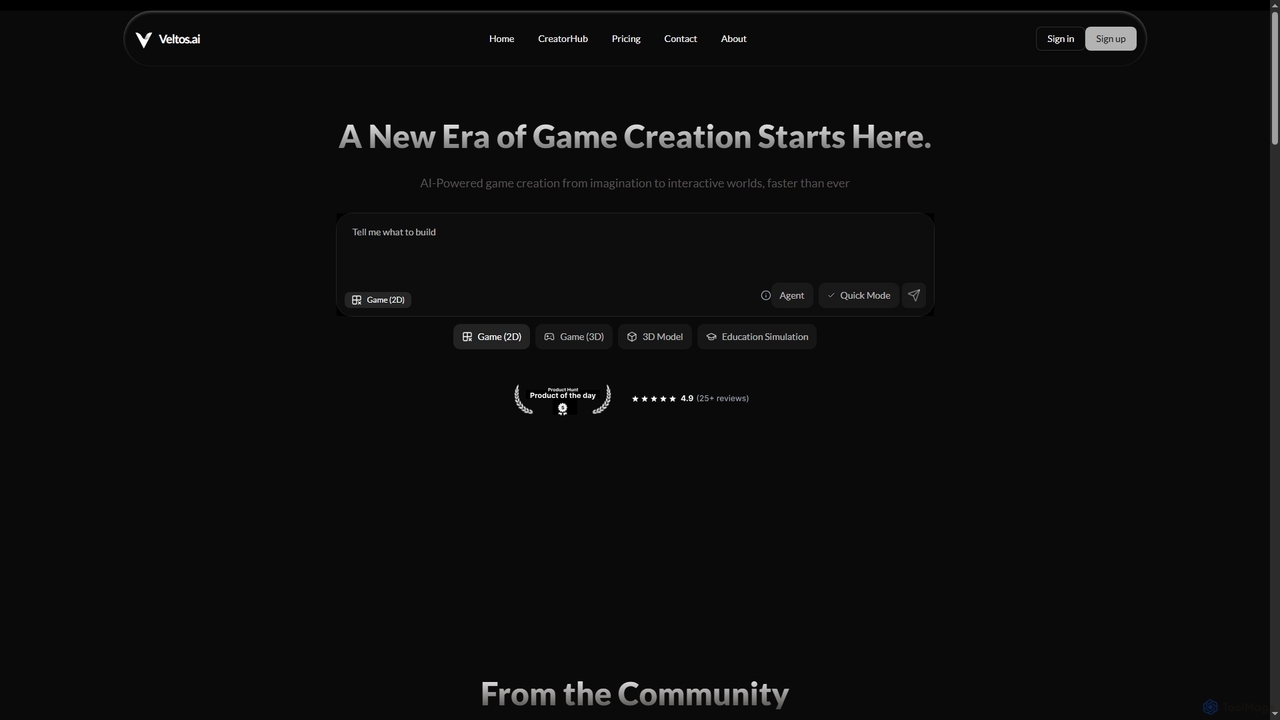
Veltos is an AI-powered platform that transforms simple text prompts into fully playable 2D and 3D games, as well as interactive 3D worlds and simulations. It empowers creators of all skill levels to design and publish games rapidly without writing a single line of code, democratizing game development and fostering a new era of creative play.

Prompt Engineering
Visits 7.9KFavorites 131Likes 146

About Game Creation

Game Creation tools leverage artificial intelligence to automate and enhance various stages of game development, focusing specifically on content generation and design. These AI-powered platforms utilize machine learning, procedural generation, and natural language processing to assist developers in crafting immersive game worlds. They accelerate the creative process, reduce manual effort, and enable the rapid prototyping of game concepts, making advanced game design more accessible.

Core Features

  • AI-Powered Asset Generation: Automatically creates 2D sprites, 3D models, textures, and sound effects based on textual descriptions or reference images.
  • Procedural Level Design: Generates diverse and complex game levels, maps, or environments algorithmically, ensuring replayability and reducing manual design time.
  • Intelligent NPC Behavior: Designs sophisticated non-player character (NPC) AI, enabling realistic interactions, decision-making, and adaptive gameplay experiences.
  • Automated Narrative & Dialogue: Assists in crafting branching storylines, character backstories, and dynamic dialogue systems using natural language processing.
  • Code & Scripting Assistance: Generates boilerplate code, suggests optimizations, and helps debug game logic, streamlining the programming phase.

Use Cases

These tools are invaluable for indie developers, large game studios, and content creators aiming to streamline their workflow. They are used for rapid prototyping of new game ideas, generating vast libraries of unique game assets, and creating dynamic, evolving game worlds that respond to player actions. From concept art to final polish, AI game creation tools enhance efficiency and creative output across the entire development cycle.

How to Choose

When selecting an AI game creation tool, consider its compatibility with your target game engine (e.g., Unity, Unreal Engine), the specific types of assets or content it can generate, and the level of customization offered. Evaluate its ease of integration into your existing development pipeline, the pricing model, and the community support available. Prioritize tools that align with your project's scope and your team's technical expertise.

Game Creation use cases

1

Accelerating Game Asset Production

Game artists and 3D modelers can leverage AI game creation tools to rapidly generate a wide array of game assets, including character models, environmental props, textures, and sound effects. By inputting simple text prompts or reference images, artists can obtain multiple variations in minutes, significantly reducing the manual effort and time typically required for asset creation. This allows for faster iteration cycles and a richer visual and auditory experience in games, freeing artists to focus on refining unique elements.

2

Designing Dynamic Game Levels

Level designers can utilize AI for procedural generation of game environments, ensuring endless replayability and diverse experiences. These tools can automatically create intricate dungeon layouts, sprawling open-world maps, or challenging puzzle rooms based on predefined rules or desired aesthetics. This capability is particularly beneficial for roguelikes, sandbox games, or titles requiring vast, varied landscapes, allowing designers to focus on core gameplay mechanics rather than repetitive map building.

3

Crafting Engaging NPC Behaviors

Game developers can employ AI to design more intelligent and reactive Non-Player Characters (NPCs). Instead of scripting every possible interaction, AI tools can generate complex decision-making trees and adaptive behaviors for NPCs, making them respond realistically to player actions and environmental changes. This enhances immersion and creates more challenging or believable adversaries and companions, enriching the player's experience without extensive manual coding for each character.

4

Streamlining Game Narrative Development

Writers and narrative designers can use AI game creation tools to assist in generating branching storylines, character backstories, and dynamic dialogue options. By providing core plot points or character traits, the AI can suggest multiple narrative paths, dialogue choices, and even entire quest lines. This accelerates the creative writing process, helps overcome writer's block, and ensures consistency across complex narratives, allowing for richer, more interactive storytelling.

5

Rapid Prototyping of Game Concepts

Indie developers and small teams can significantly speed up the prototyping phase using AI game creation tools. These tools allow for the quick assembly of basic game mechanics, temporary assets, and preliminary level designs from simple inputs. Within hours, a playable concept can be generated, enabling developers to test core gameplay loops and iterate on ideas much faster than traditional methods. This reduces development costs and helps validate game ideas early in the production cycle.

6

Automating Game Code Generation

Programmers can leverage AI to generate boilerplate code, optimize existing scripts, and even suggest solutions for complex game logic. By describing desired functionalities, AI tools can produce snippets of code for character movement, inventory systems, or combat mechanics, compatible with popular game engines. This reduces repetitive coding tasks, minimizes errors, and allows developers to focus on unique gameplay features, accelerating the overall coding process and improving code quality.

Game Creation FAQ

What are AI Game Creation tools?

AI Game Creation tools are specialized software applications that utilize artificial intelligence to automate, assist, and enhance various aspects of video game development. They leverage technologies like machine learning, procedural generation, and natural language processing to generate game assets, design levels, create NPC behaviors, and even assist with narrative development. These tools aim to streamline the creative process, reduce manual labor, and enable developers to build more complex and dynamic games efficiently.

How do AI tools assist in game asset creation?

AI tools significantly accelerate game asset creation by generating 2D sprites, 3D models, textures, animations, and sound effects. Users can input text descriptions, sketches, or reference images, and the AI will produce multiple variations of assets. This process reduces the need for extensive manual modeling or drawing, allowing artists to quickly populate game worlds with unique content, iterate on designs, and maintain a consistent art style across diverse assets, saving considerable time and resources.

What are the benefits of using AI for game level design?

Using AI for game level design offers several key benefits. Firstly, it enables procedural generation of vast and diverse levels, ensuring high replayability and reducing the manual effort required for complex map creation. Secondly, AI can optimize level layouts for balance, challenge, and player flow, identifying potential issues before extensive testing. Thirdly, it allows for rapid prototyping of level concepts, enabling designers to quickly test and iterate on different ideas, ultimately leading to more engaging and well-structured game environments.

How do AI game creation tools differ from traditional game development software?

Traditional game development software (like Unity or Unreal Engine) provides frameworks and editors for manual asset creation, coding, and level design. AI game creation tools, while often integrating with these traditional platforms, introduce automation and generative capabilities. They don't replace the core engines but augment them by using AI algorithms to create content (assets, levels, narratives) or assist with tasks (code generation, NPC logic) that would otherwise require extensive manual input, thereby accelerating and enhancing the development process.

What should I consider when choosing an AI game creation tool?

When selecting an AI game creation tool, consider its compatibility with your existing game engine and development pipeline. Evaluate the specific types of content it excels at generating (e.g., 3D models, levels, narratives) and the quality of its output. Look for tools that offer sufficient customization options, a user-friendly interface, and robust integration capabilities. Additionally, assess the pricing model, the level of community support, and the learning curve to ensure it aligns with your project's needs and your team's expertise.