PrometheanAI
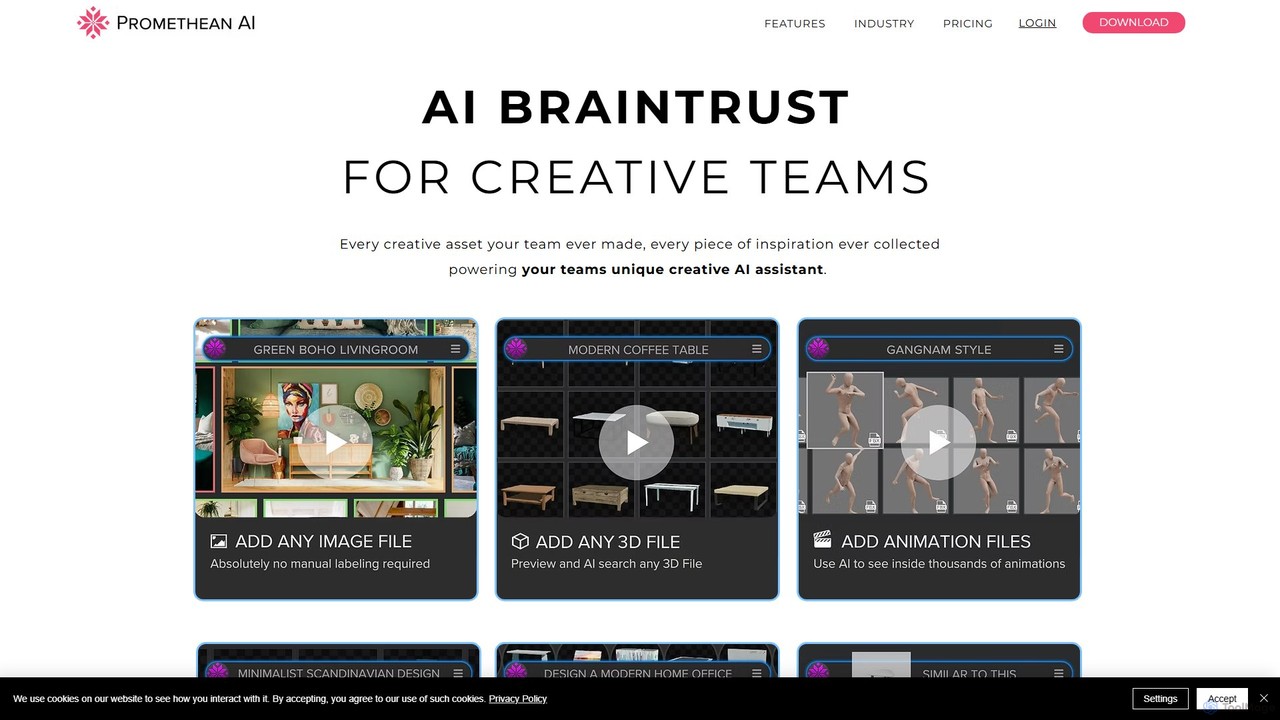
PrometheanAI is an enterprise-level AI assistant for creative teams, designed to accelerate digital art production and world-building. It …
PrometheanAI is an enterprise-level AI assistant for creative teams, designed to accelerate digital art production and world-building. It integrates into existing workflows and editors, using a team's own assets to automate mundane tasks and enhance creativity without requiring cloud uploads.
About World Building
AI World Building tools are specialized platforms for creating, managing, and visualizing the intricate details of fictional universes, primarily within game development. These tools leverage generative AI and structured databases to help creators design everything from maps and timelines to characters and complex lore. They serve as a dynamic, interconnected knowledge base, ensuring narrative consistency and sparking creative inspiration. Unlike static documents, these platforms provide interactive relationship mapping and procedural content generation, streamlining the creation of deep, immersive worlds.
Core Features
- Interactive Map Generation: Procedurally create and customize geographical, political, or city maps with linkable points of interest.
- Lore & Knowledge Management: Function as a centralized wiki to store, cross-reference, and organize all world elements like magic systems, species, and history.
- Character & Faction Creator: Generate detailed character profiles, backstories, family trees, and organizational hierarchies.
- Timeline Visualization: Visually track historical events, plot points, and character arcs to maintain chronological consistency.
- Relationship Mapping: Automatically create visual graphs that show connections between characters, locations, events, and items.
Use Cases
These tools are essential for game narrative designers, indie developers, and level designers during the pre-production and development phases. They are also widely used by novelists, screenwriters, and tabletop RPG creators to build and manage their settings. Any project requiring a consistent and detailed fictional world benefits from a dedicated world-building platform.
How to Choose
When selecting a tool, consider the scope of its features—whether it's an all-in-one solution or specialized for maps or characters. Evaluate the depth of AI integration for content generation versus simple organization. For teams, collaboration features are crucial. Finally, check for robust export options to integrate the world data with game engines or other software.

World BuildingUse Cases
Designing a Cohesive RPG World
A narrative designer for an indie RPG studio needs to establish a consistent and deep world. Using a world-building tool, they generate a continent map, define the core principles of its magic system, and create timelines for major historical conflicts. They link character profiles to their places of origin on the map and track their lineage. This creates a centralized 'source of truth' that the art and quest design teams can reference, ensuring that environmental storytelling, character dialogues, and item descriptions all align with the established lore, preventing plot holes.
Generating Factions and Political Intrigue
A writer for a sci-fi strategy game needs to create several distinct factions with complex relationships. They use an AI world-building tool to generate foundational concepts for each faction, including their government type, societal values, and key leaders. The tool's relationship mapper is then used to visualize alliances, rivalries, and trade agreements. This visual aid helps the writer craft compelling storylines centered on political espionage and shifting allegiances, providing a rich backdrop for the game's strategic gameplay.
Rapid Prototyping for Game Jams
A solo developer participating in a 48-hour game jam needs a compelling setting quickly. Instead of spending hours on brainstorming, they use a world-building tool to generate a core concept, a simple map, and a protagonist's backstory based on a few keywords. This allows them to establish a narrative framework in under an hour, freeing up critical time to focus on coding gameplay mechanics and creating art assets. The tool acts as a creative accelerator, ensuring the final prototype has a coherent theme and story.
Managing Lore for a Live Service Game
The narrative team for a large MMO needs to maintain consistency across years of content updates. They use a world-building tool as their central, canonical wiki. Every new character, location, or historical event introduced in an expansion is documented and linked to existing lore. This prevents continuity errors and allows new writers to quickly get up to speed on the established universe. The timeline feature is particularly useful for tracking the evolving story and ensuring future content builds logically on past events.
Creating Interactive Maps for TTRPGs
A Dungeon Master (DM) preparing a new tabletop RPG campaign uses a world-building tool to design the campaign world. They generate a continent, then zoom in to create detailed regional and city maps. On these maps, they place interactive pins for key locations like dungeons, towns, and quest-givers. Each pin links directly to a wiki entry containing descriptions, NPCs, and potential encounters. During sessions, the DM can share the player-facing map, revealing locations as they are discovered, creating a dynamic and engaging visual aid for the campaign.
Visualizing a Novel's Character Web
A novelist writing an epic fantasy series with a large cast of characters uses a world-building tool to keep track of everyone. They create a profile for each character, detailing their motivations, allegiances, and physical descriptions. The key feature they use is the relationship mapper, which creates a visual web of connections—family ties, political alliances, secret rivalries. This graph helps the author spot potential plot developments and ensures character interactions remain consistent across multiple books, preventing them from forgetting minor but crucial relationships.