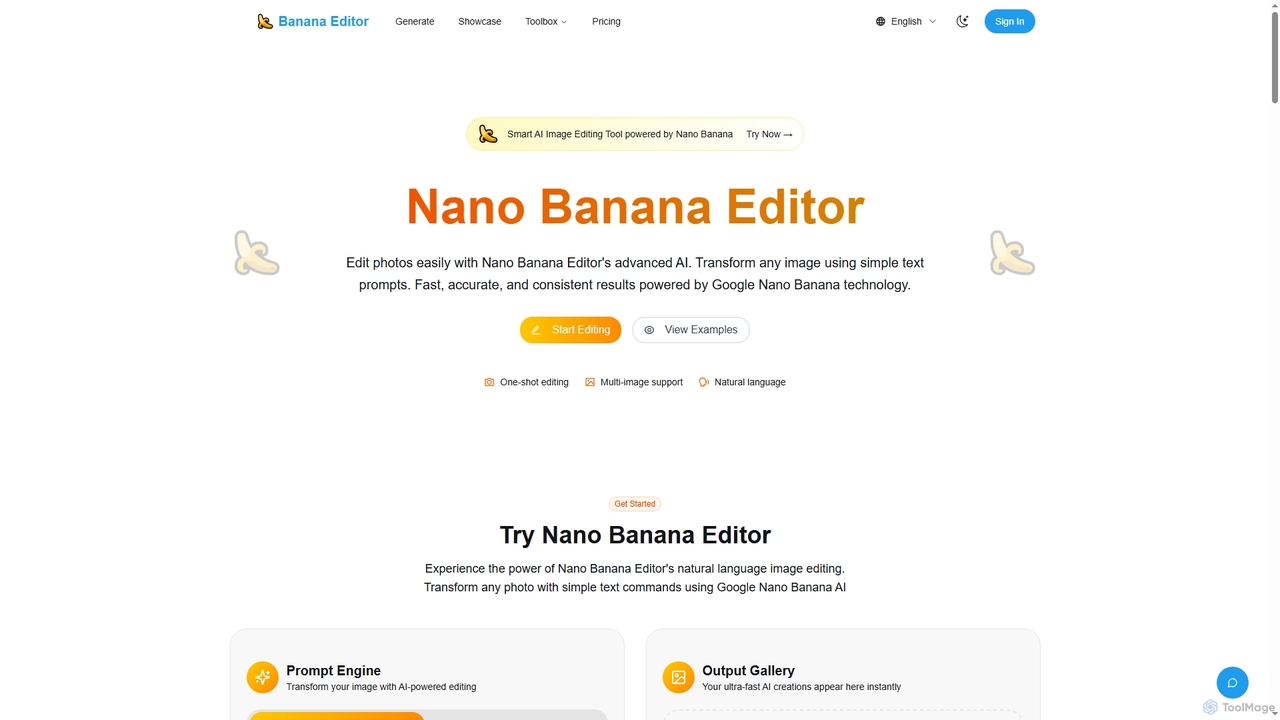
Banana Editor
Banana Editor is an advanced AI image editing tool powered by Google Nano Banana technology. It allows users …
Banana Editor is an advanced AI image editing tool powered by Google Nano Banana technology. It allows users to transform and enhance photos using simple natural language text prompts, ensuring fast, accurate, and consistent results for various creative and commercial applications.
About Ai Art Generation
AI Art Generation tools are a category of AI-powered software that automatically create unique visual content from text prompts, images, or other inputs. These tools leverage advanced generative AI models, such as diffusion models, to interpret user commands and synthesize novel artworks, illustrations, and designs. They empower artists, designers, and creators to explore new artistic frontiers, accelerate creative workflows, and generate diverse visual assets with unprecedented speed and flexibility. This sub-category within graphic design focuses specifically on the creation of original imagery rather than just editing existing ones.
Core Features
- Text-to-Image Generation: Transforms descriptive text prompts into detailed visual artworks.
- Image-to-Image Transformation: Modifies existing images based on new prompts or style references.
- Style Transfer: Applies the artistic style of one image to the content of another.
- Inpainting & Outpainting: Intelligently fills in missing parts of an image or extends its boundaries.
- Prompt Engineering: Offers advanced controls and parameters to fine-tune generation results.
Use Cases
AI art generation tools are widely adopted across various creative industries. Digital artists use them for rapid concept art development, generating multiple visual ideas for characters, environments, or products. Marketing professionals leverage these tools to create unique social media graphics, ad creatives, and campaign visuals that stand out. Game developers utilize AI art generators to produce diverse textures, assets, and background elements, significantly speeding up the asset creation pipeline.
How to Choose
When selecting an AI art generation tool, consider the quality and diversity of its output models, ensuring they align with your desired artistic styles and fidelity. Evaluate the user interface and ease of prompt engineering, as a more intuitive experience can greatly enhance workflow. Assess the available customization options, such as control over composition and specific elements. Finally, compare pricing models, including subscription costs and credit systems, to find a solution that fits your budget and usage frequency.
Ai Art GenerationUse Cases
Generating Concept Art for Game Development
Game artists and designers can input textual descriptions of characters, creatures, or environments to rapidly generate hundreds of unique concept art variations. This accelerates the initial ideation phase, allowing teams to quickly visualize and iterate on different artistic directions before committing to detailed production, saving significant time and resources in the pre-production stage.
Creating Unique Marketing Campaign Visuals
Marketing teams and content creators can use AI art generators to produce eye-catching and original images for social media posts, banner ads, and email campaigns. By simply describing the desired theme, mood, and elements, they can generate bespoke visuals that resonate with target audiences, avoiding stock photo clichés and ensuring brand uniqueness across various platforms.
Designing Personalized Avatars and Digital Collectibles
Individual users and digital artists can leverage AI art generation to create highly personalized avatars for online profiles or unique digital collectibles (NFTs). By providing specific traits, styles, and themes, the AI can generate distinct visual representations, offering a creative and scalable way to produce unique digital identities or limited-edition art pieces for various platforms.
Visualizing Architectural and Interior Design Concepts
Architects and interior designers can input basic sketches or textual descriptions of spaces, materials, and desired aesthetics to quickly generate photorealistic or stylized renderings. This allows clients to visualize design concepts in various styles and configurations early in the project, facilitating feedback and accelerating the design approval process without extensive manual rendering work.
Illustrating Children's Books and Educational Materials
Authors and educators can utilize AI art generators to create custom illustrations for children's books, educational worksheets, or storytelling projects. By describing characters, scenes, and specific actions, they can generate consistent visual narratives that engage young audiences, providing a cost-effective and efficient alternative to commissioning traditional illustrators for every image.
Experimenting with Artistic Styles and Techniques
Fine artists and hobbyists can use AI art generation tools as a creative partner to explore new artistic styles, blend different aesthetics, or generate inspiration for their next masterpiece. By experimenting with various prompts and parameters, they can discover unexpected visual combinations and push the boundaries of their creative expression, fostering innovation and personal artistic growth.