
Freemium
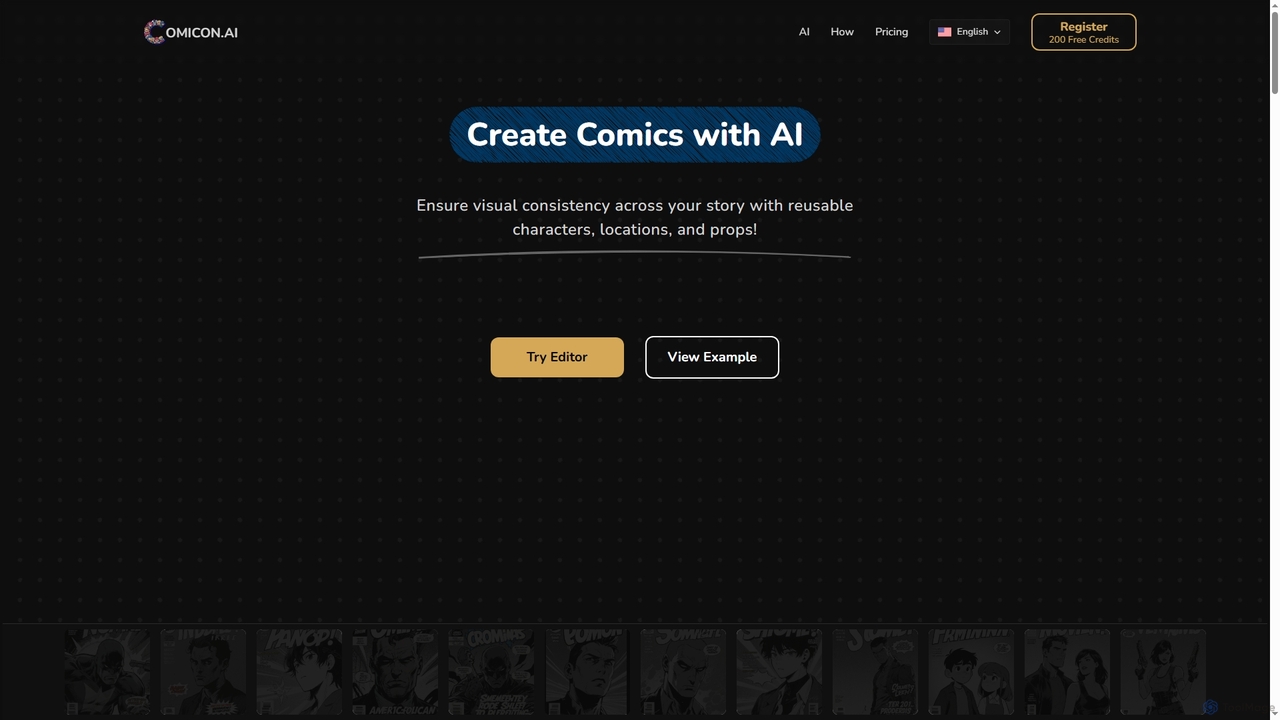
Popular Character Design AI tools in Image Generation include Comicon, helping you work more efficiently.
Character Design AI tools are specialized platforms that leverage artificial intelligence to create, customize, and animate digital characters for various media. These tools utilize advanced generative AI models, often incorporating 3D modeling and rigging technologies, to produce consistent and expressive character assets. They empower artists, developers, and content creators to rapidly iterate on character concepts, maintain stylistic coherence, and streamline the production pipeline for games, animation, virtual reality, and marketing.
Character Design AI tools are invaluable for accelerating creative workflows in several industries. Game developers use them to quickly generate a wide array of non-player characters (NPCs) or explore protagonist designs. Animation studios leverage these tools for rapid character concepting and creating consistent character sheets. Marketing teams utilize them to develop unique brand mascots or virtual influencers for campaigns, ensuring a distinct visual identity.
When selecting a Character Design AI tool, consider its stylistic versatility and the depth of customization options available. Evaluate its ability to generate 3D models and export them in formats compatible with your existing software (e.g., Blender, Unity, Unreal Engine). Assess the intuitiveness of its pose and expression controls, and compare pricing models, including subscription tiers and credit-based systems, to match your project budget and usage frequency.
Game artists input descriptions of desired characters (e.g., "futuristic cyborg warrior," "fantasy elf archer") and generate multiple visual concepts. This allows for rapid iteration on designs, exploring various styles, outfits, and features before committing to detailed 3D modeling, significantly speeding up the pre-production phase.
Animators and storytellers use AI tools to create a consistent cast of characters for a new series. By defining core traits and styles, they can generate main characters, supporting roles, and background figures that maintain a cohesive visual identity across all episodes, streamlining the character design pipeline.
Marketing agencies and brands utilize these tools to design and customize virtual influencers. They can fine-tune every aspect, from facial features and hairstyles to clothing and accessories, ensuring the virtual persona perfectly aligns with brand values and target audience aesthetics, creating a unique digital ambassador.
Businesses employ AI character design to develop distinctive mascots for advertising campaigns or branding. By generating various character styles and poses, they can quickly find a mascot that embodies their brand's personality, making marketing materials more engaging and memorable across different platforms.
Developers of interactive narratives or educational apps use AI to create diverse avatars for users or story characters. This enables a rich variety of visual options without extensive manual design, allowing users to personalize their experience or encounter a wide range of unique personalities within the narrative.
Designers populate virtual and augmented reality environments with realistic or stylized characters. AI tools can generate numerous unique characters with appropriate attire and animations, enhancing immersion and interactivity in virtual worlds, training simulations, or augmented reality games, reducing manual asset creation time.
AI Character Design tools are specialized software applications that use artificial intelligence to assist in the creation, customization, and animation of digital characters. Unlike general image generators, they focus specifically on human, humanoid, or creature forms, offering features for consistent character generation, detailed customization, and often 3D model export for use in games, films, and virtual experiences.
To choose the best AI Character Design tool, consider your specific needs: evaluate its ability to generate diverse styles (realistic, stylized, anime), the depth of customization for features and clothing, and its animation capabilities. Check for compatibility with your existing software (e.g., Unity, Unreal Engine, Blender) and the quality of its 3D model exports. Also, compare pricing models and community support for learning and troubleshooting.
While both fall under AI Image Generation, AI Character Design tools are highly specialized. General AI Image Generation can create any image from text, but often struggles with character consistency across multiple poses or scenes. Character Design tools, however, are specifically trained and optimized to generate consistent characters, manage their expressions and poses, and often provide features like 3D model generation and rigging, which are crucial for character-centric projects.
AI Character Design tools typically offer features such as text-to-character generation, image-to-character conversion, detailed facial and body customization, clothing and accessory design, and pose/expression control. Many also include 3D model generation, automatic rigging for animation, and style transfer capabilities to maintain visual consistency across a character set.
Game developers, animators, concept artists, virtual reality creators, and marketing professionals benefit most from AI Character Design tools. They are ideal for individuals and studios needing to rapidly prototype character ideas, generate large numbers of unique NPCs, create consistent character assets for series, or design virtual influencers and brand mascots efficiently, significantly reducing manual design time and costs.