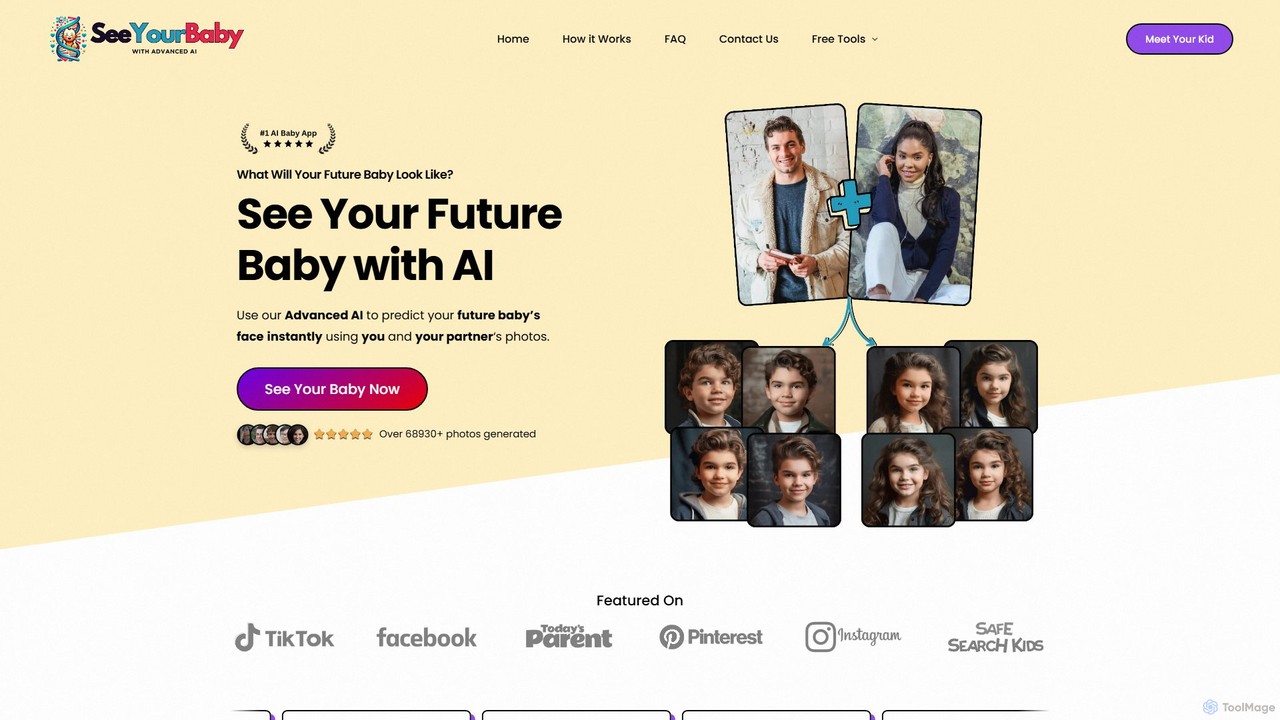
Face Generation tools are AI-powered applications that create realistic or stylized human faces from scratch. Leveraging advanced deep learning models like Generative Adversarial Networks (GANs) and Diffusion Models, these tools synthesize unique facial images based on specified parameters, offering unparalleled control over facial features, expressions, and demographics. They are invaluable for diverse creative, research, and commercial applications, providing a specialized capability within the broader field of Image Generation by focusing exclusively on human visages.
Core Features
- Realistic Face Synthesis: Generate highly convincing, photorealistic human faces that do not exist in reality, complete with intricate details like skin texture, hair, and subtle expressions.
- Parameter Control: Precisely adjust a wide range of attributes such as age, gender, ethnicity, hair color, eye color, facial expression, and even accessories like glasses or hats, allowing for highly customized outputs.
- Style Transfer: Apply specific artistic styles, aesthetic filters, or even transfer the style from a reference image to generated faces, enabling unique visual effects for creative projects.
- Facial Feature Manipulation: Independently modify individual facial components like the shape of eyes, nose, mouth, or jawline, offering granular control over the final appearance.
- Batch Generation: Efficiently create multiple unique faces simultaneously, which is ideal for populating large datasets, generating diverse character lineups, or producing varied marketing visuals.
Use Cases
These specialized tools are widely adopted by content creators for rapidly generating unique avatars, diverse character concepts for games, animations, or virtual reality environments, significantly accelerating the design process. Marketing professionals utilize them to produce a vast array of model faces for advertising campaigns, product showcases, or social media content, effectively avoiding costly photoshoots and ensuring diverse representation. Furthermore, researchers and AI engineers employ face generation to create large-scale, synthetic datasets for training and testing facial recognition systems, expression analysis models, or studying human perception, addressing critical data privacy and diversity challenges.
How to Choose
When selecting a face generation tool, several key factors should guide your decision. First, critically evaluate the realism and quality of the generated output, paying close attention to the naturalness of skin tones, hair, and subtle facial expressions. Second, assess the precision and breadth of parameter control, ensuring it allows for granular customization of attributes like age, gender, ethnicity, and emotion to meet your specific project needs. Third, consider the generation speed and scalability, especially if you require producing a large volume of faces efficiently. Finally, investigate integration capabilities with your existing creative software or the availability of an API for seamless workflow incorporation, alongside understanding the tool's licensing and commercial use policies.