Image Generation Best in category 1 results Photorealistic AI Tool

Popular AI tools in the Photorealistic field of Image Generation include MAI-Image-1, etc., helping you quickly improve efficiency.

MAI-Image-1

MAI-Image-1

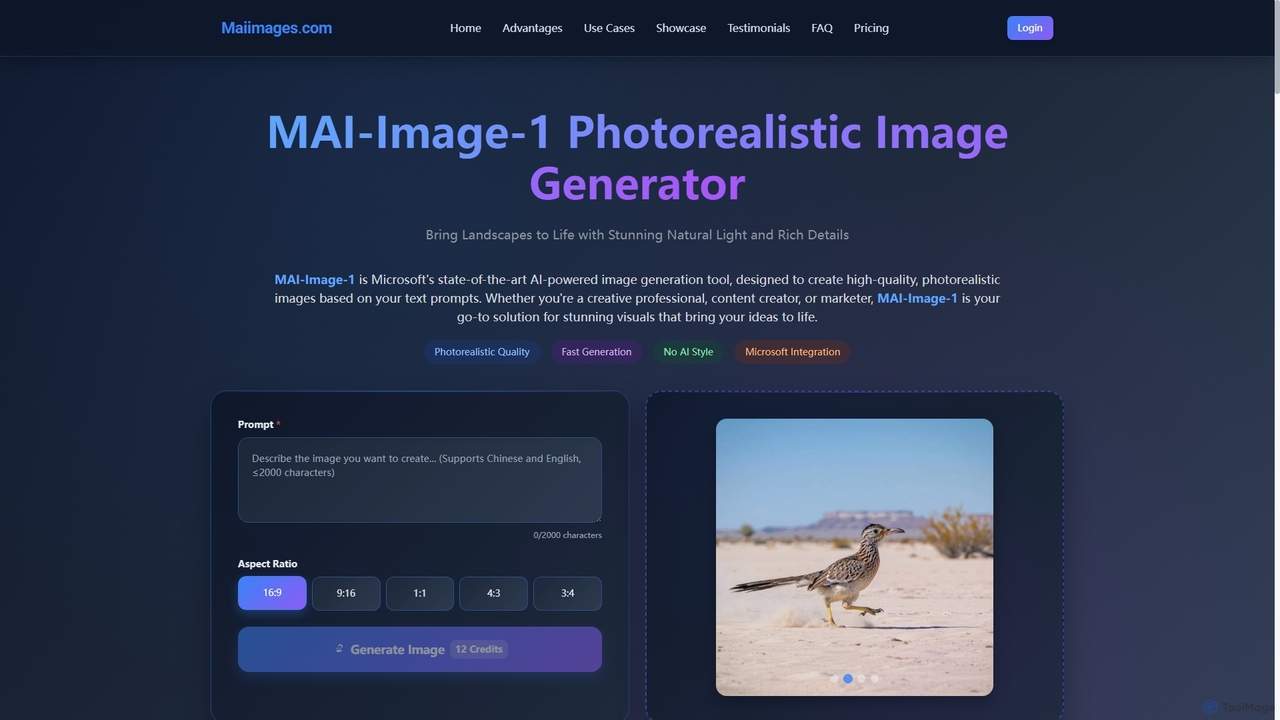
MAI-Image-1 is Microsoft's cutting-edge AI image generator, transforming text prompts into stunning, photorealistic visuals. Designed for professionals, it …

3.8K

About Photorealistic

Photorealistic AI generators are a specialized class of image generation tools designed to create images with a level of detail and realism indistinguishable from actual photographs. These tools leverage advanced deep learning models, such as Generative Adversarial Networks (GANs) and diffusion models, trained on vast datasets of high-resolution photos to understand and replicate the nuances of light, texture, and physics. Their primary value lies in producing high-fidelity visuals for commercial advertising, product visualization, and digital media, eliminating the need for costly and time-consuming photoshoots. They excel at rendering complex details like skin pores, fabric weaves, and subtle lighting effects.

Core Features

  • High-Fidelity Detail Rendering: Generates intricate textures, reflections, and surface imperfections with exceptional clarity.
  • Advanced Lighting and Shadow Simulation: Accurately models how light interacts with objects and environments, creating realistic highlights, shadows, and ambiance.
  • Camera and Lens Emulation: Simulates real-world photographic effects like depth of field (bokeh), motion blur, and specific lens characteristics (e.g., 50mm, wide-angle).
  • Precise Prompt Interpretation: Understands complex, descriptive prompts that include photographic terms, camera settings, and specific material properties.
  • Contextual Consistency: Ensures that all elements within an image adhere to consistent physics, scale, and environmental logic.

Use Cases

Photorealistic generators are widely used in marketing, e-commerce, entertainment, and design. For instance, advertising agencies use them to create compelling product lifestyle shots, while architects and interior designers generate true-to-life visualizations of their projects for client presentations. In the film and gaming industries, they are used for creating realistic concept art and environmental assets.

How to Choose

When selecting a photorealistic AI tool, consider the maximum output resolution, as higher resolutions are crucial for professional use. Evaluate the model's ability to accurately interpret detailed prompts and the level of control offered over parameters like lighting, camera angles, and depth of field. Also, assess the rendering speed, cost per image, and the platform's terms of service regarding commercial usage rights.

PhotorealisticUse Cases

1

Creating Product Advertising Imagery

A marketing team for a luxury watch brand needs compelling lifestyle images for a new social media campaign. Instead of organizing an expensive photoshoot, they use a photorealistic AI generator. They input detailed prompts like 'close-up of a chrome diver watch on a man's wrist, background of a yacht deck at sunset, golden hour lighting, shot on a 50mm lens, hyperrealistic'. The AI generates dozens of unique, high-resolution images that perfectly match the brand's aesthetic, saving significant time and budget while providing a wealth of marketing assets.

2

Architectural and Interior Design Visualization

An architect needs to present a new building concept to a client. Using a photorealistic AI tool, they can transform their 2D blueprints or 3D models into stunning, lifelike renderings. They can specify materials ('facade with brushed concrete and oak panels'), lighting conditions ('overcast day, soft ambient light'), and surrounding environment ('urban setting with reflective windows on adjacent buildings'). This allows the client to visualize the final project with incredible accuracy, facilitating faster approvals and design iterations without the cost of traditional 3D rendering artists.

3

Virtual Staging for Real Estate Listings

A real estate agent has photos of an empty apartment that looks unappealing. To attract more potential buyers, they use a photorealistic AI tool for virtual staging. They upload the photos and use prompts to furnish the space, such as 'add a modern Scandinavian-style sofa, a wool rug, and a coffee table to the living room, view from the doorway'. The AI generates images of the apartment beautifully furnished and decorated, making the property far more attractive in online listings and helping buyers envision themselves living there, which can lead to faster sales at better prices.

4

Concept Art for Film and Video Games

A concept artist is tasked with designing the look of a key character for a new sci-fi film. They use a photorealistic AI generator to quickly iterate on ideas. By providing detailed descriptions like 'portrait of a weathered male space marine, late 40s, cybernetic eye, faint facial scars, cinematic lighting, detailed armor texture', they can generate dozens of highly realistic portraits in minutes. This process allows the art director and film director to review multiple concrete visual options early in pre-production, streamlining the creative decision-making process and setting a clear visual target for the modeling and costume departments.

5

Generating Unique Stock Photography

A small business owner needs high-quality images for their blog and website but finds traditional stock photo libraries to be generic and expensive. They turn to a photorealistic AI generator to create custom visuals. For a blog post about remote work, they generate an image with the prompt 'a bright, modern home office with a laptop on a wooden desk, a large window with green plants, soft morning light, photo realistic'. This provides them with a unique, royalty-free image that perfectly fits their content's theme, enhancing their brand's visual identity without recurring subscription fees.

6

Creating Food Photography for Menus

A restaurant owner wants to update their online menu and delivery app profiles with appetizing photos of their dishes. Professional food photography can be costly. Instead, they use a photorealistic AI generator. They take a simple photo of a dish and enhance it or generate a new one from scratch with prompts like 'a gourmet burger on a brioche bun with melted cheese, on a rustic wooden board, side of crispy fries, dramatic side lighting, shallow depth of field'. The AI produces mouth-watering, perfectly styled images that entice customers and increase online orders, providing a professional look at a fraction of the cost.

PhotorealisticFrequently Asked Questions