ToolMage
Sign in

Best 2 Face Analysis AI tools for Image & Video

Popular Face Analysis AI tools in Image & Video include FaceShapes and Ballot Face, helping you work more efficiently.

Ballot Face
Free

Ballot Face

An entertaining AI tool that analyzes your face to predict your political affiliation. Upload a photo, let the AI analyze it, and share the fun, thought-provoking results on social media. It's a viral, satirical take on AI and politics.

Political Satire
Visits 4.2KFavorites 119Likes 109
FaceShapes
Free

FaceShapes

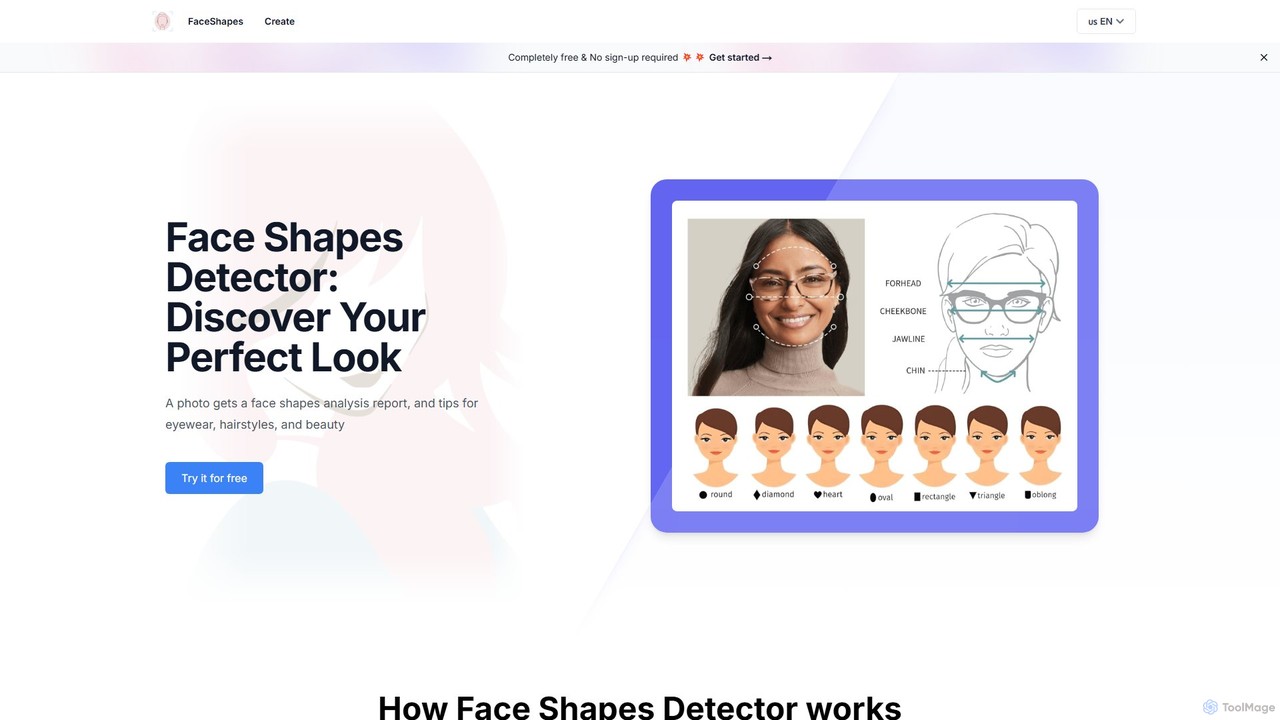
FaceShapes is a free, AI-powered online tool that analyzes your facial structure from a photo to determine your unique face shape. It provides personalized recommendations for flattering hairstyles, eyewear, and makeup techniques. Simply upload a photo to receive a detailed analysis and discover styles that enhance your natural features, helping you find your perfect look with confidence. No registration is required.

Style Advisor
Visits 7.2KFavorites 116Likes 103

About Face Analysis

Face Analysis tools are AI-powered solutions designed to detect, analyze, and interpret various attributes and expressions from human faces in images or videos. Leveraging advanced computer vision and machine learning algorithms, these tools can identify facial landmarks, estimate age and gender, recognize emotions, and even verify identities. They provide valuable insights for a wide range of applications, from enhancing security systems to personalizing user experiences and optimizing marketing strategies.

Core Features

  • Emotion Recognition: Identifies and classifies human emotions (e.g., happiness, sadness, anger) from facial expressions.
  • Age and Gender Estimation: Automatically predicts the age range and gender of individuals in visual data.
  • Facial Landmark Detection: Pinpoints key points on a face, such as eyes, nose, and mouth, for precise analysis.
  • Identity Verification: Compares a face to a known identity for authentication purposes, often used in KYC processes.
  • Gaze Tracking: Determines where a person is looking, providing insights into attention and focus.

Use Cases

Face analysis tools are crucial for industries requiring deep insights into human behavior and identity. They are used in retail for understanding customer engagement, in security for access control and surveillance, and in healthcare for monitoring patient expressions. These tools also support content moderation by detecting inappropriate facial content and enhance user interfaces through emotion-aware interactions.

How to Choose

When selecting a face analysis tool, consider its accuracy in diverse conditions (lighting, angles, occlusions), the range of attributes it can detect (emotions, age, gender, landmarks), and its integration capabilities with existing systems. Evaluate data privacy and ethical compliance, processing speed for real-time applications, and the clarity of its API documentation. Scalability and pricing models are also important factors for long-term use.


Featured tool rankings

Face Analysis use cases

1

Enhanced Security and Access Control

Security managers can deploy face analysis tools for automated identity verification at entry points. By comparing live camera feeds with registered user databases, these systems grant access to authorized personnel, detect unauthorized individuals, and flag suspicious activities, significantly bolstering physical security without manual checks.

2

Personalized Retail Customer Experience

Retail marketers utilize face analysis to understand customer demographics and emotional responses to product displays or advertisements. This data helps optimize store layouts, tailor promotional content, and personalize recommendations, leading to improved customer engagement and higher sales conversions.

3

Automated Content Moderation

Social media platforms and content providers employ face analysis to automatically detect and flag inappropriate or harmful facial content, such as explicit imagery or signs of distress. This helps maintain a safe online environment, reduces manual review workload, and ensures compliance with platform guidelines.

4

Driver State Monitoring for Automotive Safety

Automotive manufacturers integrate face analysis into in-car systems to monitor driver alertness and emotional state. By detecting signs of drowsiness, distraction, or anger through facial cues, the system can issue alerts or activate safety features, preventing accidents and enhancing road safety.

5

User Experience (UX) Research and A/B Testing

UX researchers use face analysis to gauge users' emotional reactions and engagement levels while interacting with websites, applications, or prototypes. This provides objective data on user satisfaction, frustration, or confusion, informing design iterations and improving overall product usability.

6

Healthcare Patient Monitoring and Telemedicine

Healthcare providers can leverage face analysis for remote patient monitoring, especially in mental health or elderly care. Detecting subtle changes in facial expressions can indicate pain, discomfort, or emotional distress, allowing for timely intervention and improved care delivery in telemedicine settings.

Face Analysis FAQ

What are Face Analysis tools?

Face Analysis tools are AI-powered applications that use computer vision to extract and interpret information from human faces in digital images or videos. They can identify various attributes like age, gender, emotions, and facial landmarks, providing insights into identity, behavior, and demographics. These tools are a subset of the broader Image & Video AI category.

How do Face Analysis tools work?

Face Analysis tools typically work by first detecting faces in an image or video frame using deep learning models. Once a face is identified, algorithms then analyze specific regions and patterns to extract features. These features are then processed to estimate attributes like age, gender, or emotion, or to match against known identities using trained machine learning models.

What is the difference between Face Analysis and Facial Recognition?

Face Analysis is a broader category that involves extracting various attributes from a face, such as age, gender, emotion, or gaze. Facial Recognition is a specific application within face analysis focused solely on identifying or verifying an individual's identity by comparing their face to a database of known faces. All facial recognition is face analysis, but not all face analysis is facial recognition.

What are the key ethical considerations when using Face Analysis tools?

Key ethical considerations include data privacy, consent, bias, and potential for misuse. It's crucial to ensure transparent data collection, obtain explicit consent for analysis, and address algorithmic biases that might lead to inaccurate or unfair outcomes for certain demographic groups. Responsible deployment also involves safeguarding against surveillance and discrimination.

Who can benefit most from using Face Analysis tools?

A wide range of professionals and industries can benefit. This includes security personnel for access control, marketers for audience insights, UX designers for user feedback, content moderators for platform safety, and healthcare providers for patient monitoring. Any field requiring automated understanding of human facial cues and demographics can find value in these tools.