Silo
Silo is an advanced automation platform designed to streamline and accelerate employee onboarding and offboarding. It automates access …
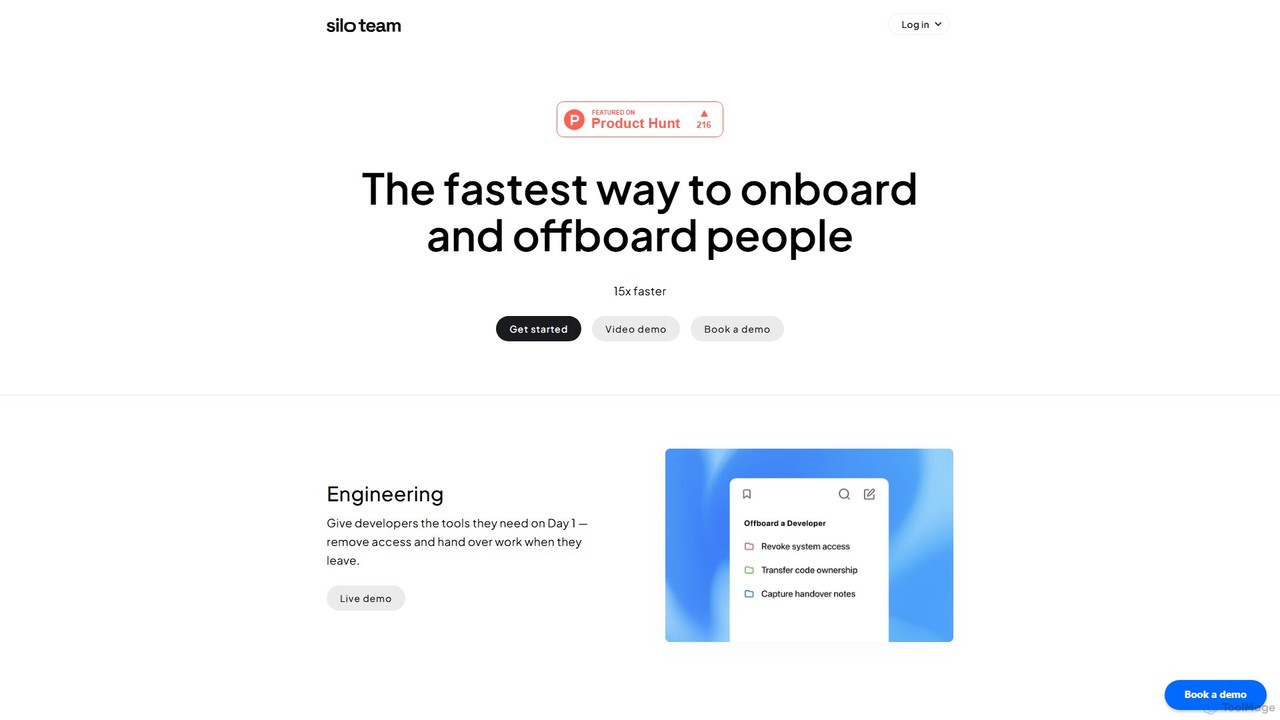
Silo is an advanced automation platform designed to streamline and accelerate employee onboarding and offboarding. It automates access management, task assignments, and policy training across various departments like Engineering, Sales, and Finance. By providing role-based, compliant workflows, Silo helps companies onboard new hires up to 15x faster, enhance security by instantly revoking access for departing employees, and ensure a seamless, audit-ready employee lifecycle management process.
About Access Control
AI-powered Access Control tools are a class of solutions that leverage artificial intelligence to manage and enforce who can access specific resources within an organization. These tools utilize machine learning, behavioral analytics, and advanced algorithms to provide dynamic, context-aware, and predictive access decisions. They enhance security posture, streamline compliance, and improve operational efficiency by moving beyond static, rule-based systems.
Core Features
- Adaptive Authentication: Dynamically adjusts authentication requirements based on real-time risk factors like user behavior, device, location, and time.
- Behavioral Analytics: Monitors user and entity behavior to detect anomalies and potential threats, flagging suspicious activities for investigation.
- Automated Provisioning/Deprovisioning: Uses AI to automate the granting or revoking of access rights based on roles, changes in employment status, or policy updates.
- Risk-Based Access Decisions: Evaluates multiple data points to assign a risk score to each access request, allowing or denying access based on predefined thresholds.
- Biometric Integration: Supports advanced biometric authentication methods (e.g., facial recognition, fingerprint) for enhanced security and user experience.
Applicable Scenarios
Organizations use these tools to secure sensitive data, manage employee access to various systems, and ensure compliance with regulatory requirements. They are particularly valuable in dynamic environments where traditional access methods fall short, such as hybrid cloud setups or remote workforces.
How to Choose
When selecting AI Access Control tools, consider the level of automation and adaptiveness required, integration capabilities with existing IT infrastructure, the types of risk factors the AI can analyze, and compliance reporting features. Scalability and user experience are also crucial for effective deployment and long-term value.

Access ControlUse Cases
Preventing Insider Threats with Behavioral Analytics
Security teams deploy AI Access Control to continuously monitor employee access patterns and system interactions. The AI learns normal behavior baselines and flags deviations, such as an employee accessing unusual files or logging in from an unfamiliar location outside working hours, enabling proactive intervention against potential insider threats or compromised accounts.
Implementing Dynamic Zero Trust Policies
Enterprises adopt AI-driven access control to enforce a Zero Trust architecture, where every access request is verified regardless of network location. The AI evaluates real-time context—user identity, device health, location, and resource sensitivity—to grant least-privilege access, adapting permissions dynamically as risk factors change throughout a session.
Automating Employee Onboarding and Offboarding
HR and IT departments leverage AI Access Control to automate the provisioning and deprovisioning of access rights for new hires and departing employees. Based on predefined roles and departmental assignments, the AI automatically grants or revokes access to necessary applications and data, significantly reducing manual effort and ensuring immediate security upon termination.
Enhancing Customer Identity and Access Management (CIAM)
E-commerce platforms and online service providers use AI-powered access control to secure customer accounts and personalize user experiences. The AI analyzes customer login patterns and device fingerprints to detect fraudulent access attempts, while also enabling seamless, risk-adaptive authentication (e.g., step-up authentication for high-value transactions).
Securing Cloud and Hybrid Environments
Cloud architects and security administrators utilize AI Access Control to manage complex access permissions across multi-cloud and hybrid IT infrastructures. The AI helps identify over-privileged accounts, enforce consistent security policies across disparate environments, and adapt access based on the dynamic nature of cloud workloads and microservices.
Streamlining Regulatory Compliance Audits
Compliance officers employ AI Access Control systems to generate comprehensive audit trails and reports on access activities. The AI can automatically identify non-compliant access patterns or policy violations, simplifying the process of demonstrating adherence to regulations like GDPR, HIPAA, or SOC 2, and reducing the burden of manual review.