BookLed
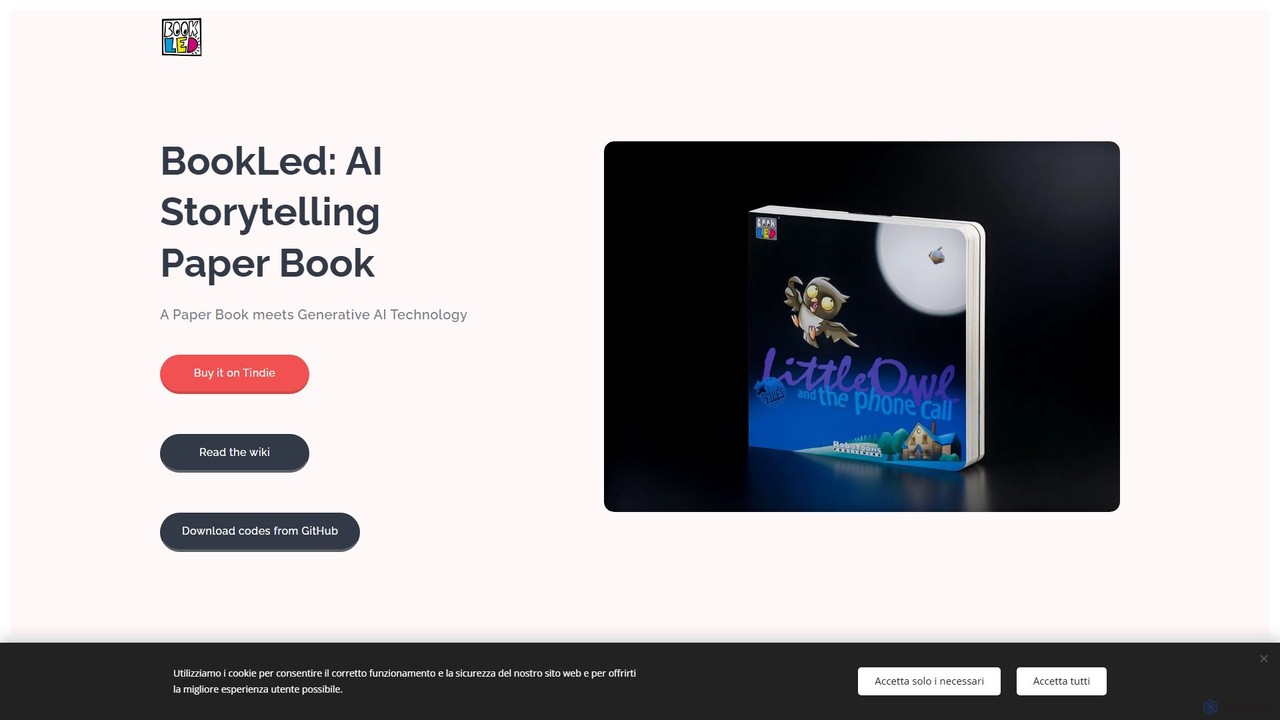
BookLed is a revolutionary paper book that merges traditional reading with Generative AI. It features embedded electronics that …
BookLed is a revolutionary paper book that merges traditional reading with Generative AI. It features embedded electronics that detect page turns, triggering synchronized light, sound, and dynamic AI-powered narration to create an immersive and interactive storytelling experience for children.
Tynker AI
Tynker AI is an educational platform designed to teach kids and beginners about artificial intelligence and machine learning. …
Tynker AI is an educational platform designed to teach kids and beginners about artificial intelligence and machine learning. Using a visual, block-based coding interface, it makes complex AI concepts accessible, fun, and engaging through interactive lessons and creative project-building.
LearningStory
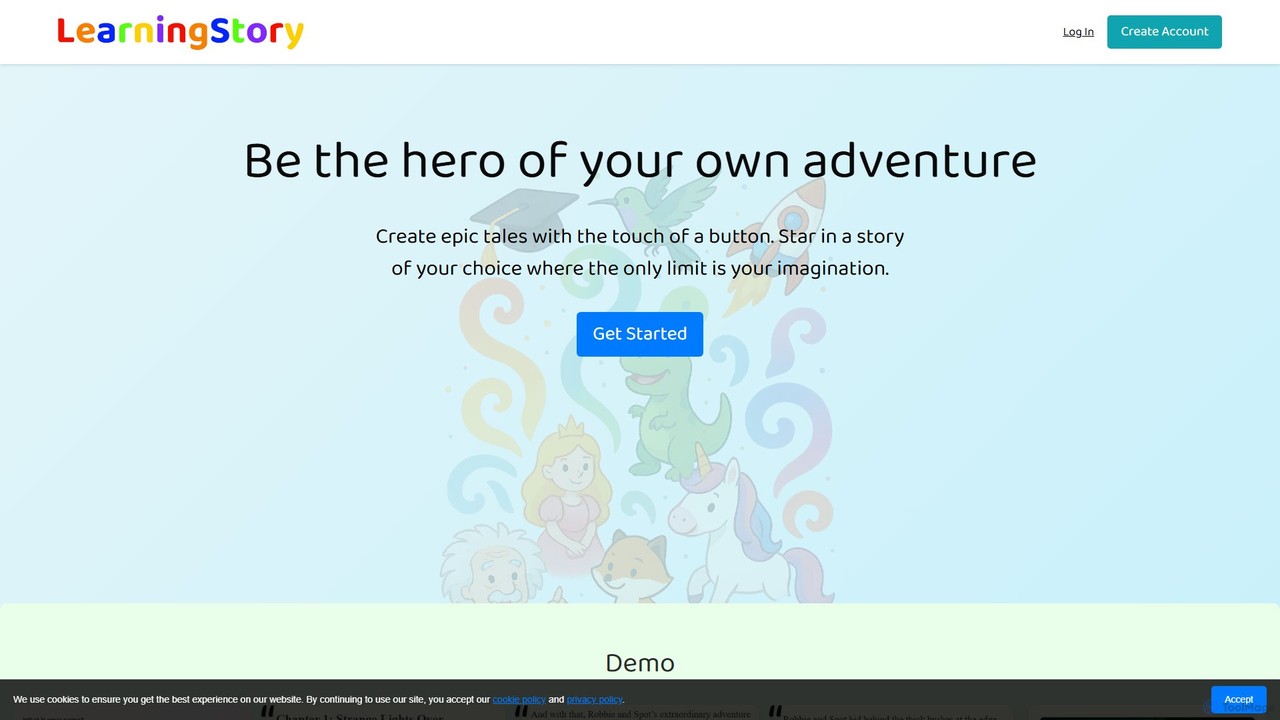
LearningStory is an AI-powered platform that creates personalized stories for children. By placing the child as the main …
LearningStory is an AI-powered platform that creates personalized stories for children. By placing the child as the main character, it transforms reading into an exciting adventure, helping to boost literacy, creativity, and a lifelong love for learning in an engaging and interactive way.
About Learning
Learning AI tools are specialized applications designed to enhance educational experiences for children. These tools leverage artificial intelligence to offer personalized learning paths, adaptive content, and interactive engagement. They aim to make education more accessible, engaging, and effective for young learners, complementing traditional teaching methods. By adapting to individual paces and styles, they foster curiosity and build foundational skills in a fun, intuitive environment.
Core Features
- Personalized Learning Paths: AI analyzes a child's progress and adapts content difficulty and pace to their needs.
- Interactive Content & Gamification: Offers engaging lessons, AI tutors, and voice recognition for active participation.
- Progress Tracking & Reporting: Monitors performance and provides detailed insights to parents or educators.
- Adaptive Assessments: Dynamically adjusts quiz questions based on real-time understanding and skill level.
- Multimodal Learning: Incorporates visual, auditory, and kinesthetic elements to cater to diverse learning styles.
Applicable Scenarios
Parents utilize these tools to supplement school education, providing extra practice in subjects like math or reading through engaging apps. Educators can integrate AI learning platforms to differentiate instruction, offering tailored exercises for students with varying needs. Children themselves benefit from self-paced exploration of new topics, from coding basics to foreign languages, all within a safe and stimulating digital environment.
How to Choose
When selecting Learning AI tools, consider the age appropriateness of content and interface, ensuring it aligns with the child's developmental stage. Evaluate the educational focus and curriculum alignment, checking if it covers desired subjects or skills. Look for engagement features like gamification, interactive elements, and clear progress feedback. Finally, assess parental controls and safety features to ensure a secure and monitored learning experience.

LearningUse Cases
Personalized Math Skill Development for Kids
Parents seeking to strengthen their child's math abilities can use AI learning tools that adapt problem difficulty based on real-time performance. The AI identifies weak areas and generates targeted exercises, ensuring the child receives focused practice without feeling overwhelmed, leading to improved comprehension and confidence in arithmetic, algebra basics, or geometry.
Interactive Foreign Language Learning for Young Learners
Children can learn new languages through AI-powered apps that offer voice recognition, interactive dialogues, and gamified vocabulary building. The AI provides instant pronunciation feedback and conversational practice, making language acquisition fun and effective. This helps children develop listening, speaking, and reading skills in a second language from an early age.
Enhancing Reading Comprehension and Phonics Skills
AI learning platforms assist young children in developing foundational reading skills. Tools can read stories aloud, highlight words as they're spoken, and offer interactive phonics exercises. The AI adapts to the child's reading level, providing appropriate challenges and support to improve fluency, vocabulary, and overall comprehension, making reading an enjoyable experience.
Fostering Creativity through AI-Assisted Storytelling
AI tools can act as creative partners, providing children with prompts and suggestions to develop their storytelling and writing skills. By offering ideas for characters, settings, or plot twists, the AI helps overcome writer's block and encourages imaginative expression. This process enhances narrative structure understanding and expands vocabulary in a playful, supportive environment.
Introducing Coding and Logic via Gamified AI Tools
For children interested in technology, AI learning tools offer game-based environments to teach fundamental coding concepts and logical thinking. Through visual programming interfaces and interactive puzzles, the AI guides children through challenges, providing immediate feedback. This cultivates problem-solving skills and computational thinking in an accessible and engaging manner.
Adaptive Science Exploration and Discovery
AI learning tools can introduce complex scientific concepts to children through interactive simulations and personalized content. Whether exploring the solar system, human anatomy, or ecological systems, the AI adjusts the depth and presentation of information to match the child's understanding. This fosters scientific curiosity and provides a solid foundation in STEM subjects.