Kids Best in category 2 results Parenting AI Tool

Popular AI tools in the Parenting field of Kids include Toypal、Kids ChatGPT, etc., helping you quickly improve efficiency.

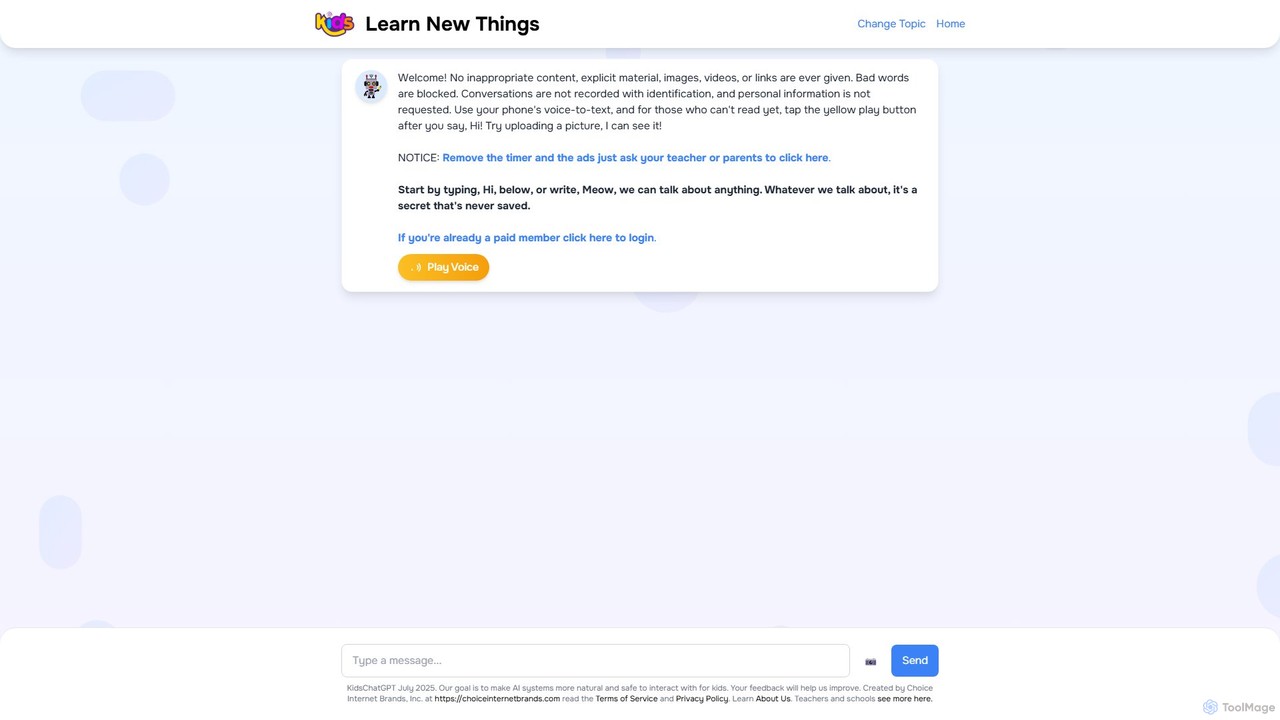
Kids ChatGPT

Kids ChatGPT

Kids ChatGPT is a safe and interactive AI chatbot designed for children. It provides a secure environment for …

3.0K
Toypal

Toypal

Toypal is an AI-powered, heart-shaped smart device that attaches to any soft toy, transforming it into a personalized …

3.0K

About Parenting

Parenting AI tools are a specialized category of artificial intelligence applications designed to support parents in various aspects of child-rearing and family management. Utilizing advanced algorithms, machine learning, and natural language processing, these tools offer personalized insights, automate routine tasks, and provide intelligent assistance. They aim to enhance child development, simplify parental responsibilities, and foster a safer, more engaging environment for children, serving as an invaluable extension within the broader 'Kids' AI tools landscape.

Core Features

  • Personalized Developmental Tracking: Monitors and analyzes a child's growth milestones, suggesting tailored activities and resources.
  • Smart Monitoring & Safety Alerts: Provides real-time insights into a child's well-being, including sleep patterns, vital signs, and location, with immediate alerts for anomalies.
  • AI-Powered Educational Content: Generates adaptive learning games, stories, and exercises customized to a child's age, interests, and learning pace.
  • Parenting Assistant & Advice: Offers evidence-based guidance on common parenting challenges, manages schedules, and provides reminders for appointments or tasks.
  • Digital Well-being Management: Helps parents set and enforce screen time limits, filter inappropriate content, and monitor online activity for child safety.

Use Cases

Parents leverage these tools for diverse needs, from managing daily routines to supporting long-term development. For instance, new parents can use AI baby monitors to track sleep and feeding schedules, receiving alerts for potential issues. Parents of school-aged children might utilize AI educational platforms to create customized homework help or interactive learning modules. Additionally, busy families can rely on AI assistants to streamline scheduling, manage family calendars, and receive personalized advice on behavioral challenges or health queries.

How to Choose

When selecting Parenting AI tools, prioritize data privacy and security features, ensuring sensitive family information is protected. Evaluate the tool's age-appropriateness and its alignment with educational and developmental goals, looking for evidence-based content. Consider the user interface for ease of use by both parents and children, and assess its integration capabilities with existing smart home devices or other family management apps. Finally, review customization options to ensure the tool can adapt to your family's unique needs and values.

ParentingUse Cases

1

Personalized Learning Path Creation

Parents of school-aged children can utilize AI parenting tools to generate customized learning activities and curricula. By inputting a child's current academic level, interests, and learning style, the AI can suggest interactive games, reading materials, or problem sets that adapt in difficulty, ensuring engaging and effective educational support tailored to the individual child's pace and needs, fostering improved academic performance and curiosity.

2

Smart Baby Monitoring & Anomaly Detection

New parents can deploy AI-powered baby monitors that go beyond basic video feeds. These tools analyze a baby's sleep patterns, breathing, and movements, identifying subtle changes that might indicate discomfort or potential health issues. The AI provides real-time alerts for unusual activity, such as a baby rolling over or a significant change in breathing, offering peace of mind and enabling prompt parental intervention, enhancing infant safety.

3

AI-Driven Parenting Advice & Schedule Management

Busy parents can leverage AI assistants to streamline daily family logistics and receive expert guidance. By inputting family schedules, appointments, and child-rearing questions, the AI can offer personalized advice on topics like sleep training, discipline strategies, or nutritional planning, drawing from vast databases of pediatric and psychological research. It also helps manage calendars, send reminders, and suggest age-appropriate activities, significantly reducing parental stress and time spent on administrative tasks.

4

Interactive Storytelling & Language Development

Parents can use AI tools to create dynamic and personalized stories or language learning experiences for their preschoolers. By inputting characters, themes, or specific vocabulary words, the AI generates unique narratives or interactive dialogues. This not only sparks a child's imagination but also provides a fun and engaging way to introduce new words, practice pronunciation, and develop early literacy skills in a highly customized and adaptive environment.

5

Child Safety & Digital Content Filtering

For parents concerned about their children's online exposure, AI parenting tools offer robust digital well-being management. These tools can monitor internet usage, filter inappropriate websites and content, and enforce screen time limits across multiple devices. The AI learns and adapts to new threats, providing a dynamic shield against harmful online material and helping parents teach responsible digital habits, ensuring a safer online experience for children.

6

Developmental Milestone Tracking & Activity Suggestions

Parents can track their child's physical, cognitive, and social-emotional development using AI-powered platforms. These tools allow parents to log milestones, observe patterns, and compare progress against age-appropriate benchmarks. Based on the data, the AI suggests targeted activities, games, or exercises designed to stimulate specific areas of development, providing proactive support and ensuring children receive appropriate stimulation during critical growth periods.

ParentingFrequently Asked Questions