
ToolMage
Sign in

Best 1 Corporate Law AI tools for Legal

Popular Corporate Law AI tools in Legal include Skala, helping you work more efficiently.

Skala
Freemium

Skala

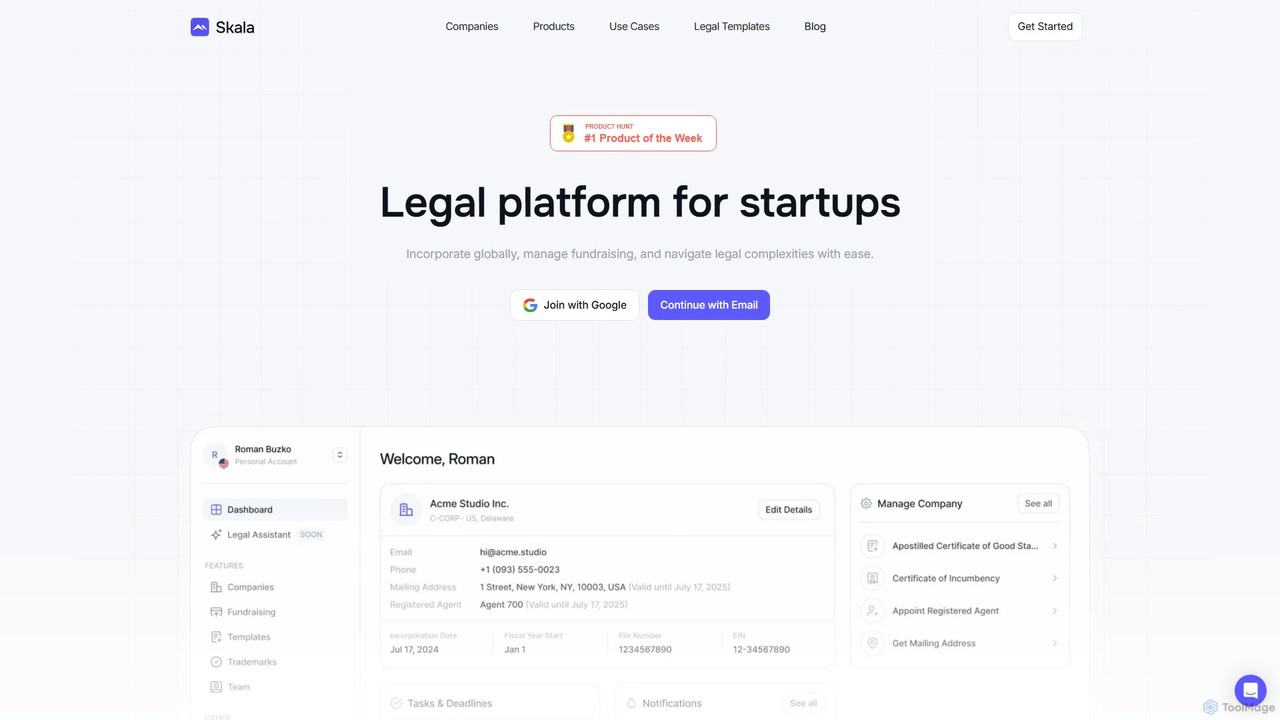
Skala is an AI-powered legal platform designed for startups. It simplifies global company incorporation, fundraising, trademark registration, and team contract management. By combining AI-driven tools with expert-vetted legal templates, Skala empowers founders to navigate complex legal landscapes with ease, saving time and resources.

Fundraising
Visits 34.2KFavorites 117Likes 128

About Corporate Law

Corporate Law AI tools are specialized applications designed to automate and enhance legal processes related to a company's lifecycle. These tools leverage natural language processing (NLP) and machine learning to analyze contracts, manage corporate governance, and streamline compliance tasks. They primarily serve to increase efficiency, reduce human error, and provide data-driven insights for in-house legal teams and law firms. By handling high-volume, repetitive work, these platforms free up legal professionals to focus on strategic advisory roles.

Core Features

  • Contract Analysis & Drafting: Automatically reviews legal agreements for risks and non-standard clauses, and generates drafts for common corporate documents.
  • Compliance Management: Monitors regulatory changes, tracks filing deadlines, and automates compliance reporting to mitigate legal risks.
  • Due Diligence Automation: Rapidly analyzes thousands of documents during M&A transactions to identify key provisions, liabilities, and red flags.
  • Entity Management: Centralizes corporate records, tracks subsidiary information, manages board minutes, and maintains capitalization tables.

Applicable Scenarios

These tools are essential for in-house legal departments of large corporations, law firms specializing in M&A and corporate governance, and compliance teams in regulated industries like finance and healthcare. Startups also use them for company formation and managing equity documentation efficiently.

Selection Criteria

When choosing a Corporate Law AI tool, consider its jurisdiction-specific knowledge base, integration capabilities with existing document management systems, and data security certifications. Also, evaluate the depth of its features—whether you need a comprehensive platform for M&A or a focused tool for routine compliance.

Corporate Law use cases

1

Automating M&A Due Diligence

A corporate law firm is handling a major acquisition. The legal team uses an AI tool to analyze over 10,000 documents in the target company's virtual data room. The AI automatically identifies and flags critical clauses such as change of control, assignment restrictions, and unusual indemnification terms. This process reduces the manual review time from weeks to days, allowing lawyers to focus on negotiating key deal points and providing strategic advice based on the AI-generated risk summary.

2

Streamlining Corporate Governance and Compliance

The in-house legal department of a multinational corporation uses an AI-powered entity management platform to oversee its 50+ subsidiaries. The system centralizes all corporate records, tracks director appointments, and automatically generates reminders for annual general meetings and regulatory filings in different jurisdictions. When a new regulation is passed, the AI alerts the compliance team and suggests necessary updates to internal policies, ensuring consistent governance and reducing the risk of non-compliance penalties across the entire organization.

3

Drafting and Managing Shareholder Agreements

A startup is preparing for its first seed funding round. The founders use an AI legal tool to generate a standardized shareholder agreement. They input key terms like vesting schedules, share classes, and board composition, and the tool produces a comprehensive draft based on current market standards. The platform then manages the agreement's lifecycle, tracking signature status and flagging key dates for future obligations, which helps the startup maintain an organized and professional legal posture with its new investors.

4

Automating Board Meeting Minute Generation

A corporate paralegal is responsible for documenting board meetings for a publicly traded company. They use an AI tool that transcribes the meeting audio in real-time and identifies key decisions, action items, and voting results. After the meeting, the tool provides a structured draft of the minutes, which the paralegal can quickly review and finalize. This reduces the administrative burden, ensures accuracy, and creates a searchable, digital archive of all board resolutions, improving corporate record-keeping.

5

Managing Cap Table and Equity Issuance

A fast-growing tech company's finance and legal teams use an AI platform to manage their capitalization table (cap table). When a new employee is granted stock options, the details are entered into the system, which automatically updates the cap table, generates the grant agreement for e-signature, and calculates the updated ownership percentages. This ensures the cap table is always accurate and audit-ready, which is critical for future fundraising rounds and maintaining compliance with securities regulations.

6

Monitoring Regulatory Changes for Corporate Compliance

A compliance officer at a financial services firm is tasked with staying ahead of evolving corporate law. They use an AI tool that continuously scans regulatory databases, government gazettes, and legal news sources. The tool identifies and summarizes relevant changes, such as new reporting requirements or amendments to corporate governance codes. It then assesses the potential impact on the company's existing policies and procedures, providing actionable alerts that help the firm proactively adapt and avoid regulatory breaches.

Corporate Law FAQ

What are AI Corporate Law tools?

AI Corporate Law tools are specialized software that use artificial intelligence, particularly machine learning and natural language processing, to assist with legal tasks specific to the corporate lifecycle. They automate high-volume, process-oriented work such as contract review, compliance monitoring, due diligence, and entity management. Unlike general legal AI, they are finely tuned for the transactional and regulatory needs of businesses, from formation to M&A.

How to choose the right AI Corporate Law tool?

Choosing the right tool depends on your specific needs. Consider these factors:

  • Functionality: Do you need a comprehensive platform for M&A due diligence, or a more focused tool for compliance tracking or contract management?
  • Jurisdiction Coverage: Ensure the tool's knowledge base is relevant to the legal jurisdictions where you operate.
  • Integration: Check if it can integrate with your existing systems, such as document management platforms or communication tools.
  • Security & Confidentiality: Verify its data security protocols and certifications, as you will be handling highly sensitive information.
What's the difference between general Legal AI and Corporate Law AI?

The primary difference is specialization. General Legal AI covers a broad spectrum of law, including litigation support (e-discovery), legal research across all practice areas, and case management. Corporate Law AI is a focused subset designed specifically for the non-contentious, transactional, and regulatory aspects of running a business. It excels at tasks like managing corporate records, analyzing M&A documents, and tracking compliance, which are distinct from the needs of a litigation or criminal law practice.

Who benefits most from using AI Corporate Law tools?

In-house legal departments and corporate law firms are the primary beneficiaries. In-house teams use these tools to manage high volumes of contracts and compliance obligations with greater efficiency and less risk. Law firms leverage them to conduct faster, more thorough due diligence in M&A deals and to offer more competitive, fixed-fee services for routine corporate work. Additionally, compliance officers and startup founders benefit by automating regulatory monitoring and streamlining company formation processes, respectively.

Can AI tools replace corporate lawyers?

No, AI tools are designed to augment, not replace, corporate lawyers. They excel at automating repetitive, data-intensive tasks, which frees up lawyers' time. This allows legal professionals to focus on high-value work that requires human judgment, such as strategic negotiation, complex legal analysis, and client advisory. The tools act as powerful assistants, enhancing a lawyer's ability to work more efficiently and accurately, but they cannot replicate the critical thinking and ethical reasoning of a human expert.