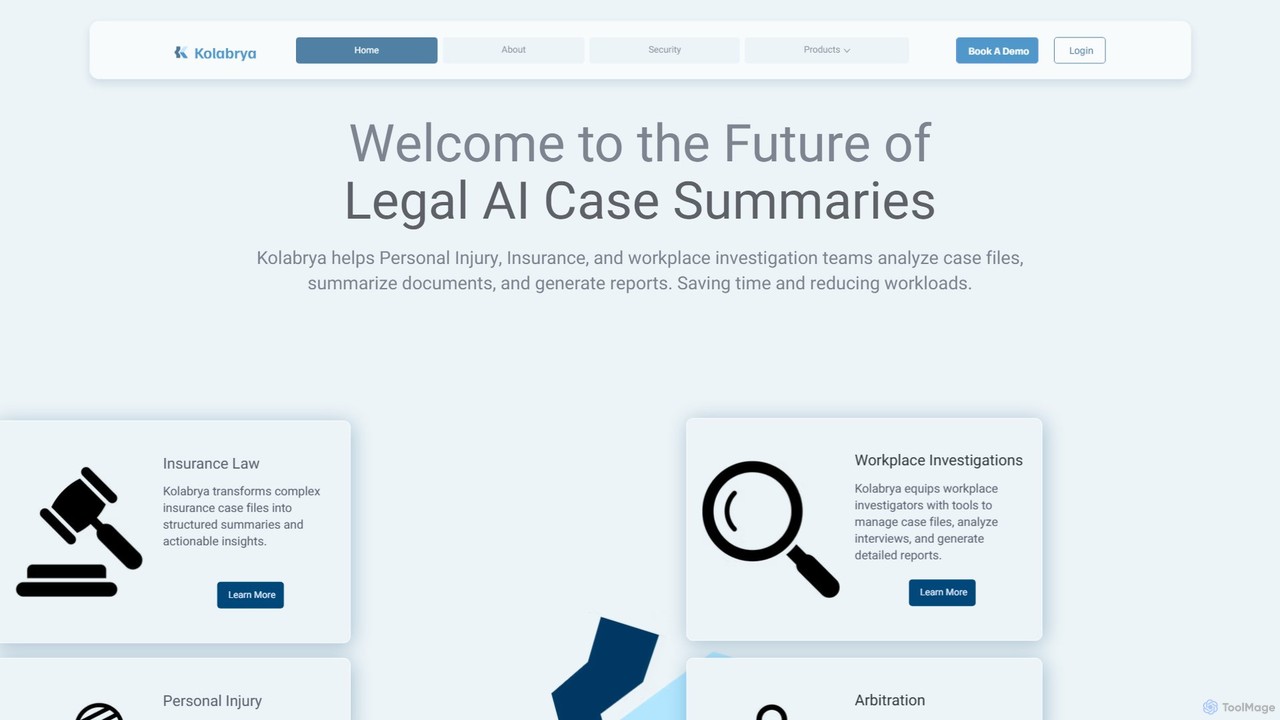
AI Investigation tools are a specialized category of legal technology designed to automate the analysis of large datasets for evidence discovery and pattern recognition. These tools utilize machine learning and natural language processing to sift through documents, communications, and other digital evidence to identify relevant information and connections. They are essential for legal professionals, corporate compliance teams, and investigators to accelerate complex inquiries, manage eDiscovery, and uncover critical insights from vast amounts of unstructured data. Their key advantage is the ability to process information at a scale and speed far beyond human capabilities.
Core Features
- eDiscovery Automation: Automatically processes, tags, and categorizes vast volumes of electronic data, identifying privileged or relevant documents.
- Pattern & Anomaly Detection: Identifies unusual activities, communication patterns, or financial transactions that may indicate fraud or misconduct.
- Entity & Relationship Analysis: Maps connections between people, organizations, places, and events from various data sources to visualize networks.
- Sentiment & Context Analysis: Analyzes the tone and context of communications to understand intent and identify potentially incriminating language.
- Timeline Reconstruction: Automatically organizes events from disparate data sources into a chronological timeline to clarify sequences of actions.
Applicable Scenarios
These tools are widely used in corporate legal departments for internal fraud or misconduct investigations. Law firms leverage them for litigation support, particularly in large-scale eDiscovery for civil or criminal cases. Government and regulatory agencies also use them for compliance audits and law enforcement investigations, helping to connect disparate pieces of evidence efficiently.
Selection Criteria
When choosing an AI Investigation tool, consider the types of data sources it supports (e.g., emails, chat logs, financial records). Evaluate its analytical capabilities, such as the sophistication of its pattern recognition and relationship mapping. Security and compliance certifications (like SOC 2 or GDPR) are critical, as is the tool's scalability to handle massive datasets. Finally, assess the user interface and the level of technical expertise required to operate it effectively.