
PrivacyAI
PrivacyAI is a free, AI-powered tool that generates comprehensive Privacy Policies, Terms of Service, and Cookie Policies in …
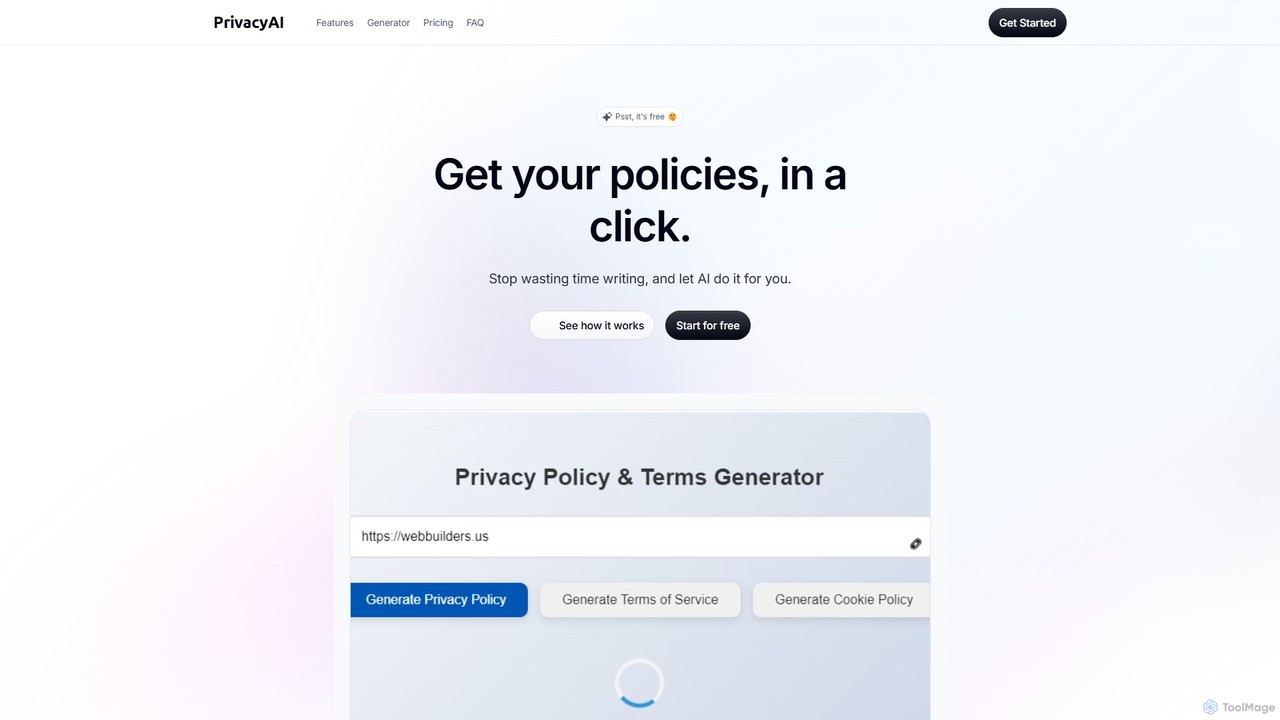
PrivacyAI is a free, AI-powered tool that generates comprehensive Privacy Policies, Terms of Service, and Cookie Policies in a single click. It saves time and legal costs by automatically scanning your website to create tailored documents. Ideal for startups, developers, and small businesses needing fast, reliable, and compliant legal policies without any expense.
About Policy Generator
Policy Generators are AI-powered tools that automate the creation of essential legal documents for websites, applications, and businesses. They use professionally vetted templates and user-specific inputs to generate customized policies such as Privacy Policies, Terms of Service, and Cookie Policies. This process significantly reduces the time and cost of drafting compliance documents, making legal protection accessible for startups and small businesses. Many of these tools also provide automatic updates to keep policies aligned with evolving regulations like GDPR and CCPA.
Core Features
- Guided Questionnaire: Asks a series of questions about your business practices to tailor the legal text.
- Multi-Regulation Compliance: Generates documents that adhere to major data privacy laws like GDPR, CCPA, and LGPD.
- Template Variety: Offers a range of templates for different needs, including Privacy Policy, Terms & Conditions, EULA, and Refund Policy.
- Automatic Updates: Notifies users or automatically modifies policies when relevant laws change, ensuring ongoing compliance.
- Easy Integration: Provides simple embed codes or plugins to add the generated policies directly to a website or app.
Applicable Scenarios
These tools are essential for any online entity. For example, an e-commerce store needs them to outline terms of sale and data handling, a SaaS company requires them to define user rights and service limitations, and a mobile app developer uses them to meet app store requirements and protect intellectual property.
Selection Criteria
When choosing a Policy Generator, consider the scope of policies offered and ensure it covers all your needs. Evaluate its support for specific international regulations relevant to your user base. Check if the service includes automatic updates for legal changes, which is a critical feature for long-term compliance. Finally, compare pricing models, whether a one-time purchase or a subscription that includes ongoing updates.
Policy GeneratorUse Cases
Create a GDPR-Compliant Privacy Policy for a New Website
A startup founder launching a new e-commerce site needs to ensure compliance with GDPR as they anticipate customers from the European Union. Using a policy generator, the founder answers a guided questionnaire about their data collection practices, such as information gathered through contact forms, analytics tools, and cookies. The tool then automatically drafts a comprehensive Privacy Policy that includes all necessary GDPR clauses, like data subject rights and the legal basis for processing. This allows the founder to obtain a compliant policy in under an hour, avoiding significant legal fees and ensuring the website is ready for a global audience at launch.
Generate Terms of Service for a SaaS Application
A product manager for a new Software-as-a-Service (SaaS) platform needs to establish clear legal guidelines for users before launch. They use a policy generator to create a Terms of Service (ToS) document. The process involves inputting specific details about the service, including subscription models, user responsibilities, acceptable use policies, intellectual property rights, and limitations of liability. The generator structures this information into a professional, legally sound ToS document. This provides the company with crucial legal protection, defines the relationship with its customers, and helps prevent misuse of the platform, all without the lengthy and expensive process of hiring a law firm.
Draft a Cookie Policy for an E-commerce Store
An e-commerce manager needs to be transparent about the use of cookies on their online store to comply with the ePrivacy Directive and GDPR. Instead of manually listing every cookie, they use a policy generator that often includes a cookie scanning feature. The tool scans the website to identify all first-party and third-party cookies being used for analytics, marketing, and functionality. Based on the scan results, it generates a detailed Cookie Policy that categorizes cookies and explains their purpose. Many generators also provide a customizable cookie consent banner script, ensuring the store obtains proper user consent before deploying non-essential cookies, thereby building customer trust and avoiding regulatory fines.
Update Policies for CCPA/CPRA Compliance
A US-based small business owner with an existing website needs to update their privacy policy to comply with the California Consumer Privacy Act (CCPA) and its successor, the CPRA. Instead of starting from scratch, the owner uses their subscription-based policy generator. The service, being up-to-date with legal changes, flags the necessary amendments. The owner simply re-runs the questionnaire, adding information relevant to California residents' rights, such as the 'Do Not Sell or Share My Personal Information' clause. The tool then regenerates the policy with the required updates. This ensures the business remains compliant with evolving state-level regulations, avoiding potential fines and maintaining access to the California market.
Create an End-User License Agreement (EULA) for a Mobile App
An independent app developer is preparing to submit their new mobile game to the Apple App Store and Google Play Store. Both platforms require a legal agreement governing the use of the software. The developer uses a policy generator to create an End-User License Agreement (EULA). They provide information about the app's functionality, restrictions on use (e.g., no reverse engineering), ownership of in-app content, and warranty disclaimers. The tool compiles this into a standard EULA format that is suitable for app store submissions. This allows the developer to meet platform requirements quickly, protect their intellectual property, and set clear boundaries for users without needing to hire a specialized lawyer.
Generate a Refund Policy for an Online Course Platform
An online course creator is selling digital courses and needs a clear, legally sound policy for customer refunds to manage expectations and reduce disputes. Using a policy generator, the creator specifies the conditions for refunds, such as a 14-day money-back guarantee, a requirement that less than 20% of the course content has been viewed, and the process for submitting a refund request. The tool drafts a formal Refund Policy based on these inputs. This policy can be displayed on the checkout page and in the website's footer, providing transparency, reducing chargebacks, and enhancing the platform's professionalism and trustworthiness in the eyes of potential students.