
ToolMage
Sign in

Best 1 Real Estate AI tools for Legal

Popular Real Estate AI tools in Legal include Landeed, helping you work more efficiently.

Landeed
Freemium

Landeed

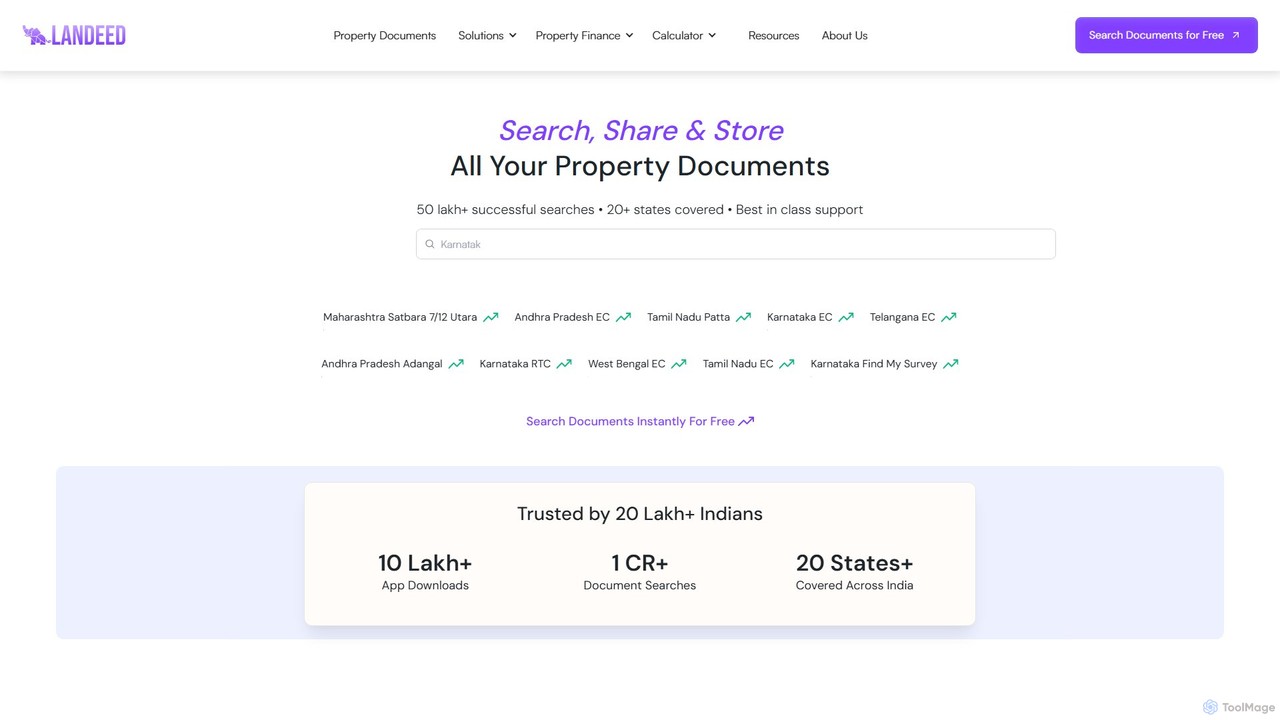
Landeed is an AI-powered platform for instantly searching, downloading, and managing official property documents across India. It simplifies real estate due diligence by providing quick access to over 100 types of land records from more than 20 states, supported by legal expertise and AI-driven property analysis.

Data Analysis
Visits 435.3KFavorites 154Likes 148

About Real Estate

Real Estate AI tools are a sophisticated category of artificial intelligence applications designed to transform various facets of the property sector. These tools leverage advanced machine learning, data analytics, and natural language processing to automate tasks, provide predictive insights, and enhance decision-making across the real estate lifecycle. From optimizing property valuations and market analysis to streamlining client management and legal document review, AI in real estate empowers professionals to operate with greater efficiency, accuracy, and strategic foresight.

Core Features

  • Automated Valuation Models (AVM): Predict property values and market trends using extensive datasets and algorithms.
  • Lead Generation & CRM Automation: Identify high-potential clients, personalize outreach, and manage customer relationships efficiently.
  • Document Analysis & Contract Review: Accelerate the review of legal documents, leases, and contracts by identifying key clauses and potential risks.
  • Predictive Market Analytics: Forecast future market shifts, investment opportunities, and demographic changes.
  • Virtual Property Experiences: Generate immersive virtual tours and 3D visualizations for enhanced property marketing.

Applicable Scenarios

Real estate agents utilize these tools for lead qualification and personalized property recommendations. Property developers employ AI for site selection and demand forecasting. Legal professionals in real estate benefit from expedited due diligence and automated contract clause extraction, significantly reducing manual review time and ensuring compliance. Investors leverage AI for identifying undervalued assets and managing portfolio risks.

How to Choose

When selecting Real Estate AI tools, consider the specific functionalities required, such as valuation accuracy or CRM capabilities. Evaluate integration potential with existing MLS, CRM, or legal tech platforms. Assess the reliability and breadth of data sources used by the AI, and ensure the solution complies with relevant real estate regulations. User-friendliness and scalability are also crucial for long-term adoption and effectiveness.

Real Estate use cases

1

Automated Property Valuation & Market Insights

Real estate appraisers and investors use AI tools to rapidly assess property values and understand market dynamics. By analyzing vast datasets including sales records, demographic information, and economic indicators, AI provides highly accurate valuations and forecasts future market trends. This enables quicker, more consistent appraisals and supports data-driven investment decisions, reducing manual research time significantly.

2

Streamlined Lead Generation & Client Matching

Real estate agents and brokers leverage AI to identify and qualify potential buyers and sellers more efficiently. AI analyzes client preferences, online behavior, and current property inventory to suggest personalized listings and prioritize high-potential leads. This automation increases conversion rates, reduces the time spent on manual lead qualification, and ensures clients are matched with properties that truly meet their needs.

3

Efficient Contract Review & Due Diligence

Legal professionals and real estate lawyers utilize AI for rapid analysis of complex real estate contracts, leases, and other legal documents. AI quickly identifies key clauses, potential risks, compliance issues, and discrepancies across large volumes of text. This capability significantly accelerates the due diligence process, minimizes human error, and helps in faster, more secure transaction closures, directly supporting the legal aspects of real estate.

4

Optimized Property Management & Maintenance

Property managers and facility managers employ AI to predict maintenance needs and optimize resource allocation. By analyzing sensor data, historical maintenance records, and tenant feedback, AI can schedule predictive maintenance, automate service requests, and even optimize energy consumption. This leads to lower operational costs, extended property lifespan, and improved tenant satisfaction through proactive management.

5

Enhanced Virtual Property Showings & Marketing

Real estate marketers and agents use AI to create immersive property experiences and engaging marketing content. AI generates high-quality virtual tours, 3D renderings, and personalized marketing copy based on property features and target audience demographics. This broadens the reach of property listings, reduces the need for physical showings, and provides more compelling presentations, attracting a wider pool of potential buyers.

6

Strategic Real Estate Investment Analysis

Real estate investors and fund managers rely on AI to identify lucrative investment opportunities and manage portfolio risks. AI processes a multitude of data points, including economic indicators, demographic shifts, zoning laws, and historical property performance, to pinpoint high-yield assets and assess potential risks. This empowers investors with data-driven strategies, leading to optimized portfolio performance and smarter capital allocation.

Real Estate FAQ

What are Real Estate AI tools?

Real Estate AI tools are software applications that use artificial intelligence, such as machine learning and data analytics, to automate and enhance processes within the real estate industry. They are designed to provide predictive insights, streamline operations, and improve decision-making. Key functions include property valuation, lead generation, market analysis, and legal document review, helping professionals work more efficiently and accurately.

How do AI tools benefit the real estate industry?

AI tools bring numerous benefits to real estate by significantly enhancing efficiency, accuracy, and strategic decision-making. They automate repetitive tasks like data entry and lead qualification, reduce human error in valuations and contract reviews, and provide predictive insights into market trends and investment opportunities. This leads to faster transactions, optimized resource allocation, reduced operational costs, and ultimately, more profitable outcomes for agents, investors, and developers.

What should I consider when choosing Real Estate AI software?

When selecting Real Estate AI software, consider its core functionalities and how well they align with your specific needs, such as valuation accuracy, CRM features, or legal document parsing. Evaluate its integration capabilities with your existing systems (e.g., MLS, CRM). Assess the quality and breadth of the data sources the AI uses, and ensure the tool complies with relevant real estate and data privacy regulations. User-friendliness, scalability, and vendor support are also crucial factors.

How do Real Estate AI tools intersect with legal processes?

Real Estate AI tools significantly enhance legal processes by automating and accelerating tasks like contract review, due diligence, and compliance checks. They can rapidly analyze complex legal documents, identify key clauses, flag potential risks or discrepancies, and ensure adherence to regulatory requirements. This reduces the manual workload for legal professionals, minimizes errors, and speeds up transaction closures, making legal aspects of real estate more efficient and reliable.

What are the emerging trends in AI for real estate?

Emerging trends in AI for real estate include more sophisticated predictive analytics for hyper-local market forecasting and personalized investment recommendations. We're also seeing growth in AI-powered virtual and augmented reality for immersive property experiences, the use of blockchain with AI for smart contracts and transparent transactions, and AI-driven sustainability solutions for optimizing building energy efficiency. These innovations aim to create more intelligent, efficient, and user-centric real estate ecosystems.