ToolMage
Sign in

Best 2 Tax AI tools for Legal

Popular Tax AI tools in Legal include Deferred and Nabsai, helping you work more efficiently.

Nabsai
Paid

Nabsai

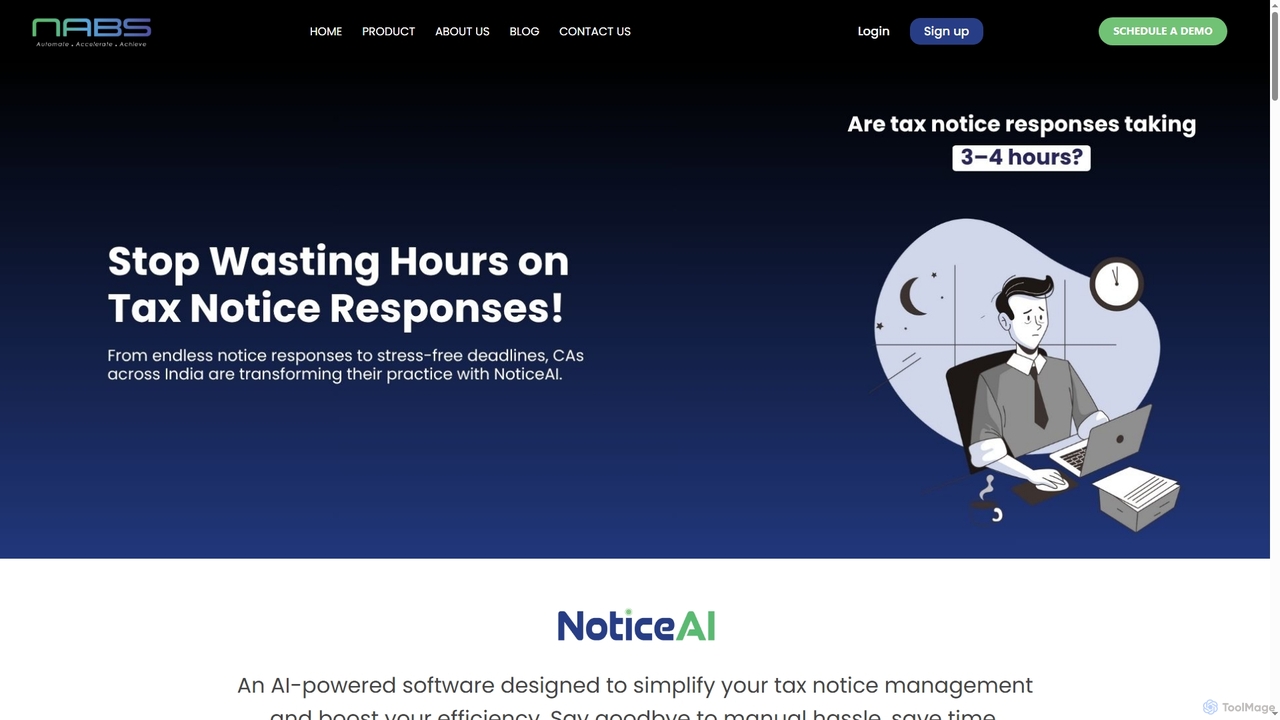
Nabsai is an AI-powered tax notice management platform designed for Chartered Accountants in India. It automates the entire process from notice retrieval to generating legally sound responses, leveraging RAG technology for case law citations. This streamlines workflows, ensures compliance, and reduces response time from hours to under 30 minutes.

Accounting
Visits 7KFavorites 154Likes 156
Deferred
Freemium

Deferred

Deferred is a Qualified Intermediary revolutionizing 1031 exchanges for real estate investors. It offers a unique "No Fee" model, allowing clients to earn interest on their exchange funds. Featuring an AI Tax Assistant named ARTE, top-tier fund security with up to $175M FDIC insurance, and an experienced team, Deferred simplifies the tax-deferral process, making it more accessible, secure, and profitable for investors.

Real Estate
Visits 16.5KFavorites 154Likes 134

About Tax

AI Tax tools are specialized applications designed to automate and streamline various tax-related processes, falling under the broader category of legal AI solutions. These tools leverage artificial intelligence, machine learning, and natural language processing to analyze financial data, ensure compliance, and assist with tax planning and reporting. They significantly reduce manual effort, minimize errors, and help individuals and businesses navigate complex tax regulations more efficiently. By providing real-time insights and automating routine tasks, AI Tax tools enhance accuracy and strategic decision-making in financial management.

Core Features

  • Automated Data Extraction: Automatically extracts relevant financial data from invoices, receipts, and bank statements.
  • Tax Calculation & Filing: Accurately calculates taxes owed and assists in preparing and submitting tax returns.
  • Compliance Monitoring: Tracks changes in tax laws and regulations, flagging potential compliance issues.
  • Audit Support: Helps organize financial records and identify discrepancies, preparing for potential audits.
  • Tax Planning & Optimization: Analyzes financial scenarios to suggest strategies for tax efficiency and savings.

Applicable Scenarios

AI Tax tools are invaluable for small business owners managing their own finances, large corporations needing to ensure global tax compliance, and individual taxpayers seeking to simplify their annual tax filings. Accountants and financial advisors also utilize these tools to enhance client services, perform complex tax analyses, and stay updated on regulatory changes.

How to Choose

When selecting an AI Tax tool, consider its accuracy in calculations and compliance, integration capabilities with existing accounting software, and the level of automation offered for data entry and reporting. Evaluate its security protocols for handling sensitive financial data, user-friendliness, and the quality of customer support and regulatory updates. Scalability and pricing models should also align with your specific business or individual needs.

Tax use cases

1

Automated Expense Categorization for Small Businesses

A small business owner uses an AI Tax tool to automatically categorize hundreds of daily transactions from bank statements and credit card feeds. The AI learns from past categorizations and applies relevant tax codes, significantly reducing the manual effort required for bookkeeping. This ensures accurate expense tracking for tax deductions and saves the owner several hours each week, allowing them to focus on core business operations.

2

Corporate Tax Compliance Monitoring

A corporate tax manager in a multinational company deploys an AI Tax tool to continuously monitor changes in tax laws across multiple jurisdictions. The tool automatically flags new regulations, updates compliance requirements, and identifies potential risks of non-compliance based on the company's financial activities. This proactive approach helps the company avoid penalties and ensures adherence to complex global tax frameworks, saving significant legal and financial resources.

3

Individual Tax Return Preparation and Optimization

An individual taxpayer uses an AI Tax tool to prepare their annual tax return. The tool guides them through data entry, automatically imports W-2s and 1099s, and identifies eligible deductions and credits based on their financial profile. It can also suggest optimization strategies, such as contributing more to an IRA, to reduce tax liability for the current or future years. This simplifies the filing process, minimizes errors, and helps maximize tax savings.

4

VAT/GST Calculation and Reporting for E-commerce

An e-commerce business operating internationally utilizes an AI Tax tool to accurately calculate VAT or GST for sales across various countries with different tax rates and regulations. The tool integrates with their sales platform, automatically applies the correct tax rates based on customer location, and generates comprehensive reports for timely and accurate submission to respective tax authorities. This ensures compliance in complex cross-border transactions and avoids costly errors.

5

Audit Risk Assessment and Preparation

An accounting firm leverages an AI Tax tool to perform pre-audit risk assessments for their clients. The AI analyzes financial statements, transaction histories, and tax filings to identify anomalies, inconsistencies, or areas that might attract scrutiny from tax authorities. It generates detailed reports highlighting potential audit triggers and suggests corrective actions, allowing the firm to proactively address issues and significantly reduce the likelihood of a full audit for their clients.

6

Real Estate Tax Analysis and Forecasting

A real estate investor uses an AI Tax tool to analyze property tax implications for potential acquisitions and sales. The AI processes property data, local tax rates, and historical trends to forecast future tax liabilities and identify opportunities for tax abatements or exemptions. This enables the investor to make more informed decisions, optimize their portfolio for tax efficiency, and accurately project returns on investment by understanding the full tax burden.

Tax FAQ

What are AI Tax tools?

AI Tax tools are software solutions that leverage artificial intelligence to automate, optimize, and simplify various tax-related processes. They are designed to handle tasks such as data extraction, tax calculation, compliance monitoring, and report generation. These tools aim to reduce human error, save time, and ensure adherence to complex tax regulations for individuals, small businesses, and large corporations alike. They often integrate with existing financial systems to provide a seamless tax management experience.

How do AI Tax tools ensure compliance with changing tax laws?

AI Tax tools ensure compliance by continuously monitoring and updating their databases with the latest tax laws, regulations, and judicial rulings from relevant authorities. They use machine learning algorithms to analyze financial data against these updated rules, automatically flagging potential non-compliance issues or suggesting adjustments. Some tools also offer real-time alerts for regulatory changes that might impact a user's tax situation, providing proactive guidance to maintain adherence and avoid penalties.

What's the difference between AI Tax software and traditional tax software?

Traditional tax software primarily automates calculations and form filling based on user input and predefined rules. AI Tax software goes further by incorporating machine learning and natural language processing. This allows it to intelligently extract data from various sources, identify potential deductions or errors that might be missed manually, offer personalized tax planning advice, and adapt to new regulations without requiring manual updates. AI tools provide more proactive insights and a higher degree of automation and intelligence compared to their traditional counterparts.

Who can benefit most from using AI Tax tools?

A wide range of users can benefit significantly from AI Tax tools. Small business owners and freelancers can streamline their bookkeeping and ensure accurate tax filings without needing extensive accounting knowledge. Large corporations can manage complex international tax compliance and optimize their tax strategies across multiple jurisdictions. Individual taxpayers can simplify their annual tax preparation, identify all eligible deductions, and potentially maximize their refunds. Additionally, accountants and financial advisors can enhance their services, improve efficiency, and offer more strategic advice to clients.

Are AI Tax tools secure for handling sensitive financial data?

Yes, reputable AI Tax tools prioritize the security and privacy of sensitive financial data. They typically employ robust encryption protocols (both in transit and at rest), multi-factor authentication, and adhere to industry-standard security certifications (e.g., SOC 2, ISO 27001). Data is often anonymized or pseudonymized for AI training, and strict access controls are in place. Users should always choose tools from trusted providers with transparent data handling policies and a strong track record of data protection to ensure their financial information remains safe.