Namemancer
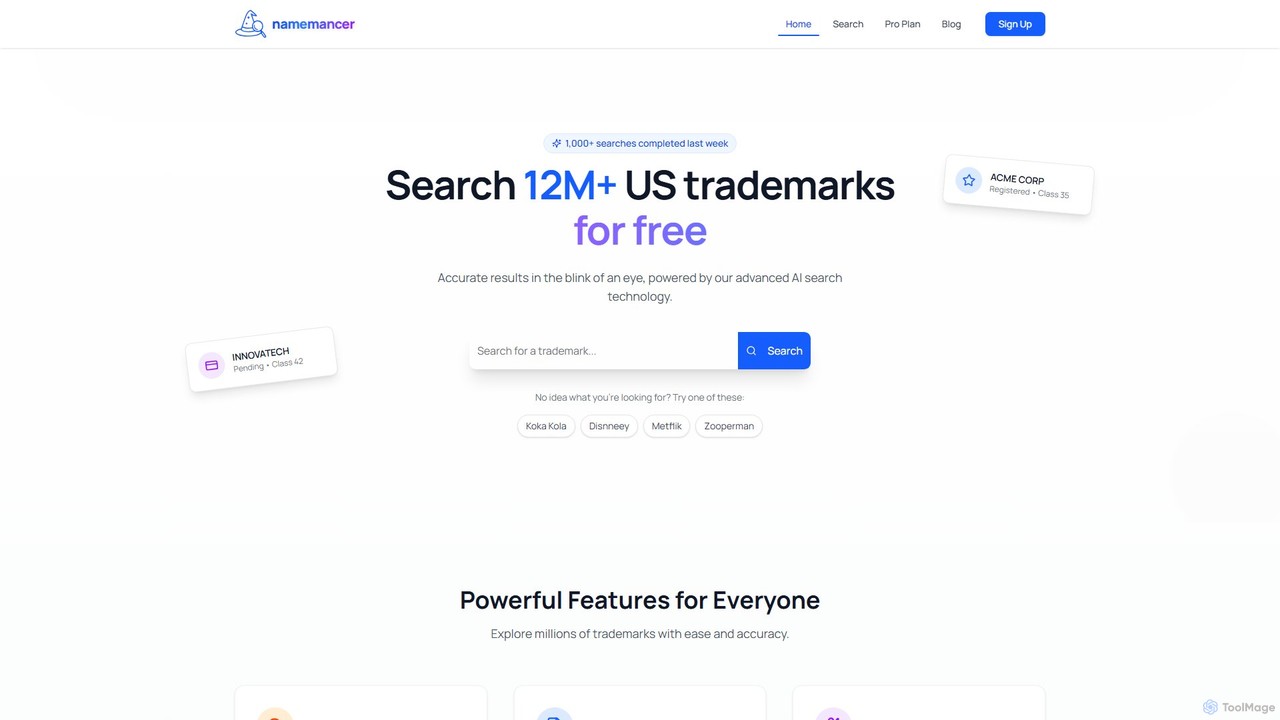
Namemancer is an AI-powered trademark search platform designed for both individuals and legal professionals. It offers free, instant …
Namemancer is an AI-powered trademark search platform designed for both individuals and legal professionals. It offers free, instant searches across 12M+ US trademarks using advanced AI that analyzes text, semantics, and phonetics. The Pro plan provides comprehensive clearance reports, common law checks, and customizable, client-ready documents, streamlining the due diligence process for attorneys.
About Trademark
AI Trademark tools are specialized platforms that use artificial intelligence to streamline and enhance trademark search, monitoring, and management. These tools leverage machine learning and computer vision to analyze vast databases of text and logos for potential conflicts with unprecedented speed and accuracy. They empower businesses, legal professionals, and brand managers to protect their intellectual property, mitigate infringement risks, and make informed branding decisions. This technology offers a significant advantage over manual methods by identifying phonetic, semantic, and visual similarities that are often missed.
Core Features
- AI-Powered Clearance Search: Conducts comprehensive searches across global databases using text, image, and phonetic analysis to identify conflicting marks.
- Automated Brand Monitoring: Continuously scans new trademark applications, online marketplaces, and social media for potential infringements.
- Portfolio Management: Centralizes trademark data, tracks critical deadlines for renewals and filings, and generates status reports.
- Risk Assessment Analysis: Provides data-driven scores or reports on the likelihood of confusion between a proposed mark and existing ones.
Use Cases
These tools are essential for intellectual property lawyers, paralegals, in-house legal teams, and brand managers in corporations of all sizes. Startups and marketing agencies also use them during the brand creation process to ensure the availability and defensibility of new names and logos before investing in marketing.
How to Choose
When selecting an AI Trademark tool, consider the comprehensiveness of its database coverage (global vs. regional), the accuracy of its image and text recognition algorithms, the scope of its monitoring features, and its ability to integrate with existing legal practice management software. Also, evaluate the clarity of its reporting and the level of customer support provided.
TrademarkUse Cases
Pre-Launch Brand Clearance Search
A startup founder preparing to launch a new tech product uses an AI trademark tool to conduct a comprehensive clearance search. They input their proposed brand name and logo. The AI scans millions of records across global trademark offices, domain registries, and social media platforms in minutes. The tool flags several phonetically similar names in the same industry and a visually similar logo in an adjacent market, providing a risk score for each. This allows the founder to choose a more distinct and defensible brand identity, avoiding potential legal disputes and costly rebranding after launch.
Automated Infringement Monitoring for E-commerce
A brand protection manager for a global fashion retailer sets up an automated watch service using an AI trademark tool. The tool continuously monitors major e-commerce platforms, social media marketplaces, and new domain registrations for unauthorized use of the company's logos and brand names. When the AI's image recognition algorithm detects a counterfeit product listing using a slightly altered logo, it automatically captures the evidence and sends an alert to the manager. This enables the legal team to issue takedown notices swiftly, protecting revenue and brand reputation.
Efficient Trademark Portfolio Management
A paralegal at a law firm specializing in intellectual property uses an AI tool to manage portfolios for multiple clients. The platform centralizes hundreds of trademarks, automatically tracking renewal deadlines, office action response dates, and publication periods across different jurisdictions. Instead of manually checking status updates on various national patent and trademark office websites, the paralegal receives a consolidated daily digest from the AI tool. This significantly reduces administrative workload and minimizes the risk of missing critical deadlines, allowing the legal team to focus on more strategic tasks.
Competitive Intelligence Analysis
A marketing strategist at a consumer goods company uses an AI trademark tool to monitor the filing activities of key competitors. They set up alerts for any new trademark applications filed by these companies worldwide. When a competitor files for a new trademark related to 'plant-based snacks,' the strategist is immediately notified. This provides an early signal of the competitor's potential entry into a new product category, allowing the strategist's company to proactively adjust its own product roadmap and marketing strategy to counter the move.
Rapid Knockout Searches for Creative Agencies
A designer at a branding agency is brainstorming names and logos for a new client. For each of the 20 initial concepts, they perform an instant 'knockout search' using an AI trademark tool. The tool provides a red/yellow/green risk indicator within seconds, based on a preliminary scan for direct conflicts. This allows the creative team to immediately discard high-risk options and focus their efforts on developing concepts that have a higher probability of being available for registration. The process accelerates the creative workflow and improves the quality of deliverables to the client.
Supporting Domain Name Dispute Resolution
An in-house counsel for a software company discovers a third party has registered a domain name confusingly similar to their primary trademark, a practice known as cybersquatting. To build a case for a UDRP (Uniform Domain-Name Dispute-Resolution Policy) complaint, the counsel uses an AI trademark tool. The tool generates a comprehensive report detailing the company's established trademark rights, dates of first use, and a side-by-side comparison of the trademark and the infringing domain. This organized evidence strengthens the complaint, increasing the likelihood of successfully recovering the domain name.