ToolMage
Sign in

Best 4 Exploration AI tools for Lifestyle

Popular Exploration AI tools in Lifestyle include Chiaro, Sendai, Waywise, and herodot, helping you work more efficiently.

Sendai

Sendai

Sendai is an AI-powered travel planner designed for pioneers and explorers. It generates smart and unique travel guides, helping users discover new destinations and experiences. Unlock personalized itineraries and embark on your next adventure with ease.

Exploration
Visits 6.1KFavorites 119Likes 133
Chiaro
Free

Chiaro

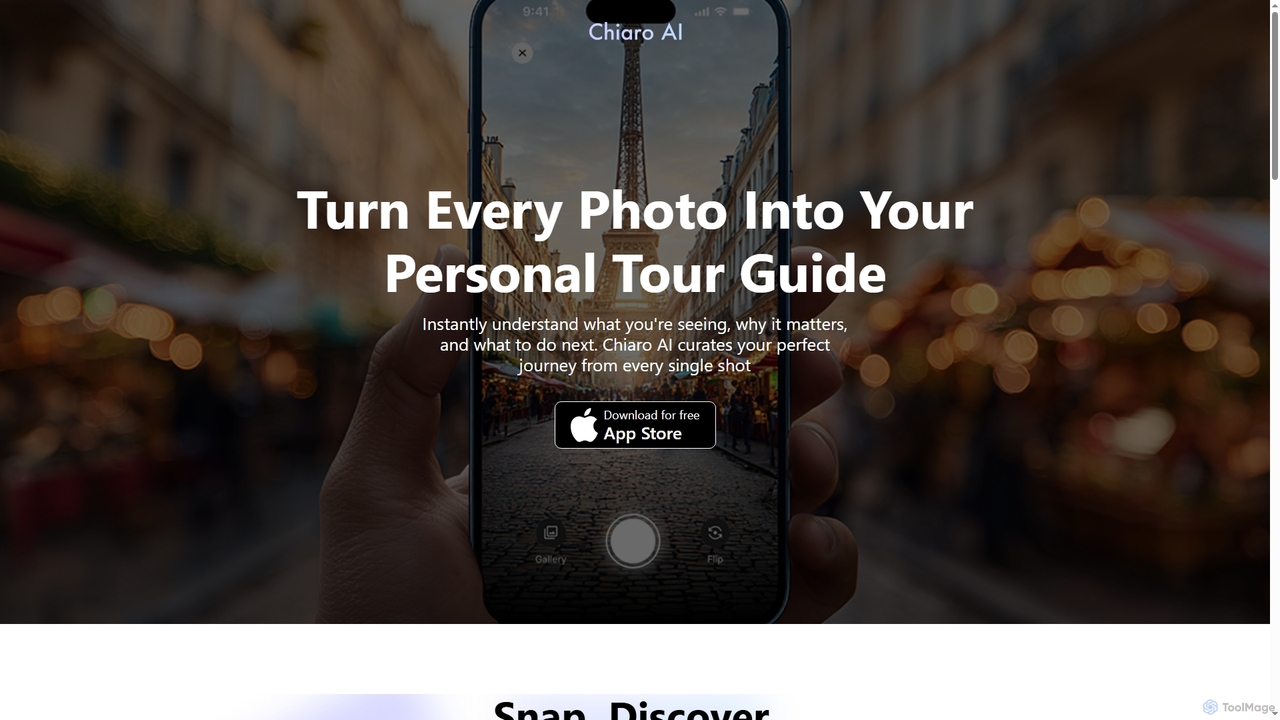
Chiaro is an AI-powered personal tour guide app that turns your phone's camera into an interactive travel companion. Snap a photo of any landmark, artwork, or monument to instantly receive its story, history, and significance through text and audio guides. It also helps you plan your day and discover hidden local gems.

Learning
Visits 8.1KFavorites 109Likes 127
herodot
Freemium

herodot

Herodot is an AI-powered travel companion that transforms your smartphone into a personal audio guide. Explore cities, museums, and historical sites at your own pace. Simply take a photo of a landmark or tap on a map to receive immersive, narrated stories in multiple languages and from various AI personas, such as a historian or a local expert.

History
Visits 5.3KFavorites 121Likes 118
Waywise
Freemium

Waywise

Waywise is an iOS city guide app for independent travelers. It avoids typical recommendations, instead providing essential, practical information on public transport, tipping culture, currency, and local customs to help you explore cities like a local, on your own terms.

Exploration
Visits 5.5KFavorites 127Likes 150

About Exploration

Exploration AI tools are designed to assist individuals in discovering new information, experiences, and personal growth opportunities within various lifestyle domains. These tools leverage advanced AI algorithms, including natural language processing and recommendation systems, to personalize discovery processes. They empower users to broaden their horizons, find tailored content, and make informed decisions, ultimately enriching their daily lives and personal development.

Core Features

  • Personalized Recommendations: AI analyzes user preferences and behaviors to suggest relevant content, activities, or destinations.
  • Information Synthesis: Processes vast amounts of data to provide concise summaries and insights on complex topics.
  • Interactive Discovery: Enables users to explore topics through conversational interfaces or guided pathways.
  • Pattern Recognition: Identifies trends and connections across diverse datasets to uncover hidden opportunities or insights.

Applicable Scenarios

Individuals seeking new hobbies, travelers planning unique itineraries, lifelong learners exploring new subjects, or anyone looking to deepen their understanding of specific interests can benefit. These tools are particularly useful for personal development, leisure planning, and educational discovery.

How to Choose

When selecting an Exploration AI tool, consider its personalization capabilities, the breadth and depth of its knowledge base, ease of use, and integration with other platforms. Evaluate the accuracy of its recommendations and its ability to adapt to evolving user interests.

Exploration use cases

1

Discovering Niche Hobbies & Interests

An individual feeling uninspired uses an Exploration AI tool by inputting their current interests, available free time, and desired skill level. The AI analyzes this data and suggests several unique hobbies, such as urban gardening, amateur astronomy, or digital calligraphy, complete with beginner resources and local community groups, saving hours of manual research and sparking new passions.

2

Personalized Travel Itinerary Planning

A traveler wants to plan a unique trip to a new city but dislikes generic tourist traps. They use an AI exploration tool, specifying their budget, preferred activities (e.g., historical sites, local cuisine, art galleries), and pace. The AI generates a multi-day itinerary with off-the-beaten-path suggestions, optimized routes, and real-time recommendations for local events, ensuring a highly personalized and memorable experience.

3

Curating Educational Content for Lifelong Learning

A professional aims to learn about sustainable energy but is overwhelmed by the sheer volume of information online. An Exploration AI tool helps by curating a personalized learning path, suggesting relevant articles, academic papers, online courses, and expert interviews based on their current knowledge level and learning style. This streamlines the learning process, making complex subjects more accessible and engaging.

4

Brainstorming Creative Project Ideas

A content creator is experiencing writer's block for their next blog post series. They input a broad topic like "future of work" into an AI exploration tool. The AI generates diverse sub-topics, unique angles, potential interview questions, and even visual concepts, drawing from current trends and interdisciplinary knowledge, significantly accelerating the ideation phase and fostering innovative content.

5

Identifying Local Hidden Gems & Experiences

A local resident wants to explore their city beyond the usual spots. They use an AI exploration tool to find hidden cafes, unique art installations, pop-up markets, or lesser-known parks. By analyzing local reviews, social media trends, and historical data, the AI provides personalized recommendations that match their interests, transforming routine outings into exciting discoveries.

6

Ancestry & Genealogy Research Assistance

An individual is researching their family history but struggles with fragmented records and obscure databases. An Exploration AI tool assists by cross-referencing historical documents, public records, and genealogical databases, identifying potential connections and suggesting new research avenues. It can even analyze linguistic patterns in old texts, helping to piece together a more complete family tree and uncover fascinating personal stories.

Exploration FAQ

What are Exploration AI tools?

Exploration AI tools are AI-powered applications designed to help users discover new information, experiences, and opportunities across various lifestyle domains. They leverage algorithms like machine learning and natural language processing to provide personalized recommendations, synthesize vast amounts of data, and facilitate interactive learning, making discovery more efficient and tailored to individual interests.

How do Exploration AI tools personalize discovery?

These tools personalize discovery by analyzing user data, including past interactions, preferences, search history, and explicit inputs. They use sophisticated recommendation engines to identify patterns and predict what content, activities, or information would be most relevant and engaging for a specific user, continuously refining suggestions based on feedback and evolving interests.

What's the difference between Exploration AI tools and general search engines?

While both help find information, general search engines primarily retrieve results based on keywords, requiring users to sift through many links. Exploration AI tools, conversely, focus on proactive, personalized discovery. They synthesize information, offer curated recommendations, and often provide interactive guidance, aiming to uncover relevant insights or experiences that users might not have known to search for directly.

Who can benefit most from using Exploration AI tools?

A wide range of individuals can benefit, including lifelong learners seeking curated educational content, travelers looking for unique itinerary suggestions, hobbyists wanting to discover new passions, and creative professionals needing inspiration. Anyone looking to expand their knowledge, find new experiences, or make more informed personal decisions in a personalized and efficient manner will find these tools valuable.

What should I consider when choosing an Exploration AI tool?

When selecting an Exploration AI tool, evaluate its core functionality, such as the depth of its recommendation engine and its ability to synthesize complex information. Consider the breadth of its knowledge base, user interface intuitiveness, and how well it integrates with your existing digital ecosystem. Also, assess its privacy policy regarding personal data and the accuracy of its personalized outputs.