Manufacturing Best in category 1 results Automation AI Tool

Popular AI tools in the Automation field of Manufacturing include Sorting Robotics, etc., helping you quickly improve efficiency.

Sorting Robotics

Sorting Robotics

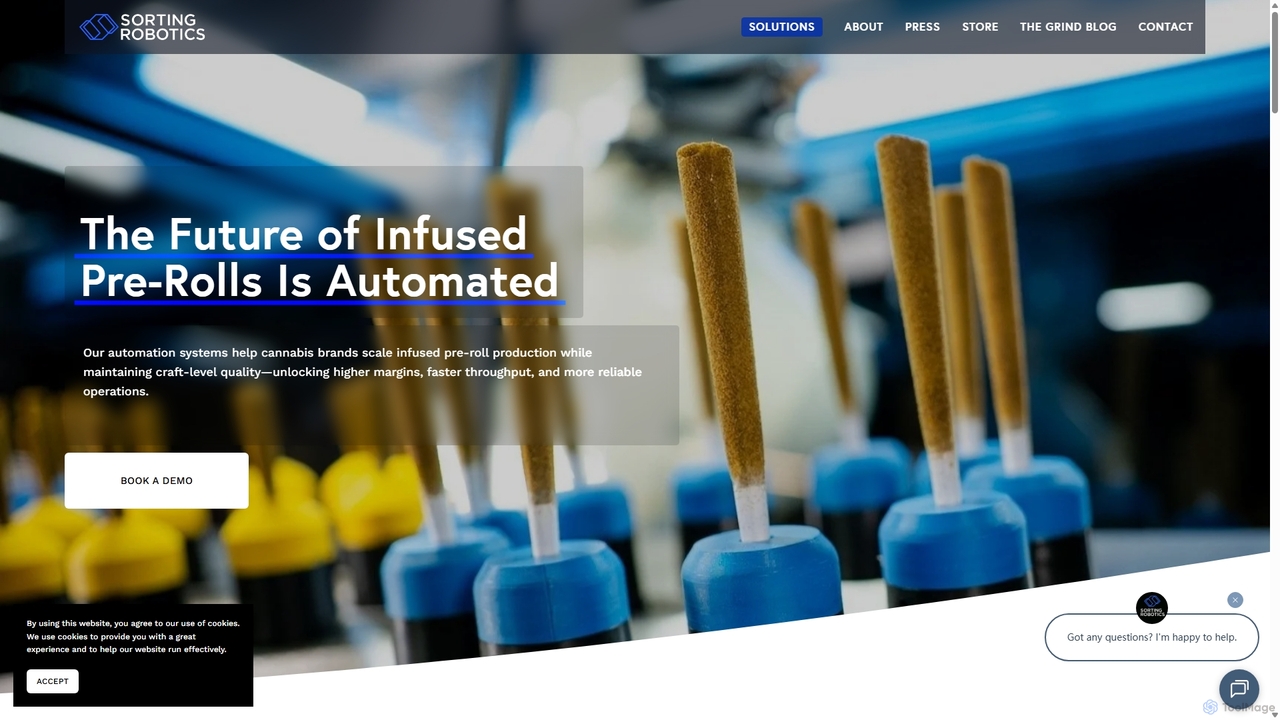
Sorting Robotics provides advanced automation and robotic solutions for the cannabis industry. Designed by ex-NASA engineers, their systems …

14.1K

About Automation

AI Automation tools for manufacturing are a class of software that uses artificial intelligence to control, manage, and optimize industrial processes. These tools leverage technologies like machine learning, computer vision, and IoT data analysis to automate tasks ranging from physical assembly to complex supply chain decisions. Their primary value lies in enhancing production efficiency, improving product quality, and enabling predictive maintenance, thus reducing downtime and operational costs. They often act as the intelligent layer connecting factory floor equipment (OT) with enterprise management systems (IT).

Core Features

  • Predictive Maintenance: Analyzes sensor data from machinery to forecast potential failures and schedule maintenance proactively.
  • Automated Quality Control: Employs computer vision to automatically detect defects, anomalies, or inconsistencies on production lines in real-time.
  • Robotic Process Automation (RPA): Programs industrial robots and cobots to perform repetitive or complex tasks like assembly, welding, and packaging with high precision.
  • Supply Chain Optimization: Uses AI algorithms to automate demand forecasting, inventory management, and logistics planning for greater resilience.
  • Digital Twin Simulation: Creates dynamic virtual models of production lines to test and optimize automation workflows before physical implementation.

Use Cases

These tools are crucial in sectors like automotive, electronics, pharmaceuticals, and consumer goods manufacturing. Production managers use them to optimize scheduling, quality assurance engineers implement them for defect detection, and maintenance teams rely on them for predictive alerts. They are applied to streamline workflows from raw material intake to final product shipment.

How to Choose

When selecting an AI automation tool for manufacturing, consider its integration capabilities with your existing MES, ERP, and SCADA systems. Evaluate its scalability to grow from a single process to a full factory deployment. Assess its data processing capabilities and security protocols for sensitive operational data. Also, verify its compatibility with your specific hardware, such as sensors, PLCs, and robotic arms.

AutomationUse Cases

1

Automated Visual Quality Inspection

A quality control engineer in an electronics manufacturing plant uses an AI-powered vision system to inspect circuit boards on the assembly line. The system, trained on thousands of images, automatically identifies soldering defects, misplaced components, and microscopic cracks with over 99.8% accuracy. This process replaces manual visual inspection, reducing inspection time per board by 95% and significantly lowering the rate of defective products reaching customers.

2

Predictive Maintenance for Assembly Line Robots

A maintenance manager at an automotive plant implements an AI automation platform to monitor the health of robotic arms on the assembly line. The system continuously analyzes vibration, temperature, and power consumption data. It detects a subtle anomaly in a motor's vibration pattern and predicts a bearing failure is likely within 72 hours. This proactive alert allows the team to schedule maintenance during a planned shutdown, preventing an unexpected line stoppage that could cost thousands per minute.

3

AI-Powered Demand Forecasting for Inventory Control

A supply chain planner for a consumer goods manufacturer uses an AI automation tool to manage inventory levels. The tool analyzes historical sales data, current market trends, promotional schedules, and even external factors like weather forecasts. It generates highly accurate demand forecasts and automatically suggests optimal reorder points and quantities. This automation reduces instances of overstocking by 30% and stockouts by 20%, freeing up capital and improving customer satisfaction.

4

Optimizing Production Scheduling with AI

A production supervisor in a pharmaceutical plant uses an AI automation tool to generate daily production schedules. The system considers multiple constraints simultaneously: machine availability, changeover times, raw material inventory, labor shifts, and order deadlines. It runs thousands of simulations to find the most efficient schedule, reducing machine idle time by 15% and increasing overall equipment effectiveness (OEE). The supervisor can now focus on managing the team rather than spending hours on complex manual scheduling.

5

Robotic Bin Picking for Parts Assembly

In a factory that assembles small appliances, an AI-powered robotic arm performs bin picking. Using a 3D vision system, the AI identifies specific components randomly oriented in a large bin, calculates the best grasping position, and picks them up to place them on a conveyor belt for the next assembly stage. This automation replaces a monotonous and ergonomically challenging manual task, increasing picking speed by 40% and ensuring a consistent flow of parts to the assembly line 24/7.

6

Automated Safety Monitoring with AI Vision

A plant safety officer implements an AI automation system connected to existing CCTV cameras. The system is trained to monitor for safety compliance in real-time. It automatically detects if workers are not wearing required Personal Protective Equipment (PPE) like helmets or safety vests in designated zones. It can also identify potential hazards, such as fluid spills or blocked emergency exits. When a violation or hazard is detected, it sends an instant alert to the safety manager's dashboard, enabling immediate corrective action and fostering a safer work environment.

AutomationFrequently Asked Questions