Manufacturing Best in category 1 results Logistics AI Tool

Popular AI tools in the Logistics field of Manufacturing include Artwo, etc., helping you quickly improve efficiency.

Artwo

Artwo

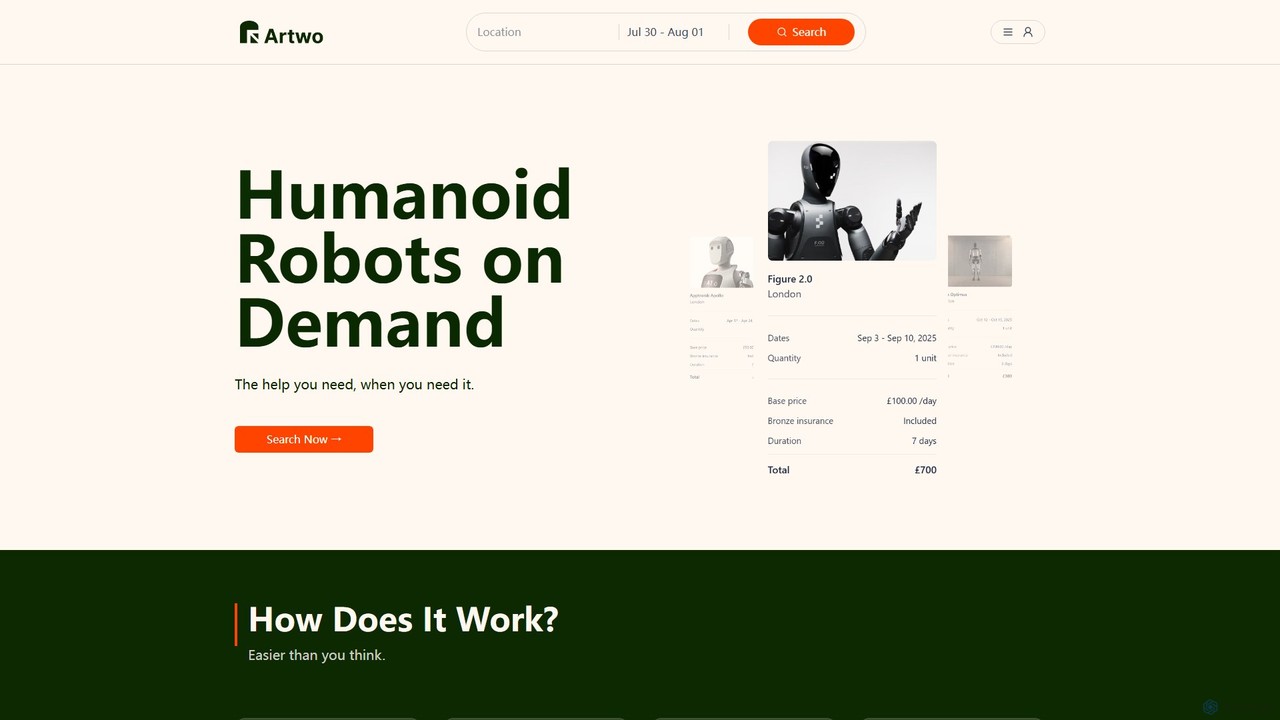
Artwo is a pioneering Robotics as a Service (RaaS) platform offering on-demand access to advanced humanoid robots. It …

2.5K

About Logistics

AI Logistics tools are a class of software that uses machine learning and predictive analytics to optimize supply chain operations. These tools analyze vast datasets from transportation, warehousing, and inventory to forecast demand, plan routes, and manage fleets in real-time. Their primary value lies in reducing operational costs, accelerating delivery times, and increasing resilience against disruptions. As a key component within the broader Manufacturing AI ecosystem, these tools bridge the gap between production output and final delivery, ensuring goods move with maximum efficiency.

Core Features

  • Predictive Demand Forecasting: Utilizes historical data and external factors to accurately project future product demand.
  • Dynamic Route Optimization: Calculates the most efficient delivery routes based on real-time traffic, weather, and delivery constraints.
  • Warehouse Automation Management: Directs robotic systems (AGVs, AMRs) for automated sorting, picking, and packing of goods.
  • Intelligent Inventory Management: Automates stock level monitoring, predicts reorder points, and minimizes carrying costs.
  • Fleet Predictive Maintenance: Monitors vehicle health data to schedule maintenance proactively before failures occur.

Use Cases

AI Logistics tools are widely adopted in sectors where efficient movement of goods is critical. E-commerce companies use them to optimize last-mile delivery networks. Global freight forwarders rely on them to manage complex international shipments and customs clearance. Manufacturing plants integrate these tools to coordinate just-in-time inventory from suppliers, ensuring production lines are never halted due to material shortages.

How to Choose

When selecting an AI Logistics tool, consider its integration capabilities with your existing ERP, WMS, and TMS systems. Evaluate its scalability to ensure it can handle your current and future shipment volumes. Assess its specialization—whether it focuses on last-mile delivery, freight forwarding, or warehouse management—to match your specific needs. Finally, confirm you have the required data quality and quantity to train the AI models effectively for optimal performance.

LogisticsUse Cases

1

Real-Time Route Optimization for Last-Mile Delivery

A logistics coordinator for an e-commerce company is tasked with planning daily routes for a fleet of 50 drivers in a dense urban area. Using an AI Logistics tool, they input all delivery addresses, vehicle capacities, and driver schedules. The system analyzes this data along with real-time traffic, weather conditions, and delivery time windows to generate the most efficient multi-stop route for each driver. If a new order comes in or a road is closed, the system dynamically re-routes drivers in real-time. This results in a 15-20% reduction in fuel consumption and allows for a significant increase in the number of successful deliveries per driver each day.

2

Automated Warehouse Inventory Management

A warehouse manager struggles with maintaining optimal stock levels for thousands of SKUs, leading to frequent stockouts or costly overstocking. By implementing an AI inventory management system, the platform continuously analyzes sales data, supplier lead times, and seasonal trends. It automatically generates purchase orders when stock levels are predicted to fall below a set threshold and identifies slow-moving items that should be prioritized for promotion. This automation reduces inventory holding costs by up to 30% and decreases stockout incidents by over 50%, directly improving order fulfillment rates and customer satisfaction.

3

Predictive Maintenance for a Trucking Fleet

A fleet manager for a long-haul trucking company needs to minimize vehicle downtime and unexpected repair costs. They deploy an AI logistics tool that connects to sensors on each truck's engine, tires, and brakes. The AI analyzes this real-time data, identifying subtle patterns that precede component failure. For example, it might detect a slight increase in engine temperature under load that indicates a failing water pump. The system then automatically alerts the manager and schedules a maintenance appointment before a breakdown occurs on the road. This proactive approach reduces unplanned downtime by 40% and extends the overall lifespan of the vehicles.

4

AI-Powered Demand Forecasting for Supply Chains

A supply chain planner for a large retail company needs to accurately forecast product demand to optimize inventory and production schedules. They use an AI tool that analyzes not just historical sales data, but also external factors like market trends, competitor promotions, social media sentiment, and even weather forecasts. The AI model generates granular demand forecasts by region and product line, highlighting potential supply chain risks such as a sudden spike in demand. This improves forecast accuracy by over 25% compared to traditional methods, reducing the bullwhip effect and enabling more efficient procurement and production planning.

5

Optimizing Container Loading and Yard Management

A port operations manager faces the challenge of efficiently managing the placement and retrieval of thousands of shipping containers. An AI system is deployed that uses computer vision from yard cameras to identify containers and their exact locations. The AI then calculates the optimal stacking plan to minimize crane movements, considering factors like container weight, destination, and type (e.g., refrigerated). When a truck arrives for pickup, the system provides the crane operator with the most efficient retrieval sequence. This optimization increases yard throughput by 15% and significantly reduces truck turnaround times.

6

Automating Freight Document Processing

A freight forwarding agent spends hours each day manually extracting data from bills of lading, commercial invoices, and packing lists. This process is tedious and prone to costly errors. By using an AI tool with Optical Character Recognition (OCR) and Natural Language Processing (NLP), the agent can simply upload scanned documents. The AI automatically identifies, extracts, and validates key information like shipper details, cargo descriptions, and HS codes. The extracted data is then populated directly into their TMS, reducing manual data entry time by over 80% and accelerating customs clearance processes.

LogisticsFrequently Asked Questions