Manufacturing Best in category 1 results Healthcare Products AI Tool

Popular AI tools in the Healthcare Products field of Manufacturing include aofithealthcare, etc., helping you quickly improve efficiency.

aofithealthcare

aofithealthcare

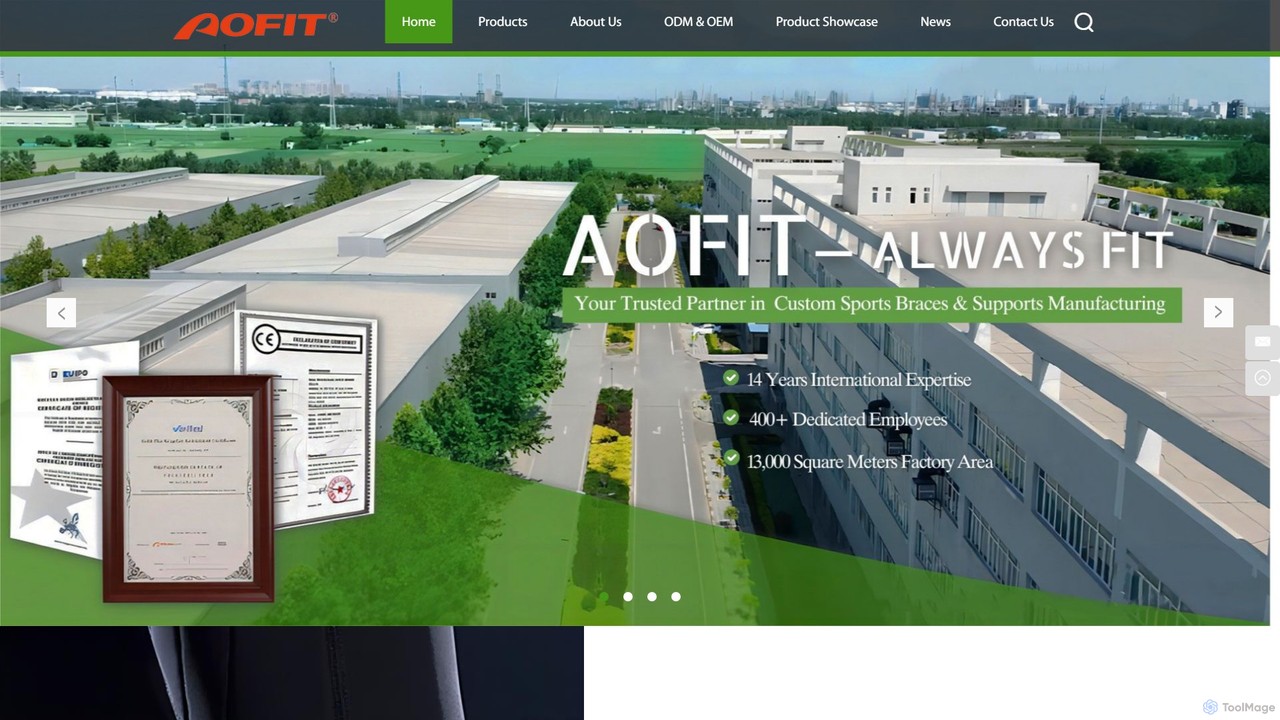
AOFIT is a leading OEM/ODM manufacturer specializing in high-quality healthcare and sports support products. They offer custom design, …

4.4K

About Healthcare Products

AI Healthcare Products are specialized manufacturing tools that apply artificial intelligence to the design, production, and quality control of medical devices, pharmaceuticals, and biotech goods. These tools utilize machine learning algorithms and predictive analytics to optimize complex processes, from molecular simulation in drug discovery to visual inspection on production lines. Their primary value lies in accelerating innovation, ensuring stringent regulatory compliance, and enhancing the precision and safety of medical manufacturing. This technology enables the creation of more effective and personalized health solutions at scale.

Core Features

  • Predictive Quality Analytics: Uses AI to forecast product defects and quality deviations before they occur, analyzing real-time production data.
  • Regulatory Compliance Automation: Automates the generation and verification of documentation required for health authorities like the FDA or EMA.
  • Digital Twin Simulation: Creates virtual models of products or production lines to test and optimize designs and processes without physical prototypes.
  • Supply Chain Optimization: Manages and predicts demand for sensitive materials, ensuring traceability and integrity from source to production.
  • Generative Design for Medical Devices: Generates and evaluates thousands of potential device designs based on performance, material, and biological constraints.

Use Cases

These tools are crucial for pharmaceutical companies, medical device manufacturers, and biotechnology firms. For instance, a device engineer might use generative design to create a lighter, stronger orthopedic implant. A quality assurance manager in a pharmaceutical plant could deploy AI vision systems to inspect vials for microscopic contaminants, a task that surpasses human capability in speed and accuracy.

How to Choose

When selecting an AI tool for healthcare product manufacturing, first assess its specialization: is it designed for biologics, devices, or small-molecule drugs? Evaluate its validation and compliance features to ensure it meets industry standards (e.g., GxP, ISO 13485). Consider its integration capabilities with existing Manufacturing Execution Systems (MES) and Quality Management Systems (QMS). Finally, analyze the data requirements and the model's transparency to ensure its predictions are reliable and explainable.

Healthcare ProductsUse Cases

1

AI-Powered Medical Device Prototyping

A medical device engineer is tasked with developing a new cardiovascular stent that is both durable and biocompatible. Instead of creating numerous physical prototypes, they use an AI generative design tool. The engineer inputs key parameters such as blood flow dynamics, material stress limits, and arterial dimensions. The AI generates hundreds of optimized stent lattice designs, simulating their performance under physiological conditions. This process allows the engineering team to identify the most promising designs for physical testing in a fraction of the time, reducing material waste and accelerating the development cycle significantly.

2

Automated Quality Control in Pharmaceutical Production

A quality assurance manager at a pharmaceutical manufacturing plant needs to ensure 100% inspection of vaccine vials for particulate matter and cosmetic defects. Manual inspection is slow and prone to human error. The plant implements an AI-powered visual inspection system. High-speed cameras capture images of each vial, and a machine learning model, trained on millions of images, instantly identifies anomalies like cracks, incorrect fill levels, or foreign particles. Vials that fail inspection are automatically rejected from the line. This automates a critical quality step, increases throughput, and provides a verifiable digital record for regulatory audits.

3

Predictive Maintenance for Medical Equipment Manufacturing

A factory produces complex diagnostic imaging machines, where production line downtime is extremely costly. To prevent unexpected failures, they install AI-powered predictive maintenance software. Sensors on critical machinery, like CNC mills and assembly robots, continuously stream operational data (vibration, temperature, etc.) to an AI platform. The platform's algorithm analyzes these patterns to predict when a component is likely to fail, weeks in advance. This allows the maintenance team to schedule repairs during planned downtime, preventing catastrophic failures, maximizing uptime, and ensuring consistent production quality of life-saving equipment.

4

Optimizing Supply Chains for Biologics

A biotechnology company manufactures temperature-sensitive cell therapies that require a strict cold chain. A supply chain manager uses an AI platform to optimize logistics. The AI analyzes historical shipping data, weather forecasts, and carrier performance to predict the safest and fastest routes. It also monitors real-time sensor data from shipments to detect temperature deviations. If a potential issue is flagged, the system automatically alerts the manager and suggests corrective actions, such as rerouting the shipment. This ensures product integrity, minimizes costly spoilage, and guarantees that critical therapies reach patients safely.

5

Personalized Implant and Prosthetic Design

An orthopedic surgeon needs a custom knee implant for a patient with unique anatomy. Traditionally, this is a lengthy manual design process. Instead, the surgeon's team uses an AI-driven design tool. They upload the patient's CT scans, and the AI software automatically generates a 3D model of a perfectly fitting implant. It optimizes the shape for load distribution and bone integration, suggesting materials and lattice structures for optimal strength and light weight. The final design is then sent directly to a 3D printer for manufacturing, enabling the creation of patient-specific devices that offer better outcomes and faster recovery times.

6

Automating Regulatory Compliance Documentation

A regulatory affairs specialist at a medical device company is preparing a 510(k) submission for the FDA. This involves compiling thousands of pages of design specifications, test results, and quality records. They use an AI tool designed for regulatory intelligence. The tool automatically cross-references documents, flags inconsistencies, and checks against the latest FDA guidance. It can also generate summaries and tables required for the submission. This reduces the risk of human error, cuts down preparation time by weeks, and increases the likelihood of a successful first-pass submission, avoiding costly delays in getting the product to market.

Healthcare ProductsFrequently Asked Questions