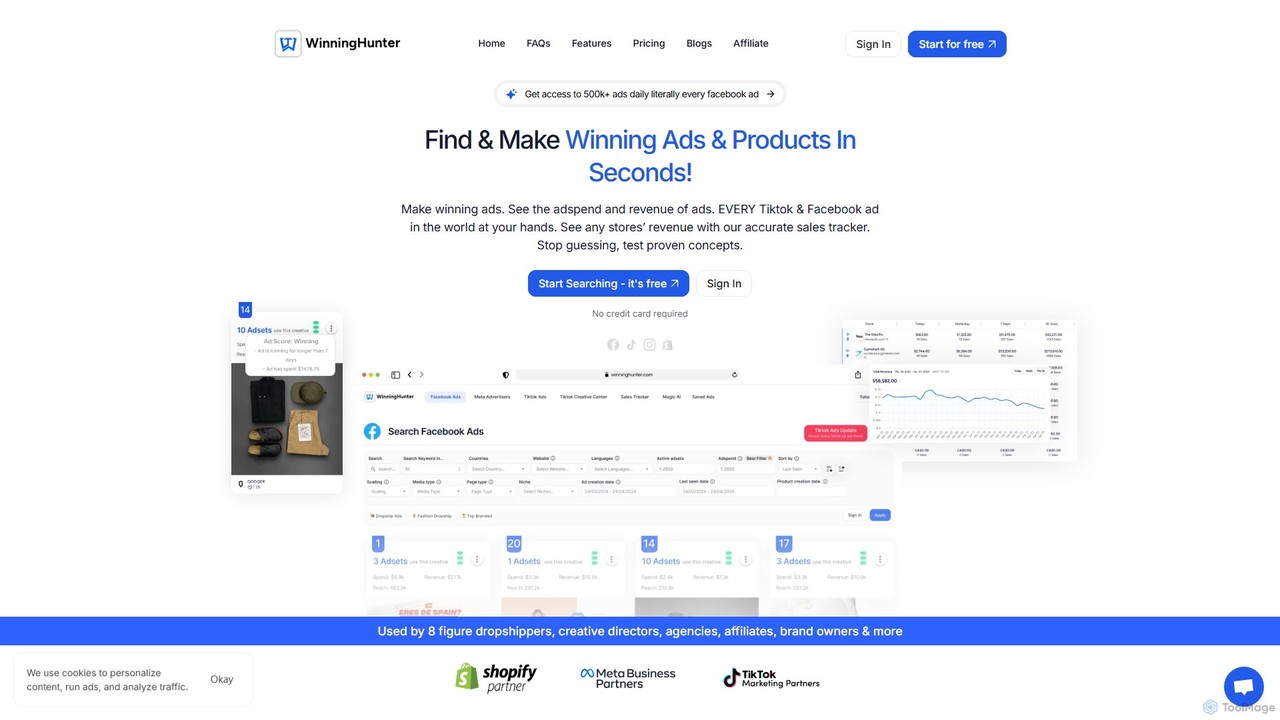
Ad Spy tools are specialized AI-powered platforms designed to monitor and analyze competitors' advertising strategies across various digital channels. These tools leverage advanced data collection and AI algorithms to uncover insights into ad creatives, targeting methods, spending patterns, and campaign performance. By providing a comprehensive overview of the competitive landscape, Ad Spy tools enable marketers to identify successful tactics, discover emerging trends, and optimize their own advertising campaigns for better results and a stronger market position.
Core Features
- Competitor Ad Monitoring: Track and analyze active and historical ad campaigns of competitors across platforms like Facebook, Google, TikTok, and more.
- Creative Analysis: Deconstruct ad creatives, including images, videos, headlines, and copy, to understand effective messaging and visual trends.
- Targeting Insights: Infer competitor audience targeting strategies based on observed ad placements and demographic data.
- Spending & Performance Estimation: Estimate competitor ad spend and gauge campaign performance metrics like impressions, clicks, and engagement.
- Landing Page Tracking: Monitor the landing pages used in competitor ads to understand their conversion funnels and offers.
Use Cases
Digital marketing agencies utilize Ad Spy tools to develop data-driven strategies for clients, identifying gaps and opportunities in their respective markets. E-commerce businesses employ them to track product launches and promotional tactics of rivals, ensuring their own campaigns remain competitive. Media buyers leverage these insights to refine their ad creatives and targeting, aiming to achieve higher ROI by learning from successful and unsuccessful competitor campaigns.
How to Choose
When selecting an Ad Spy tool, consider the breadth of platforms it covers (e.g., social media, search engines), the depth of data provided (e.g., creative details, targeting options, historical data), and the accuracy of its spending estimations. Evaluate its user interface for ease of use, the frequency of data updates, and the availability of advanced filtering and reporting features. Finally, assess the pricing model relative to the value and the specific competitive intelligence needs of your business.