Marketing Best in category 9 results Blogging AI Tool

Popular AI tools in the Blogging field of Marketing include Hashnode、BlogSEO AI、mdedit、BlogBuster、FirstDraft AI、BloggerAI、beagentic、Wizard Writer、GetBotz, etc., helping you quickly improve efficiency.

BlogBuster

BlogBuster

BlogBuster is an AI-powered platform designed to automate your entire blogging process. It generates high-quality, human-like, and SEO-optimized …

8.9K
beagentic

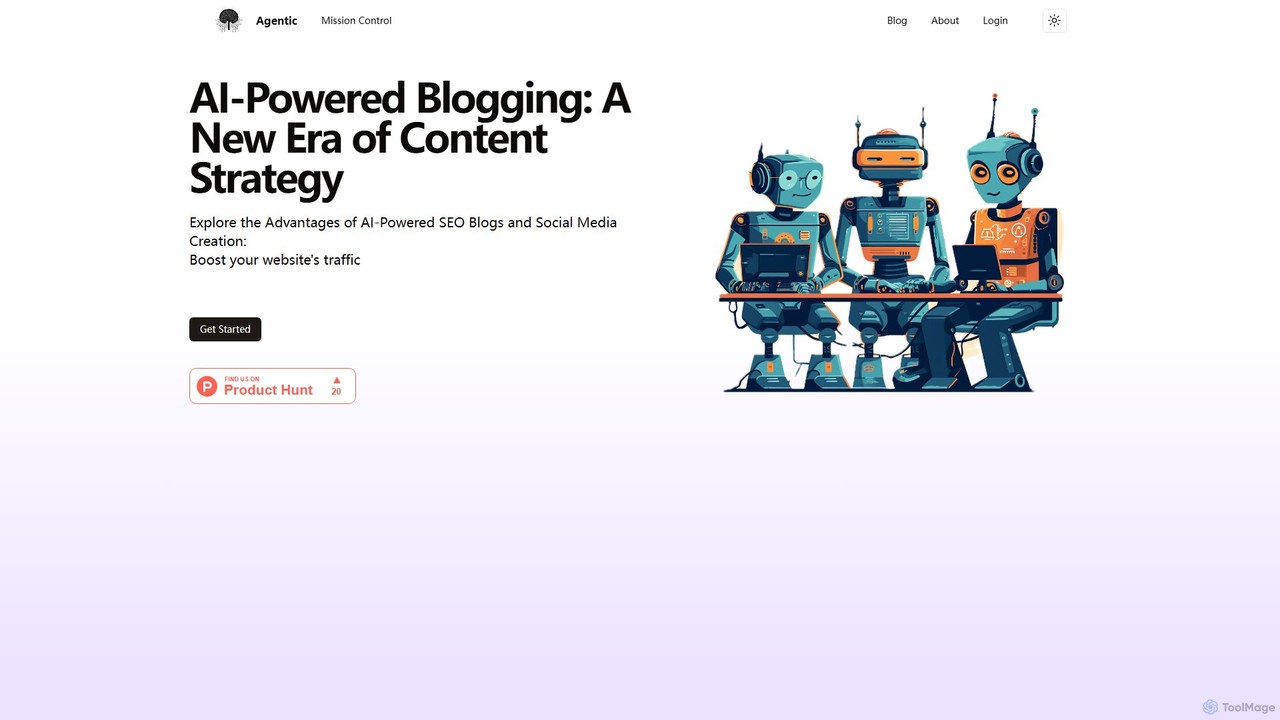
beagentic

beagentic is an AI-powered writing platform that uses a team of autonomous AI agents to research, write, and …

3.0K
BlogSEO AI

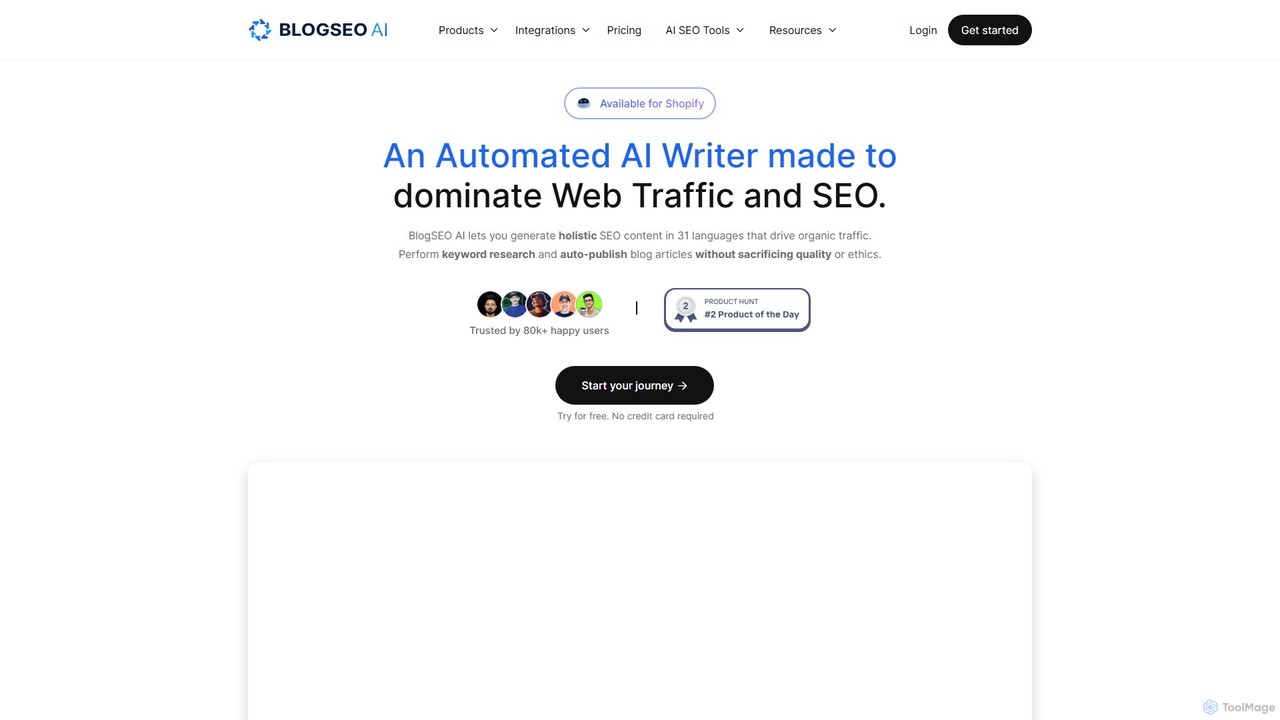
BlogSEO AI

BlogSEO AI is an automated AI writing assistant designed to dominate SEO and web traffic. It empowers bloggers, …

18.3K
GetBotz

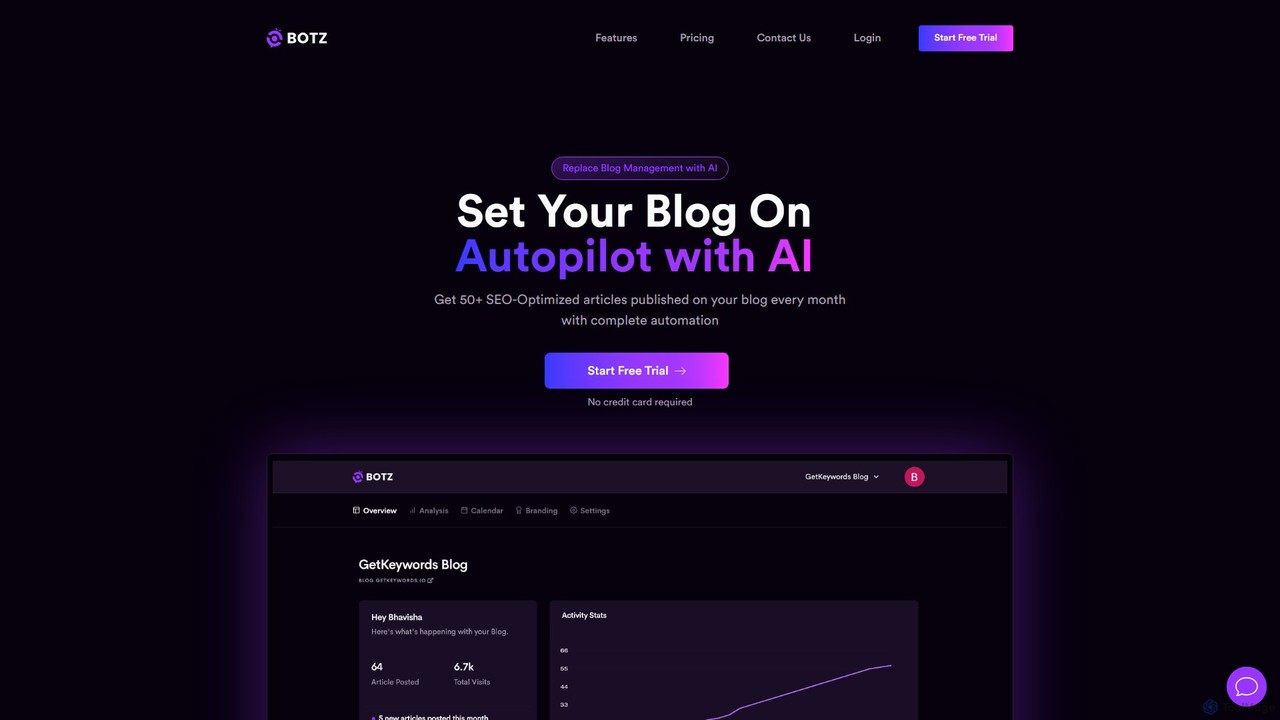
GetBotz

GetBotz is an AI-powered platform that fully automates your blog management. It handles everything from keyword research and …

3.0K
mdedit

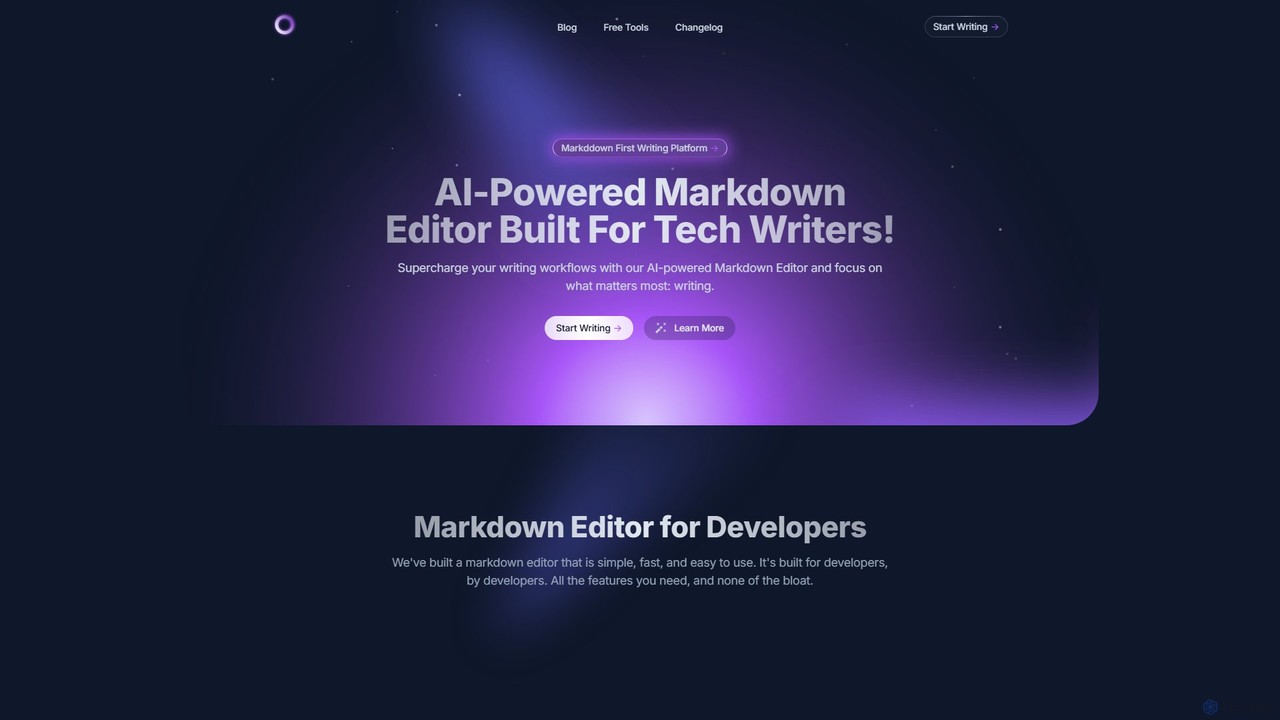
mdedit

mdedit is an AI-powered, Markdown-first writing platform designed for technical writers, developers, and bloggers. It streamlines the writing …

14.1K
Hashnode

Hashnode

Hashnode is an AI-powered blogging and documentation platform designed for developers, tech teams, and enterprises. It offers a …

1.1M
BloggerAI

BloggerAI

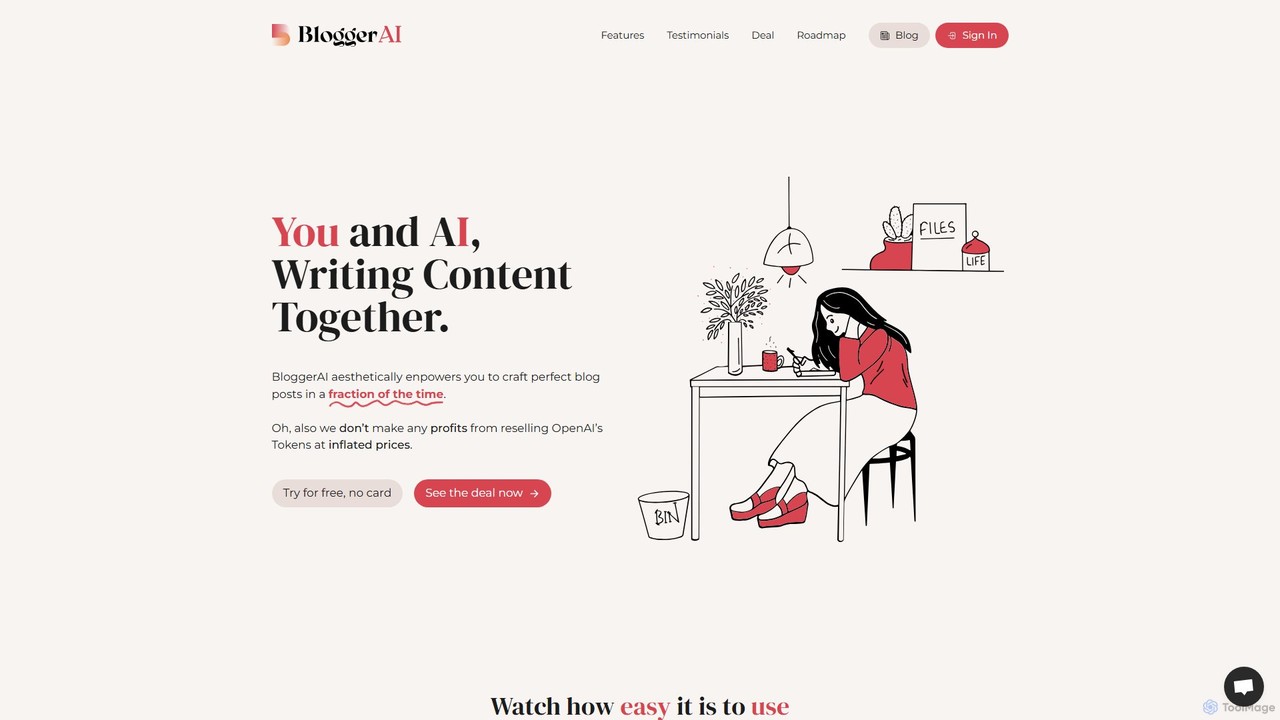
BloggerAI is an AI-powered content writing assistant designed specifically for bloggers. It helps you create high-quality, SEO-optimized blog …

3.9K
FirstDraft AI

FirstDraft AI

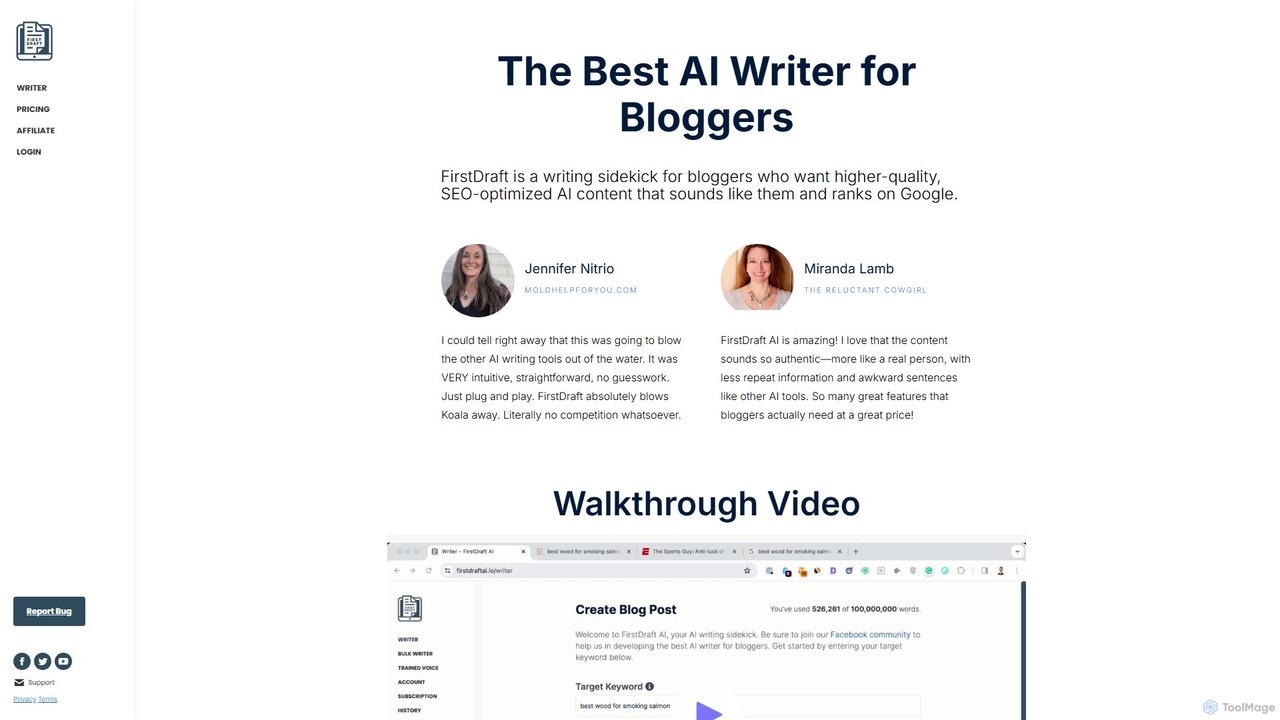
FirstDraft AI is a specialized AI writing assistant for bloggers, designed to create high-quality, SEO-optimized, and personalized long-form …

4.8K
Wizard Writer

Wizard Writer

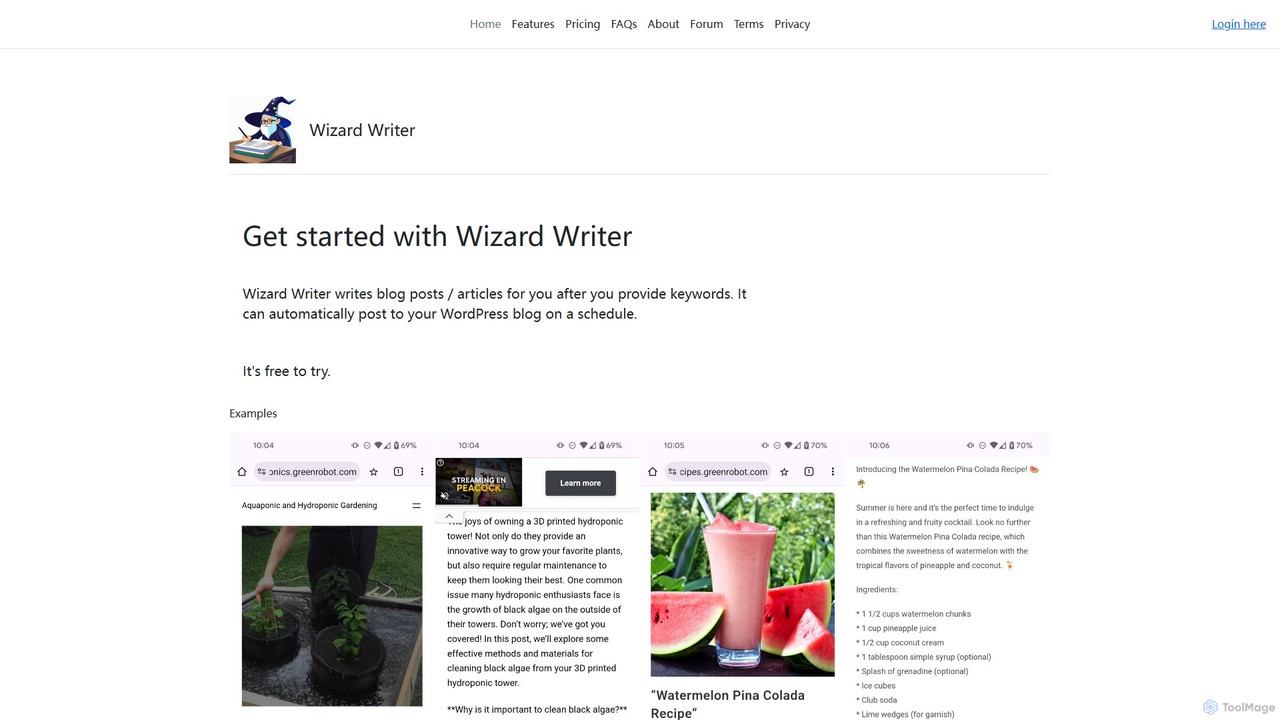
Wizard Writer is an AI-powered content creation tool that automatically generates blog posts and articles from keywords. It …

3.0K

About Blogging

AI Blogging tools are specialized applications designed to automate and enhance the entire blog content creation workflow. They leverage natural language processing (NLP) and machine learning models to assist with everything from topic ideation to final publication. These tools streamline content production, helping users generate high-quality, SEO-optimized articles efficiently. By handling repetitive tasks, they free up creators to focus on strategy, unique insights, and brand voice.

Core Features

  • Topic & Keyword Research: Analyzes search trends and competitor data to suggest high-potential blog topics and relevant SEO keywords.
  • AI-Powered Drafting: Generates structured article outlines, drafts complete blog posts, or writes specific sections based on user prompts.
  • On-Page SEO Optimization: Provides real-time feedback on content readability, keyword density, internal linking, and other on-page SEO factors.
  • Content Repurposing: Transforms a single blog post into various formats, such as social media updates, email newsletters, or video scripts.
  • Title & Meta Description Generation: Creates compelling, click-worthy headlines and meta descriptions to improve click-through rates from search results.

Use Cases

These tools are widely used by content marketing teams to scale their content output, solo bloggers aiming to increase publication frequency, and SEO specialists focused on improving search rankings. E-commerce businesses also use them to create product-related blog content that drives traffic and sales.

How to Choose

When selecting an AI Blogging tool, consider the quality and coherence of the generated text. Evaluate the depth of its SEO features and its ability to integrate with your content management system (CMS) like WordPress. Also, assess the user interface's ease of use and the pricing model—whether it's based on word count, number of articles, or a flat subscription.

BloggingUse Cases

1

Automating First Draft Creation for Content Marketing

A content marketer for a SaaS company needs to produce four in-depth blog posts per week to support a new product launch. Using an AI Blogging tool, they input the target keyword, audience persona, and a brief outline for each post. The AI generates a structured, 1500-word first draft in under ten minutes. This allows the marketer to skip the initial research and writing phase, focusing their time on adding expert insights, brand-specific examples, and refining the tone. The process reduces the total time per article from 6 hours to 2 hours, enabling them to meet their content goals without sacrificing quality.

2

Scaling a Niche Blog with Consistent Content

A solo blogger runs a niche website about sustainable gardening. To grow their audience and improve search rankings, they need to increase their publishing frequency from once a week to three times a week. An AI Blogging tool helps them by generating a list of long-tail keyword ideas and creating detailed outlines for each topic. The blogger then uses these outlines as a foundation, adding their personal experiences and photos. The AI handles the structural and research-heavy parts, allowing the blogger to triple their output and focus on creating unique, authentic content that resonates with their audience.

3

Optimizing Existing Blog Content for SEO

An SEO specialist is tasked with improving the organic traffic of a company's blog. They use an AI Blogging tool with SEO features to audit existing posts. The tool scans an underperforming article and suggests adding related keywords, improving the meta description for a higher click-through rate, and restructuring headings for better readability. It also identifies opportunities for internal links to other relevant posts. The specialist implements these AI-driven recommendations, and within a few weeks, the article's ranking for its target keyword improves from page two to the top three results on page one.

4

Generating a Content Calendar with Relevant Topics

A marketing manager needs to plan the blog content for the next quarter but is running low on fresh ideas. They use an AI Blogging tool's topic research feature, inputting their core industry terms like 'project management software' and 'team collaboration'. The AI analyzes current search trends, competitor blogs, and questions asked on forums like Reddit and Quora. It then generates a list of 50 potential blog titles, categorized by user intent (e.g., 'how-to guides', 'comparison posts', 'thought leadership'). The manager selects the 12 most promising topics to build a comprehensive and data-driven content calendar for the quarter.

5

Repurposing Blog Posts for Social Media Engagement

A social media manager wants to promote a new, long-form blog post across multiple channels. Instead of manually creating different captions, they use an AI Blogging tool's repurposing feature. They paste the blog post's URL into the tool. The AI then generates five engaging tweets with relevant hashtags, a concise and professional LinkedIn post summarizing the key takeaways, and a more casual Facebook post with a question to spark discussion. This saves the manager over an hour of creative work and ensures the core message is adapted effectively for each platform's audience, increasing overall engagement.

6

Overcoming Writer's Block for a Technical Article

A software developer needs to write a technical blog post about a new API but is struggling to start. They feel stuck on how to structure the information in an accessible way. Using an AI Blogging tool, they input the topic 'A Beginner's Guide to Our New API'. The AI generates several potential outlines, including one structured with sections for 'What is the API?', 'Key Features', 'Getting Started: A Step-by-Step Tutorial', and 'Common Use Cases'. Seeing this logical flow helps the developer overcome their writer's block. They use the generated outline as a framework and begin filling in the technical details with confidence, turning a daunting task into a manageable one.

BloggingFrequently Asked Questions