ToolMage
Sign in

Best 2 Content AI tools for Marketing

Popular Content AI tools in Marketing include Alphy and aiarion, helping you work more efficiently.

aiarion
Free

aiarion

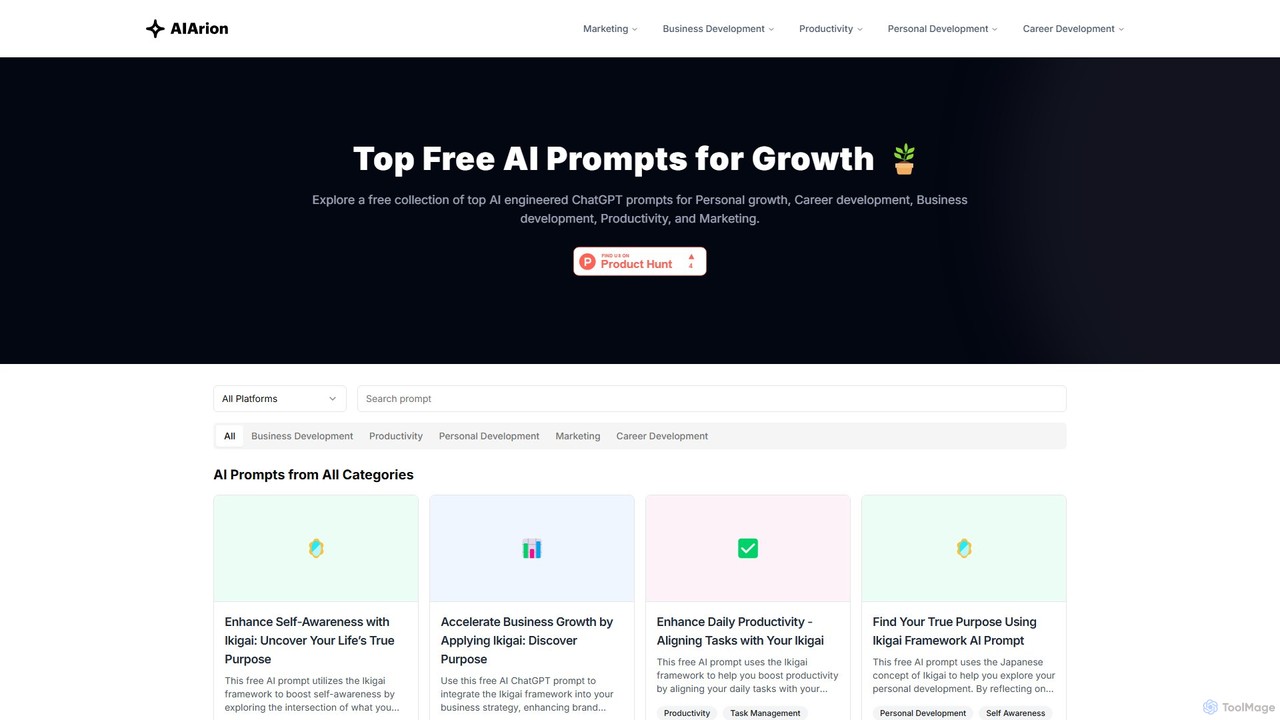
AIArion offers a vast, free library of expertly engineered AI prompts for ChatGPT, Claude, and other models. It leverages proven frameworks like Ikigai, GTD, and SWOT to help users in personal growth, business development, marketing, and productivity. Simply copy, customize, and paste prompts to get structured, actionable insights from your favorite AI.

Strategic Planning
Visits 4.8KFavorites 144Likes 142
Alphy
Freemium

Alphy

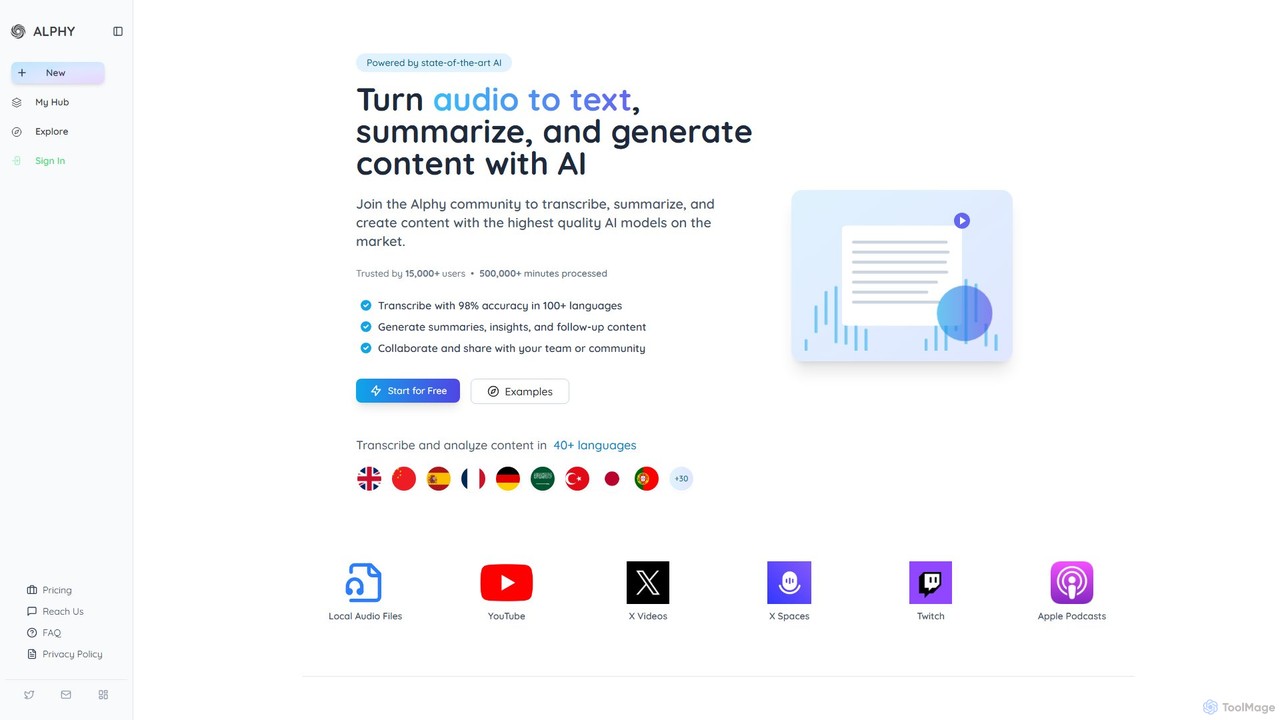
Alphy is an AI-powered tool that transcribes, summarizes, and analyzes audio and video content from various platforms like YouTube, X (Twitter), and podcasts. It turns lengthy discussions into accurate text, concise summaries, and new content formats, enabling users to quickly extract insights and repurpose information.

Summarizer
Visits 6.2KFavorites 128Likes 132

About Content

AI Content tools are designed to automate and enhance the creation, optimization, and personalization of various forms of digital content. Leveraging natural language processing (NLP), machine learning, and generative AI models, these tools empower marketers, writers, and businesses to produce high-quality, engaging content at scale. This significantly boosts marketing efficiency and reach, freeing up creative teams to focus on strategy and innovation within the broader marketing landscape.

Core Features

  • Text Generation: Automatically create articles, ad copy, social media posts, and email content.
  • Visual & Video Scripting: Generate basic visuals, illustrations, or detailed video scripts from text prompts.
  • SEO Optimization: Analyze content for keywords and suggest improvements for search engine ranking.
  • Content Repurposing: Transform long-form content into various formats like summaries, social snippets, or infographics.
  • Personalization & Localization: Tailor messages for specific audience segments and adapt content for different regions.

Applicable Scenarios

These tools are invaluable for digital marketing agencies needing to produce diverse content for multiple clients efficiently. E-commerce businesses can automate the generation of unique product descriptions and marketing copy for vast inventories. Bloggers and publishers benefit from automating article drafts, topic ideation, and content outlines, ensuring a consistent flow of fresh material.

How to Choose

When selecting an AI Content tool, consider its support for specific content types (text, images, video scripts) and the quality and customization options of its output. Evaluate its integration capabilities with your existing CMS, SEO, or marketing automation platforms. Finally, assess the pricing model and its scalability to match your content volume and budget requirements.

Content use cases

1

Generating SEO-Optimized Blog Posts

A content marketer regularly needing to publish high-ranking blog content can use AI tools to streamline their workflow. By inputting keywords and a topic, the AI generates a comprehensive draft, which the marketer then refines for tone, accuracy, and brand voice. This process significantly increases organic traffic and ensures a consistent flow of fresh, relevant content, saving hours of manual research and writing.

2

Crafting Diverse Social Media Ad Copy

Social media managers tasked with creating multiple ad variations for A/B testing across platforms can leverage AI. By providing product details and target audience insights, the AI generates dozens of unique ad copy options, including headlines, body text, and calls-to-action, in various tones and styles. This accelerates campaign launches and improves ad performance by enabling rapid experimentation and optimization.

3

Automating Product Descriptions for E-commerce

E-commerce specialists facing the daunting task of writing unique, compelling descriptions for hundreds of new products can turn to AI. By uploading product features and specifications, the AI generates engaging descriptions in various styles, ensuring consistency and SEO-friendliness across the entire catalog. This saves significant time, maintains a consistent brand voice, and can lead to better conversion rates by providing detailed, appealing product information.

4

Repurposing Long-Form Content into Micro-Content

A digital strategist aiming to maximize reach from webinars or whitepapers can utilize AI to repurpose long-form content. By inputting a webinar transcript or a whitepaper, the AI extracts key takeaways and generates various micro-content formats, such as social media snippets, email bullet points, and short video scripts. This extends the content's lifecycle, broadens audience engagement across multiple channels, and ensures consistent messaging.

5

Personalizing Email Marketing Campaigns

Email marketing managers striving to send highly relevant emails to segmented subscriber lists can enhance their efforts with AI. By providing audience segment data and a core message, the AI tailors subject lines and body copy for each segment, incorporating specific interests or past interactions. This results in significantly higher open rates, click-through rates, and overall customer engagement, driving better campaign ROI.

6

Developing Video Scripts and Storyboards

Video content creators aiming to produce engaging marketing videos efficiently can leverage AI for script and storyboard development. By inputting a video topic, target audience, and key messages, the AI generates a detailed script with scene suggestions, dialogue, and voiceover text. This streamlines the pre-production phase, ensures consistent messaging, and significantly accelerates the overall video output process, allowing for more frequent and diverse video content.

Content FAQ

What are AI Content tools?

AI Content tools are software applications that leverage artificial intelligence, including generative AI, natural language processing (NLP), and machine learning, to assist in the creation, optimization, and management of digital content. Their primary goal is to automate repetitive content tasks, enhance creativity, and improve content performance across various marketing and communication efforts, such as generating text, visuals, or video scripts.

How do AI Content tools differ from traditional content creation methods?

AI Content tools fundamentally differ from traditional methods by automating significant portions of the content lifecycle, from ideation to drafting and optimization. While traditional methods rely entirely on human effort, AI tools act as powerful co-pilots, offering speed, scale, and data-driven insights. They generate drafts, variations, and optimizations, allowing human creators to focus on strategic oversight, quality control, and unique creative direction, rather than manual, repetitive tasks.

What types of content can AI Content tools generate?

AI Content tools are highly versatile and can generate a wide array of content types. This includes various forms of text such as blog posts, articles, ad copy, social media updates, email newsletters, product descriptions, and website copy. Many tools also assist with visual content by generating basic images, illustrations, social media graphics, and even video concepts or detailed video scripts, often integrating with other AI image/video tools for full production.

How can AI Content tools improve my marketing strategy?

AI Content tools can significantly enhance your marketing strategy by boosting efficiency, enabling hyper-personalization, and improving SEO performance. They drastically reduce the time spent on content creation, allowing for higher volume and frequency of output. By tailoring messages to specific audience segments, they increase relevance and engagement. Furthermore, these tools generate content optimized for search engines, improving visibility and organic traffic, ultimately leading to better campaign scalability and ROI.

What should I consider when choosing an AI Content tool?

When selecting an AI Content tool, prioritize your specific content needs, such as generating long-form articles, short ad copy, or visuals. Evaluate the quality, naturalness, and customization options of the AI-generated output to ensure it aligns with your brand voice. Consider its integration capabilities with your existing marketing stack (CMS, SEO tools, social media platforms) for seamless workflow. Finally, assess the pricing model and its scalability to match your content volume and budget requirements, along with the user-friendliness of its interface.