ToolMage
Sign in

Best 8 Summarizer AI tools for Content Creation

Popular Summarizer AI tools in Content Creation include Magictool AI, y2doc, HeyGPT, Shownotes, Alphy, WP Summarize, noozcraft, and ReadPo, helping you work more efficiently.

WP Summarize
Freemium

WP Summarize

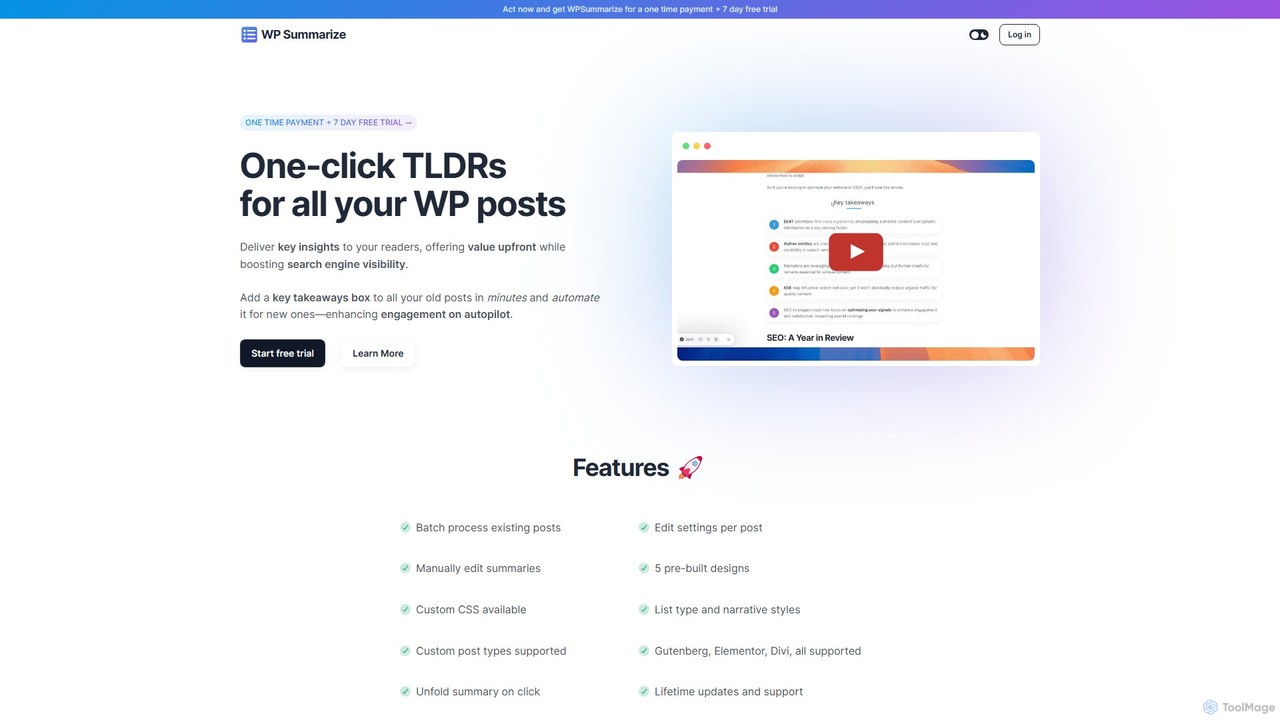
WP Summarize is an AI-powered WordPress plugin that automatically generates concise summaries and key takeaways for your posts and pages. It helps improve reader engagement, boost SEO by delivering value upfront, and saves time through batch processing and automation. With customizable designs and support for all major editors, it enhances your content without sacrificing site speed or accuracy.

Summarizer
Visits 4.2KFavorites 104Likes 103
ReadPo
Freemium

ReadPo

ReadPo is an AI-powered reading and writing assistant designed for knowledge creators. It accelerates your workflow by 10x, helping you collect and filter information from various sources, and then use it to create engaging new content like articles, newsletters, and blog posts. It combines content aggregation with advanced RAG-based AI writing for an end-to-end solution.

Summarizer
Visits 4KFavorites 104Likes 105
y2doc
Freemium

y2doc

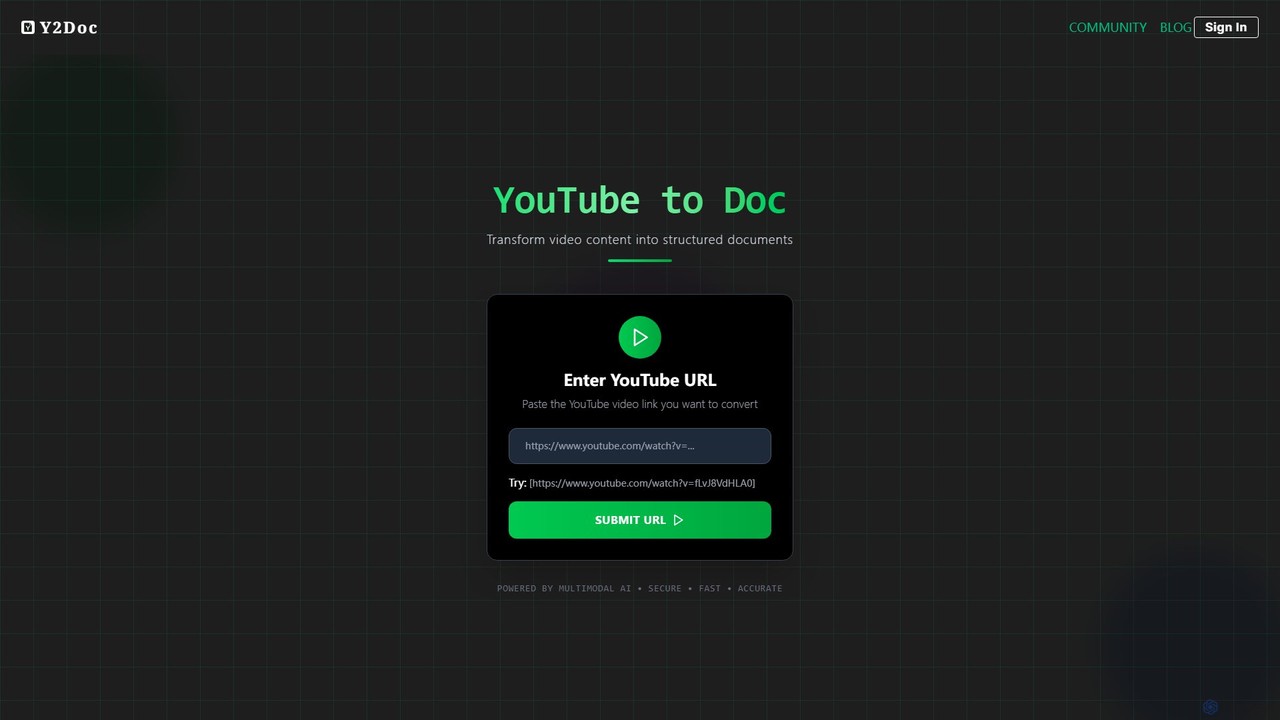
y2doc is an AI-powered tool that transforms YouTube videos into structured documents. Simply paste a YouTube URL to get accurate transcriptions, concise summaries, and key takeaways. It also functions as a versatile converter, allowing you to download videos as MP4 or audio as MP3. Ideal for students, content creators, and researchers looking to save time and repurpose video content efficiently.

Summarizer
Visits 13.6KFavorites 117Likes 116
Shownotes
Freemium

Shownotes

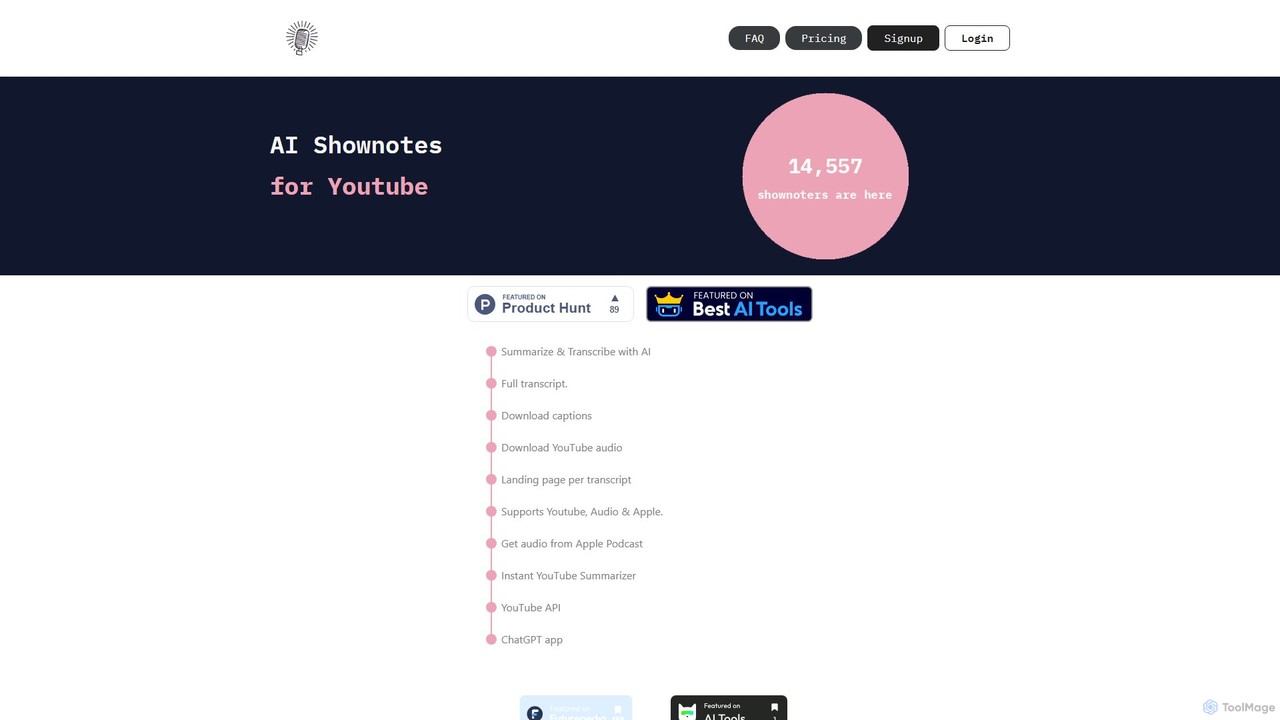
Shownotes is an AI-powered tool that instantly transcribes and summarizes YouTube videos, podcasts, and audio files. It generates full transcripts, concise summaries, and key takeaways, helping creators repurpose content and improve accessibility. It also features a unique ChatGPT integration for advanced content analysis.

Summarizer
Visits 6KFavorites 127Likes 118
noozcraft
Freemium

noozcraft

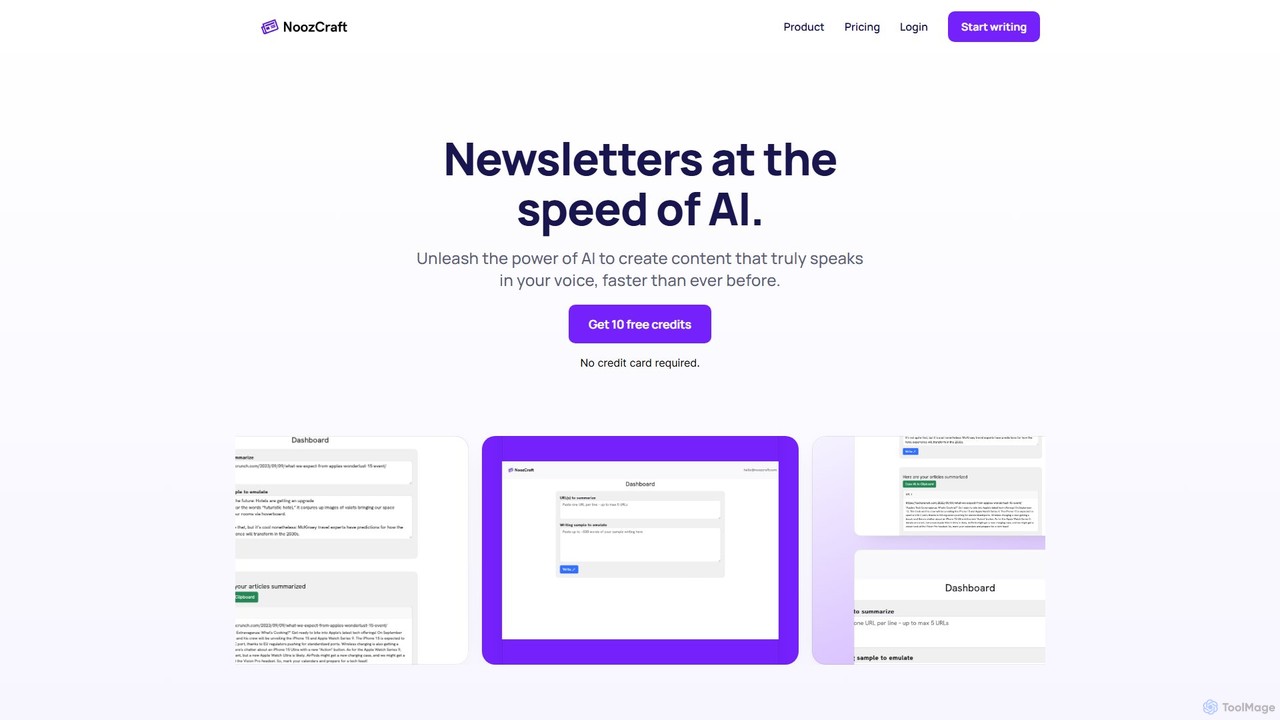
noozcraft is an AI-powered platform designed to create newsletters at high speed. It learns your unique writing style, voice, and tone to generate authentic content, helping you publish engaging newsletters over 75% faster.

Summarizer
Visits 4.1KFavorites 151Likes 145
HeyGPT
Freemium

HeyGPT

HeyGPT is an advanced, privacy-focused web client for ChatGPT. It enhances your experience by allowing you to use your own OpenAI API key, chat with documents, PDFs, websites, and YouTube videos, and transcribe audio. All data is stored locally, with no monthly fees or required logins.

Summarizer
Visits 6KFavorites 116Likes 129
Magictool AI
Freemium

Magictool AI

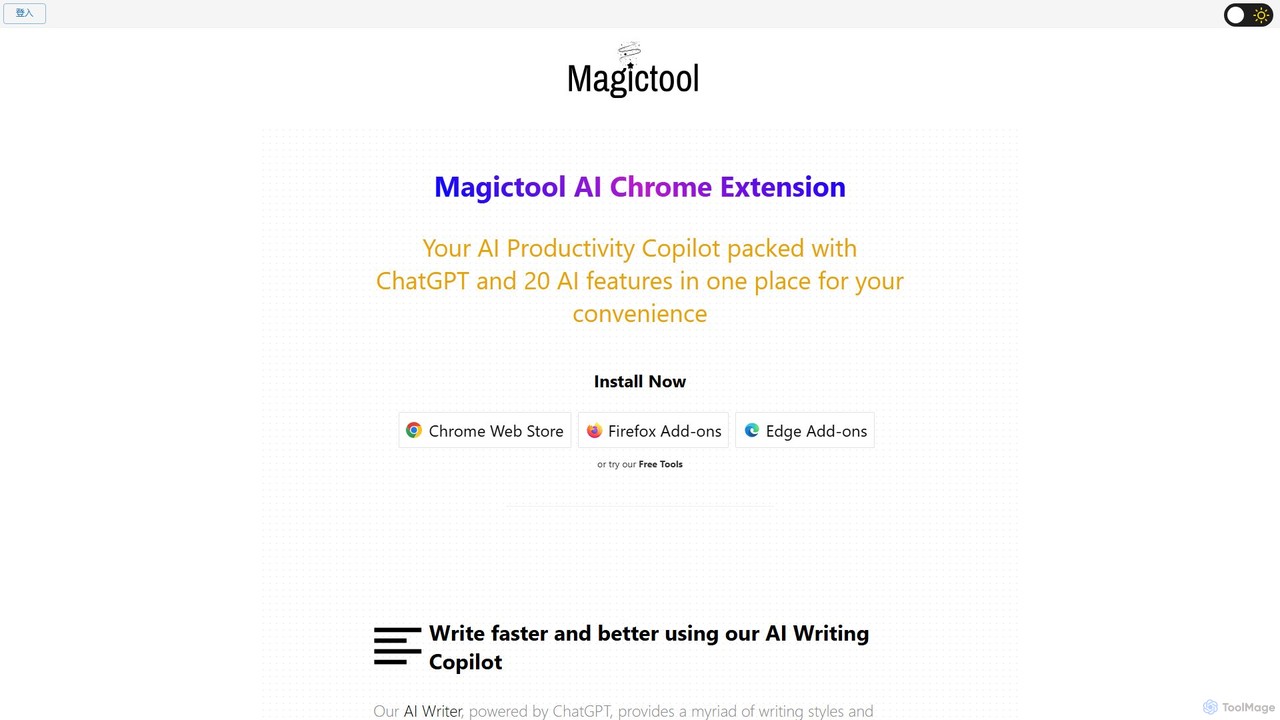
Magictool AI is an all-in-one productivity hub integrated into a browser extension. It packs over 20 AI features, including a ChatGPT-powered writer, YouTube video summarizer, PDF chat, data scraper, and AI image generator. It's designed to streamline your workflow, enhance your writing, and boost your research capabilities directly within your browser.

Chrome Extensions
Visits 117.5KFavorites 121Likes 118
Alphy
Freemium

Alphy

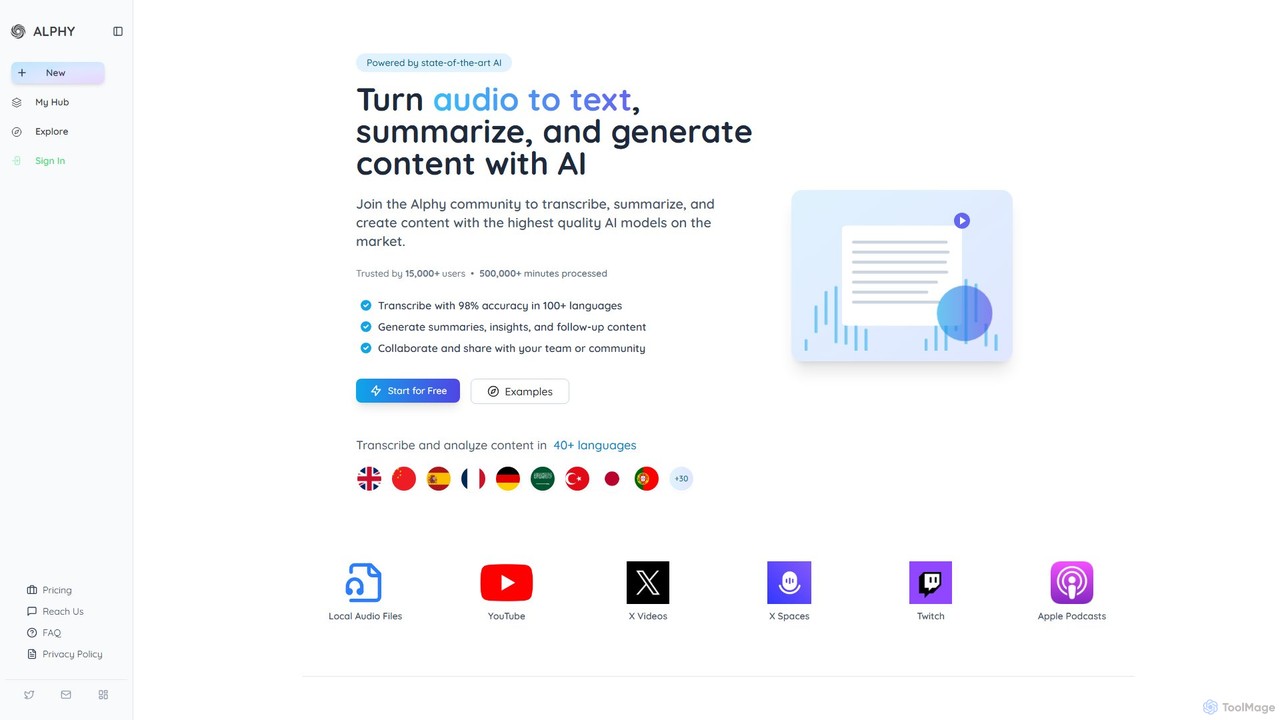
Alphy is an AI-powered tool that transcribes, summarizes, and analyzes audio and video content from various platforms like YouTube, X (Twitter), and podcasts. It turns lengthy discussions into accurate text, concise summaries, and new content formats, enabling users to quickly extract insights and repurpose information.

Summarizer
Visits 5.3KFavorites 121Likes 126

About Summarizer

An AI Summarizer is a tool that uses natural language processing (NLP) to condense long texts into concise and coherent summaries. These tools analyze the source material to identify key points and main ideas, presenting them in a shortened format without losing critical information. This capability allows users to quickly grasp the essence of lengthy documents, articles, or reports, significantly reducing reading time. Many advanced summarizers offer both extractive methods, which pull key sentences directly, and abstractive methods, which generate new sentences like a human would.

Core Features

  • Extractive & Abstractive Methods: Offers options to either pull key sentences directly from the text or generate a new, human-like summary.
  • Customizable Summary Length: Allows users to define the desired length of the summary, either by percentage, word count, or key bullet points.
  • Multi-Format Input: Supports various input types, including pasted text, document uploads (PDF, DOCX), and web page URLs.
  • Key Information Highlighting: Identifies and highlights the most crucial sentences, phrases, or concepts within the original text.
  • Multi-Language Support: Capable of processing and summarizing texts from a wide range of different languages.

Use Cases

AI Summarizers are widely used across academia, business, and journalism. Students and researchers use them to quickly review dense academic papers and literature. Business analysts leverage these tools to distill market research reports, competitor analyses, and financial documents into actionable insights for executives. Journalists and content creators can summarize source materials or long articles to speed up their research and writing process.

How to Choose

When selecting an AI Summarizer, consider the quality and coherence of the generated summaries. Evaluate the tool's support for different summarization methods (extractive vs. abstractive) to see which fits your needs. Check its compatibility with your required input formats, such as PDFs or web links. Finally, assess factors like API access for integration, data privacy policies for sensitive documents, and the overall pricing structure.

Featured tool rankings

Summarizer use cases

1

Accelerate Academic Literature Reviews

For postgraduate students and academic researchers, conducting a literature review often involves sifting through hundreds of research papers. An AI Summarizer streamlines this process. A researcher can upload a batch of PDF articles, and the tool generates concise summaries for each, highlighting the methodology, findings, and conclusions. This allows them to quickly assess the relevance of each paper, saving dozens of hours of reading time and enabling them to focus on the most impactful studies for their own work.

2

Create Executive Briefs from Market Reports

A business analyst is tasked with monitoring industry trends and competitor activities. Instead of manually reading lengthy market research reports, financial statements, and news articles, they use an AI Summarizer. By feeding URLs and documents into the tool, they can instantly generate bullet-point summaries of key findings. These condensed insights are then compiled into a weekly executive brief, enabling senior management to stay informed and make strategic decisions without being overwhelmed by raw data.

3

Generate Meeting Minutes and Action Items

After a long project meeting, a project manager receives a full transcript from a transcription service. To quickly distribute key takeaways, they paste the entire transcript into an AI Summarizer. The tool condenses the hour-long discussion into a few paragraphs, highlighting key decisions made, and can often identify and list out action items with assigned owners. This summary is then shared with all attendees, ensuring everyone is aligned on next steps and saving the manager significant time in manual minute-writing.

4

Efficient Legal Document Review

Paralegals and junior lawyers often face the daunting task of reviewing voluminous legal documents, such as case law, contracts, or depositions. An AI Summarizer designed for legal text can significantly expedite this initial review. By processing a lengthy court ruling, the tool can extract the key legal principles, arguments, and the final judgment. This allows the legal team to quickly understand the essence of a document, identify relevant precedents, and prioritize which documents require a more detailed human analysis, improving overall case preparation efficiency.

5

Create Study Guides from Textbooks

A university student preparing for final exams needs to review several dense textbook chapters. Instead of re-reading everything, they use an AI Summarizer. They can either paste the text of a digital chapter or use a tool that supports PDF uploads. The summarizer extracts the core concepts, key definitions, and important examples into a condensed set of notes. This process transforms a 50-page chapter into a 5-page study guide, making revision more manageable and helping the student focus on the most critical information for their exams.

6

Content Curation for Social Media and Newsletters

A content marketer or social media manager needs to share relevant industry news with their audience. They find a comprehensive, long-form article perfect for sharing. Using an AI Summarizer, they can quickly generate several summary variations. One short, punchy summary can be used for a Twitter post, a slightly longer version for a LinkedIn update, and a more detailed paragraph for the company's weekly newsletter. This allows them to efficiently repurpose a single piece of content for multiple channels, maintaining a consistent and informative presence online.

Summarizer FAQ

What is an AI Summarizer?

An AI Summarizer is a software tool that uses artificial intelligence, specifically natural language processing (NLP), to condense a long piece of text into a shorter version. It works by analyzing the text to understand its main points and context, then creating a summary that contains the most critical information. These tools are designed to save significant time and effort for anyone who needs to quickly understand the core message of lengthy documents, articles, web pages, or reports without reading them in their entirety.

How to choose the right AI Summarizer?

Choosing the right AI Summarizer depends on your specific needs. Consider the following factors:

  • Summarization Quality: Test the tool with your typical documents. Does it produce accurate, coherent, and relevant summaries?
  • Input Formats: Ensure it supports the formats you use, such as text pasting, URL links, or document uploads (PDF, DOCX).
  • Customization Options: Look for features that allow you to control the summary length (e.g., by percentage or word count) or style (e.g., paragraphs or bullet points).
  • Security and Privacy: If you handle sensitive information, choose a tool with strong data privacy policies and security measures.
  • Integration: If you need to integrate summarization into your workflow, check for API access or browser extensions.
What's the difference between extractive and abstractive summarization?

Extractive and abstractive summarization are two different approaches AI uses to create summaries.

  • Extractive Summarization: This method works by identifying and selecting the most important sentences or phrases directly from the original text and combining them to form a summary. It's like using a highlighter to pick out key points. The result is factually accurate but can sometimes lack flow.
  • Abstractive Summarization: This method involves the AI understanding the context of the original text and then generating new sentences in its own words to convey the main ideas. This is more like how a human would summarize something. The result is often more fluent and coherent but requires more advanced AI capabilities.
Can AI Summarizers handle content like videos or PDFs?

Yes, many AI Summarizers are versatile. For PDFs, most modern tools can directly process uploaded documents, extracting and summarizing the text within them. For videos, the process is slightly different. The summarizer typically works on the video's transcript. So, if you have a transcript or if the tool can generate one from the video's audio (often through integration with a speech-to-text service), it can then summarize the content of the video effectively. Always check a specific tool's capabilities to see which file types and media it directly supports.

Who can benefit from using an AI Summarizer?

A wide range of individuals and professionals can benefit from AI Summarizers. Key users include:

  • Students and Researchers: To quickly digest academic papers, articles, and textbook chapters for study and literature reviews.
  • Business Professionals: To analyze market reports, financial documents, and competitor news to make informed decisions.
  • Journalists and Content Creators: To speed up research by summarizing source materials and long-form content.
  • Legal Professionals: For initial reviews of case files, depositions, and legal precedents to save time.
  • Anyone with Information Overload: To stay updated on news, emails, and reports without spending hours reading.