Marketing Best in category 1 results Mapping AI Tool

Popular AI tools in the Mapping field of Marketing include nocodemapapp, etc., helping you quickly improve efficiency.

nocodemapapp

nocodemapapp

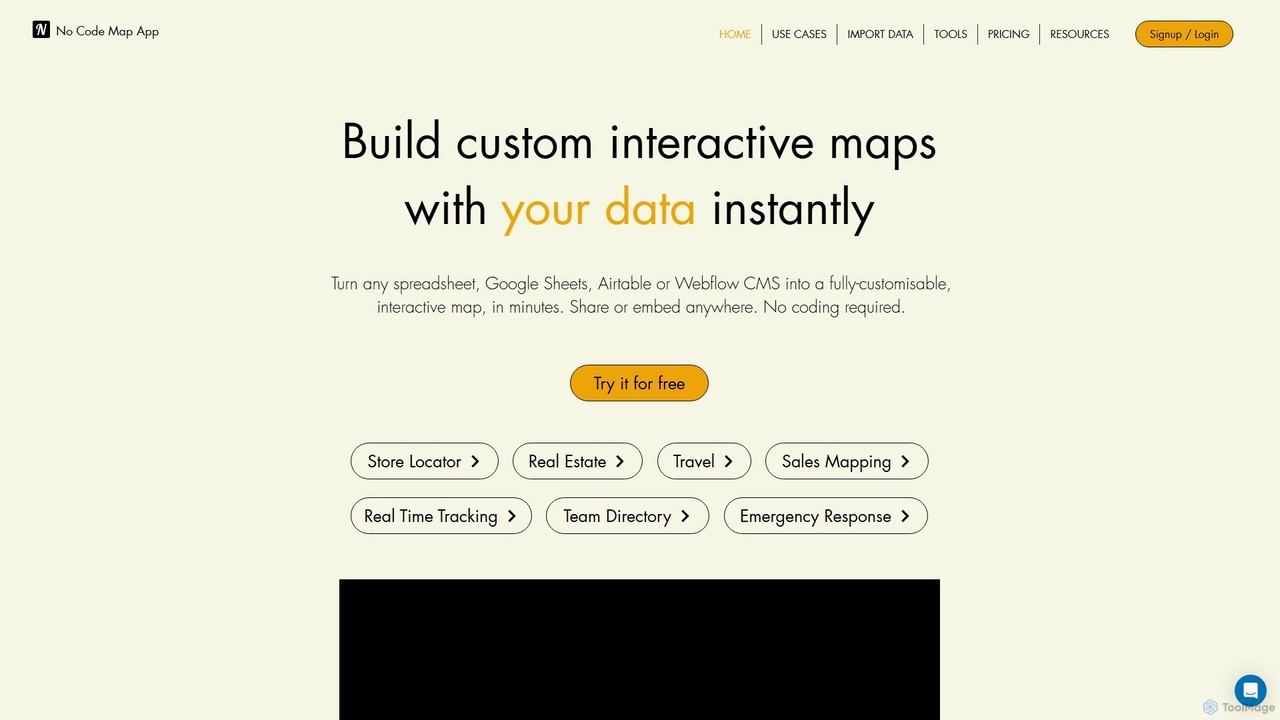
nocodemapapp is an AI-powered, no-code platform that instantly transforms data from spreadsheets, Google Sheets, Airtable, or Webflow CMS …

13.2K

About Mapping

AI Mapping tools are a specialized category of marketing software that automates the creation of strategic visualizations. These tools use AI to analyze complex data from sources like CRM and web analytics to generate dynamic diagrams such as customer journey maps, competitive landscapes, and content funnels. By transforming raw data into intuitive visual maps, they help marketers identify opportunities, pinpoint friction points, and align strategies across teams. This data-driven approach provides a clearer, more actionable understanding of market dynamics and customer behavior than manual methods.

Core Features

  • Automated Data Integration: Connects to marketing platforms (e.g., Google Analytics, Salesforce) to automatically pull and structure data for maps.
  • Journey Map Generation: Creates detailed customer journey maps by analyzing user behavior data, identifying touchpoints and emotional states.
  • Competitive Landscape Visualization: Plots competitors based on multiple attributes like market share, features, and customer sentiment.
  • Content Strategy Mapping: Aligns content pieces to specific stages of the buyer's journey and automatically identifies content gaps.

Use Cases

These tools are essential for product marketers, UX researchers, and marketing strategists in SaaS, e-commerce, and digital agencies. They are used to visualize customer experiences, analyze market positioning, and plan data-informed content strategies, replacing manual diagramming and spreadsheet analysis.

How to Choose

When selecting an AI Mapping tool, consider the scope of its data integrations and compatibility with your existing marketing stack. Evaluate the types of maps it can generate (e.g., journey, persona, competitive). Also, assess its analytical capabilities, such as sentiment analysis or predictive pathing, and ensure the user interface allows for easy customization and collaboration.

MappingUse Cases

1

Visualize the End-to-End Customer Journey

A product marketing manager for a SaaS company needs to understand why users drop off during onboarding. Using an AI Mapping tool, they connect their app's analytics and customer support tickets. The tool automatically generates a journey map, visualizing each step from sign-up to feature adoption. It highlights touchpoints with high friction and negative sentiment, allowing the team to prioritize product improvements and reduce churn effectively.

2

Analyze the Competitive Marketing Landscape

A marketing strategist is tasked with identifying gaps in the market. They use an AI Mapping tool to aggregate data on competitors from social media, news articles, and review sites. The AI generates a perceptual map, positioning each competitor based on features and customer sentiment. This visualization instantly reveals underserved market segments and strategic opportunities for differentiation, informing the next marketing campaign's positioning.

3

Map Content to Buyer Journey Stages

A content marketing team wants to ensure their content effectively nurtures leads. They input their entire content library (blog posts, whitepapers, webinars) into an AI Mapping tool. The tool analyzes each asset and automatically maps it to a specific stage of the buyer's journey—Awareness, Consideration, or Decision. The resulting visual map highlights gaps, such as a lack of decision-stage content, enabling the team to create targeted assets that accelerate conversions.

4

Identify Key Stakeholders in Enterprise Sales

An account-based marketing (ABM) team targets a large enterprise. They use an AI Mapping tool integrated with LinkedIn and their CRM. The tool analyzes job titles, reporting structures, and internal communications to generate a stakeholder map. It identifies the key decision-maker, influencers, and potential blockers within the target account. This map allows the sales and marketing teams to tailor their outreach and engagement strategies for each stakeholder, increasing the likelihood of closing the deal.

5

Brainstorm and Structure Marketing Campaigns

A creative team is planning a multi-channel holiday campaign. They use an AI mind mapping tool to brainstorm ideas. As they input concepts, the AI automatically organizes them into logical clusters, suggests related keywords, and visualizes potential connections between different channels (e.g., social media, email, paid ads). This structured visual map helps the team see the entire campaign at a glance, ensuring a cohesive message and strategy across all platforms, and significantly speeds up the planning phase.

6

Optimize Website User Flow for Conversions

A UX researcher for an e-commerce site wants to improve the checkout process. They connect their website's Google Analytics data to an AI Mapping tool. The tool generates a user flow map, visualizing the most common paths users take from the homepage to purchase. It automatically flags pages with high drop-off rates and identifies confusing navigation loops. This data-driven map provides clear, actionable insights for A/B testing new layouts and simplifying the path to conversion.

MappingFrequently Asked Questions