
Freemium
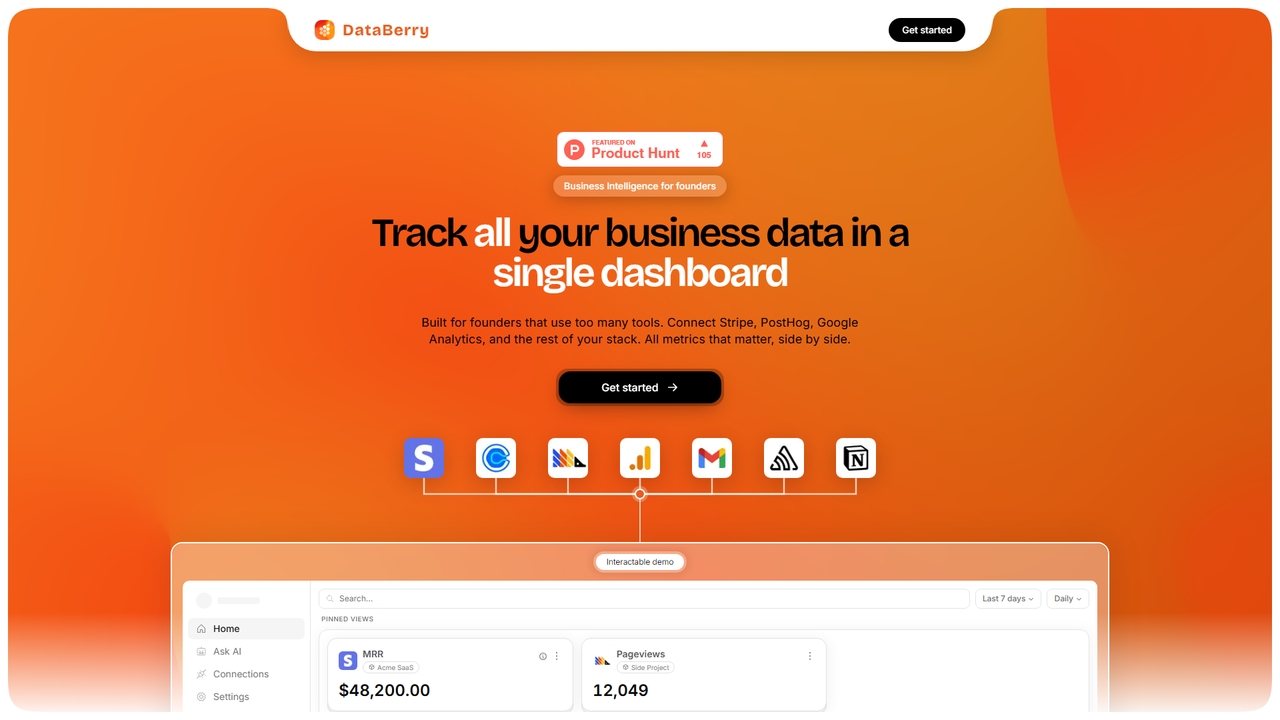
Popular Marketing Analytics AI tools in Marketing include Julius AI, Adzviser, Cuspera, Graphite Note, Cimba, brandidea, and Databerry, helping you work more efficiently.
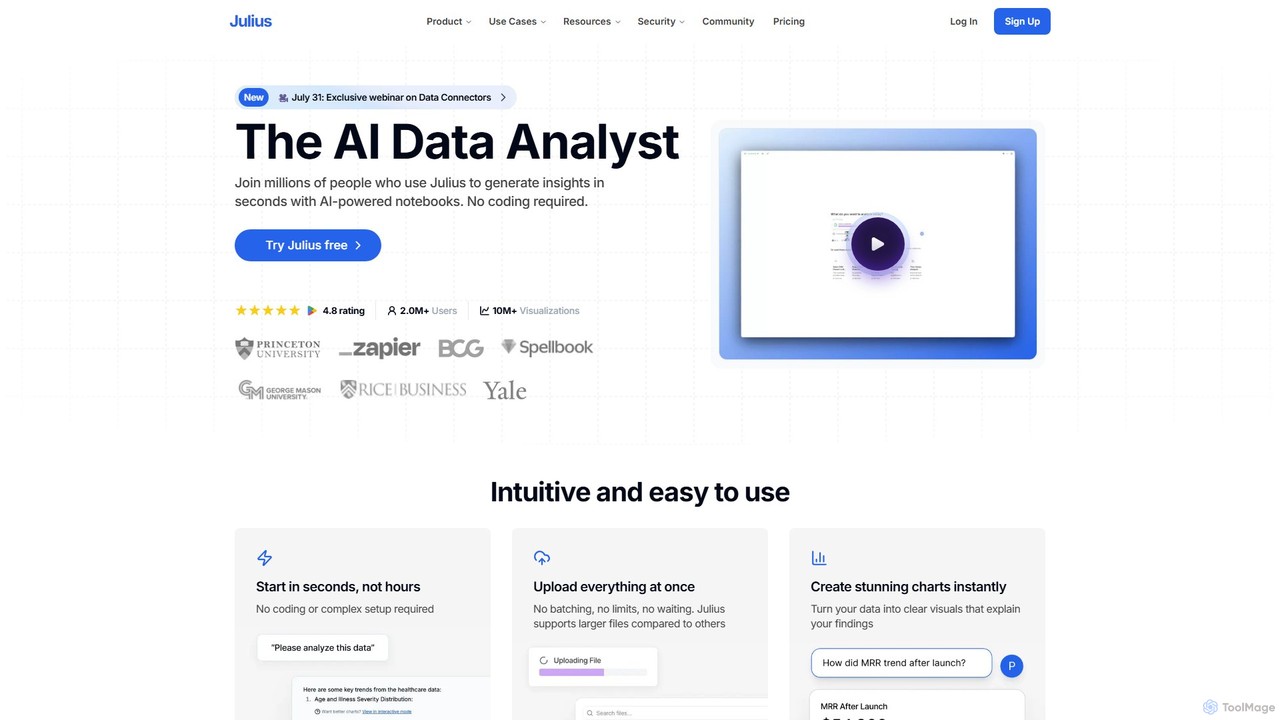
Julius AI is your AI Data Analyst, designed to interpret, analyze, and visualize complex data effortlessly. Connect your data from spreadsheets, databases, or PDFs, ask questions in natural language, and receive instant insights, charts, and reports. No coding is required, but it also supports Python, R, and SQL for advanced users, making data analysis accessible to everyone.
Developer Tools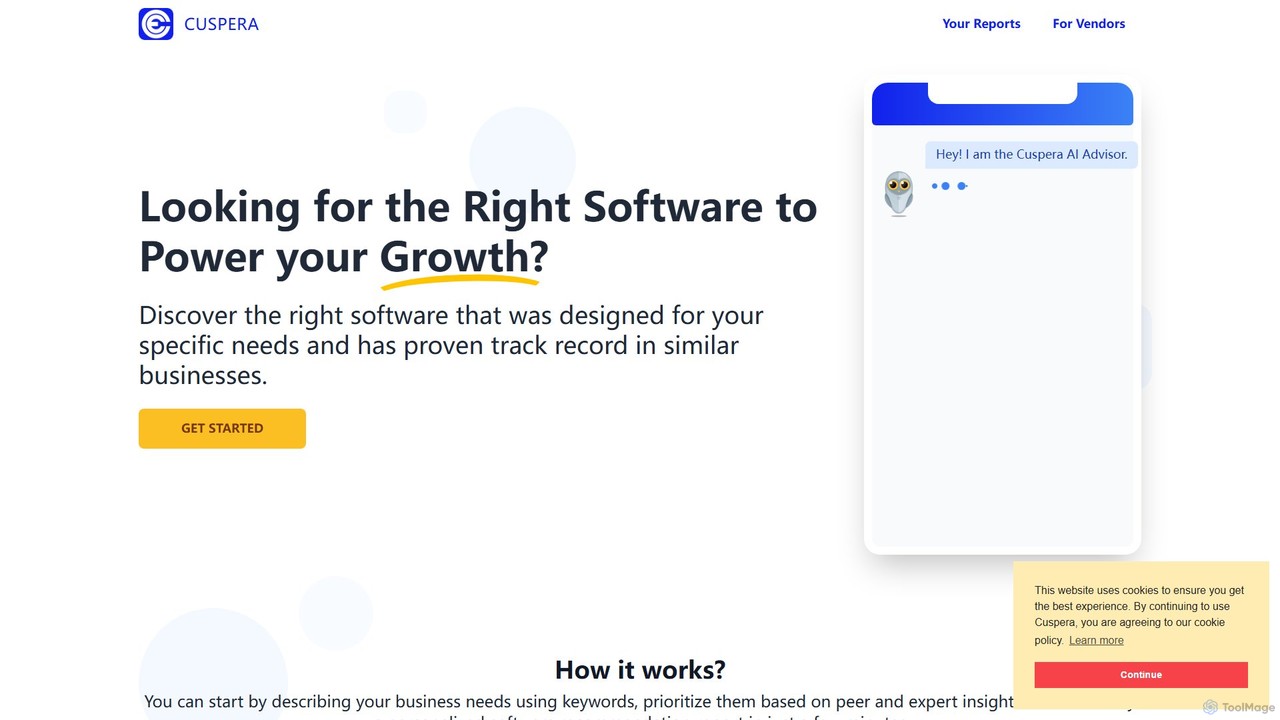
Cuspera is a B2B software discovery platform that helps businesses find the right MarTech and SalesTech solutions. It provides comprehensive buyer's guides, peer reviews, and expert insights to simplify the software selection process, ensuring you make informed decisions based on your specific business needs.
Software Discovery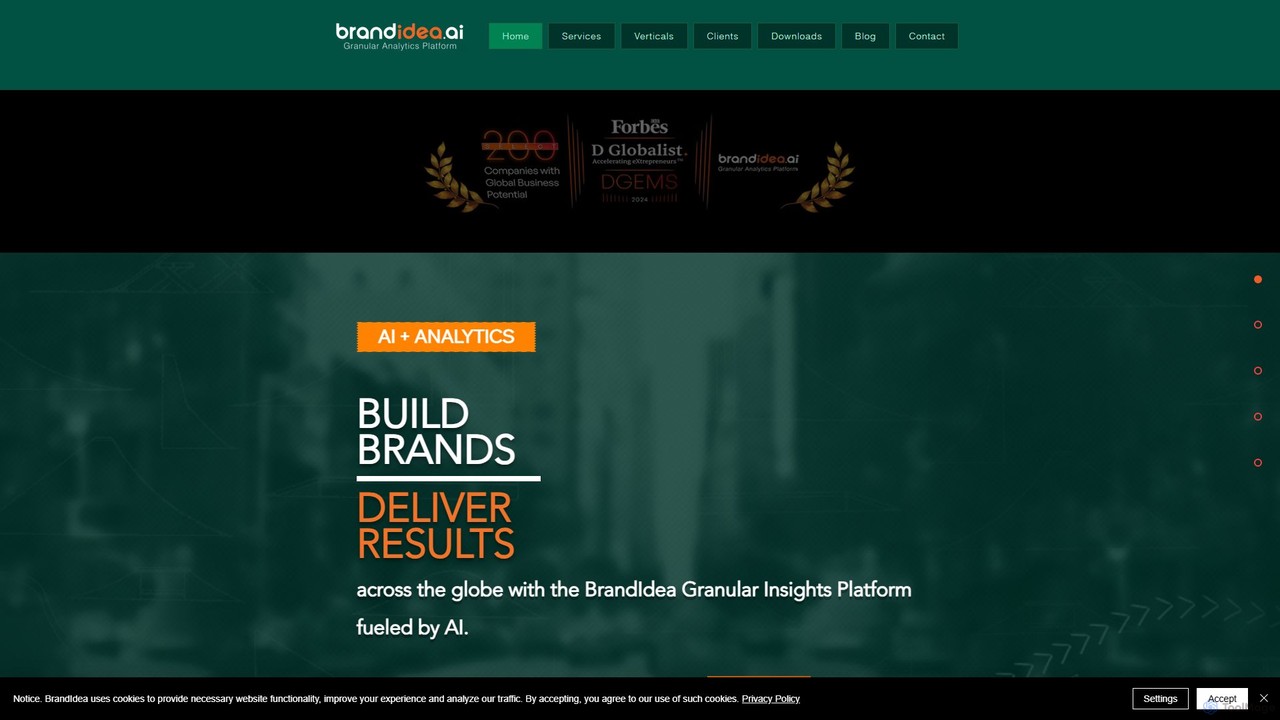
An AI-powered granular analytics platform for sales and marketing. It transforms hyper-local data from markets like India into actionable insights, moving beyond traditional analytics to provide predictive and prescriptive guidance. It helps enterprises optimize strategies, enhance ROI, and accelerate brand growth through data-driven decision-making.
Business Intelligence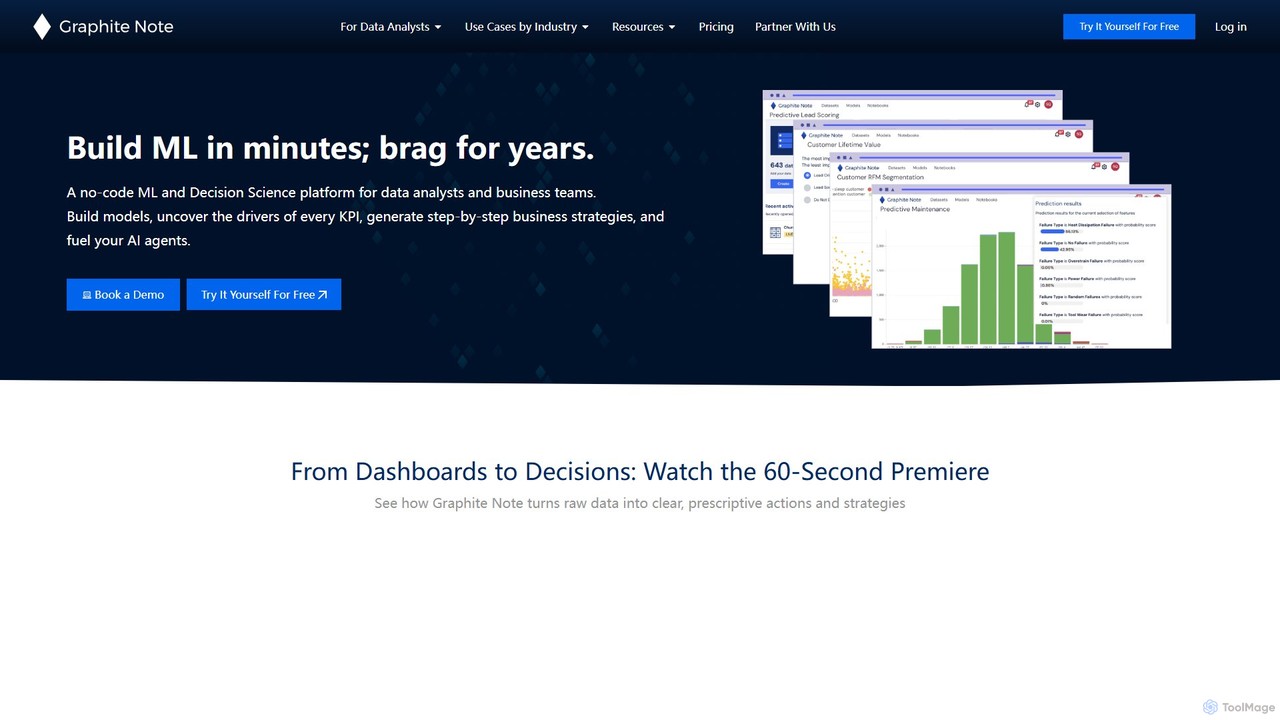
Graphite Note is a no-code AI platform designed for data analysts and business users to build, deploy, and manage predictive analytics models. It simplifies machine learning, enabling users to gain actionable insights from their data, optimize marketing campaigns, and make data-driven decisions without any coding expertise. The platform supports various data sources and automates model selection to deliver fast and accurate results.
Business Intelligence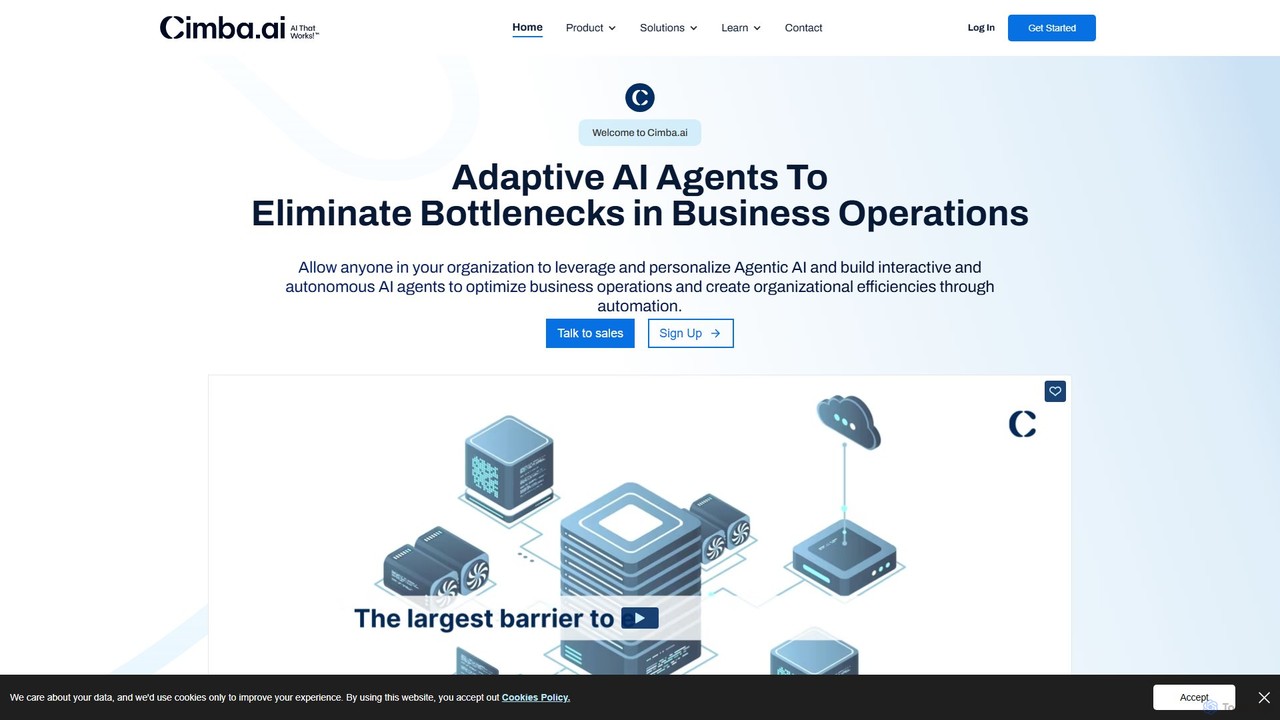
Cimba is an AI analytics agent builder that allows businesses to create and embed custom AI agents into their products. It transforms complex data analysis by enabling users to ask questions in natural language. Cimba automates workflows, provides actionable insights, generates predictive analytics, and can even execute tasks, drastically reducing the time and resources needed for data-driven decision-making in areas like marketing, sales, and retail.
Low Code No Code
Adzviser is an AI-powered marketing analytics platform that lets you talk to your data. It integrates with sources like Google Ads, Meta Ads, and Shopify, and sends data to destinations like ChatGPT, Claude, Google Sheets, and Looker Studio. Streamline reporting, gain insights through natural language queries, and automate your data workflows. Ideal for agencies, marketers, and e-commerce businesses.
Marketing AnalyticsMarketing Analytics tools are AI-powered platforms that analyze vast amounts of marketing data to uncover insights, predict trends, and measure campaign performance. They utilize machine learning algorithms to process information from various sources like web analytics, CRM, and social media. This enables businesses to move beyond simple reporting and make data-driven decisions that optimize marketing ROI. These tools are essential for understanding customer behavior and refining strategies in a complex digital landscape.
These tools are invaluable for data-driven marketing managers, performance marketers, and business analysts in sectors like e-commerce, SaaS, and B2C services. They are used to optimize advertising budgets by identifying high-performing channels, personalize user experiences by understanding segment-specific needs, and prove marketing's impact on revenue to stakeholders.
When selecting a Marketing Analytics tool, consider its data integration capabilities—can it connect seamlessly with your existing marketing stack (e.g., Google Analytics, Salesforce)? Evaluate the sophistication of its analytical models and the clarity of its data visualizations. Also, assess its scalability to handle growing data volumes and the level of technical expertise required to operate it effectively.
A performance marketer for an e-commerce brand is running campaigns across Google Ads, Facebook, and TikTok. Using an AI Marketing Analytics tool, they integrate data from all platforms into a single dashboard. The AI automatically identifies underperforming ad creatives and audience segments, while also highlighting the most profitable customer journeys through multi-touch attribution. Based on these insights, the marketer reallocates 20% of their budget from low-performing channels to high-converting ones, resulting in a 15% increase in overall return on ad spend (ROAS) within one quarter.
A marketing manager at a SaaS company needs to proactively reduce customer churn. The Marketing Analytics tool analyzes user behavior data, support ticket history, and subscription information. Its predictive model assigns a 'churn risk score' to each customer. The marketing team then uses this data to create a targeted retention campaign, offering personalized support and incentives to high-risk accounts. This data-driven approach helps them reduce churn by 5% over six months, significantly improving customer lifetime value.
A brand strategist for a consumer goods company wants to understand public perception of a new product line. The analytics tool scans millions of social media posts, reviews, and news articles related to the product and its competitors. It provides a real-time sentiment score and identifies key topics of discussion, such as praise for packaging but complaints about price. This allows the strategist to provide actionable feedback to the product and marketing teams, leading to a pricing adjustment and a new messaging campaign that addresses customer concerns directly.
A content marketing lead for a B2B tech company uses an analytics platform to understand which content resonates most with different customer segments. The tool analyzes website engagement, download rates of whitepapers, and webinar attendance. It reveals that C-level executives prefer concise, data-heavy reports, while technical managers engage more with in-depth tutorials. Armed with this knowledge, the team tailors their content calendar to produce different formats for each persona, increasing overall content engagement by 30% and generating more qualified leads.
A CMO needs to present the marketing department's impact on revenue to the board. Instead of relying on vanity metrics like clicks and impressions, they use a Marketing Analytics tool with advanced attribution modeling. The platform connects marketing campaign data with sales data from the CRM. It generates a clear report showing exactly how much revenue was influenced by specific marketing channels and campaigns over the last year. This allows the CMO to confidently justify their budget and secure a 10% increase for the next fiscal year.
A digital strategist is tasked with increasing market share. They use a Marketing Analytics tool's competitive intelligence feature to monitor competitors' online presence. The tool tracks competitors' share of voice on social media, estimated ad spend, top-performing keywords, and website traffic sources. By analyzing this data, the strategist identifies a gap in the competitor's content strategy around a specific niche topic. They launch a targeted content campaign to dominate this niche, successfully capturing a new audience segment and increasing their organic traffic by 25%.
AI Marketing Analytics tools are software platforms that use artificial intelligence and machine learning to analyze marketing data. Unlike traditional analytics tools that primarily report on past events, these AI-powered tools can identify complex patterns, predict future outcomes like customer churn, and provide prescriptive recommendations to optimize campaigns. They automate the process of data interpretation, enabling marketers to make faster, more accurate decisions without needing deep data science expertise.
Choosing the right tool depends on your specific needs. Consider these factors:
The main difference is scope and focus. Business Intelligence (BI) tools are broad, designed to analyze data from across an entire organization (finance, sales, operations, HR). Marketing Analytics tools are specialized. They are purpose-built to answer marketing-specific questions, with features like multi-touch attribution, campaign ROI analysis, and customer segmentation that are not standard in general BI platforms. While a BI tool can report on marketing data, a Marketing Analytics tool provides deeper, context-aware insights for marketers.
AI Marketing Analytics tools are designed to augment, not replace, human analysts. They automate time-consuming tasks like data collection, cleaning, and initial pattern recognition, freeing up analysts to focus on higher-level strategic thinking. The AI can surface insights and correlations that a human might miss, but a skilled analyst is still needed to interpret these findings within the broader business context, formulate hypotheses, and translate data into actionable marketing strategies. They work best as a powerful partnership between human expertise and machine intelligence.
The effectiveness of these tools relies on access to diverse and high-quality data. Key data sources include:
The more comprehensive and clean the data provided, the more accurate and insightful the AI's analysis will be.