Microlaunch
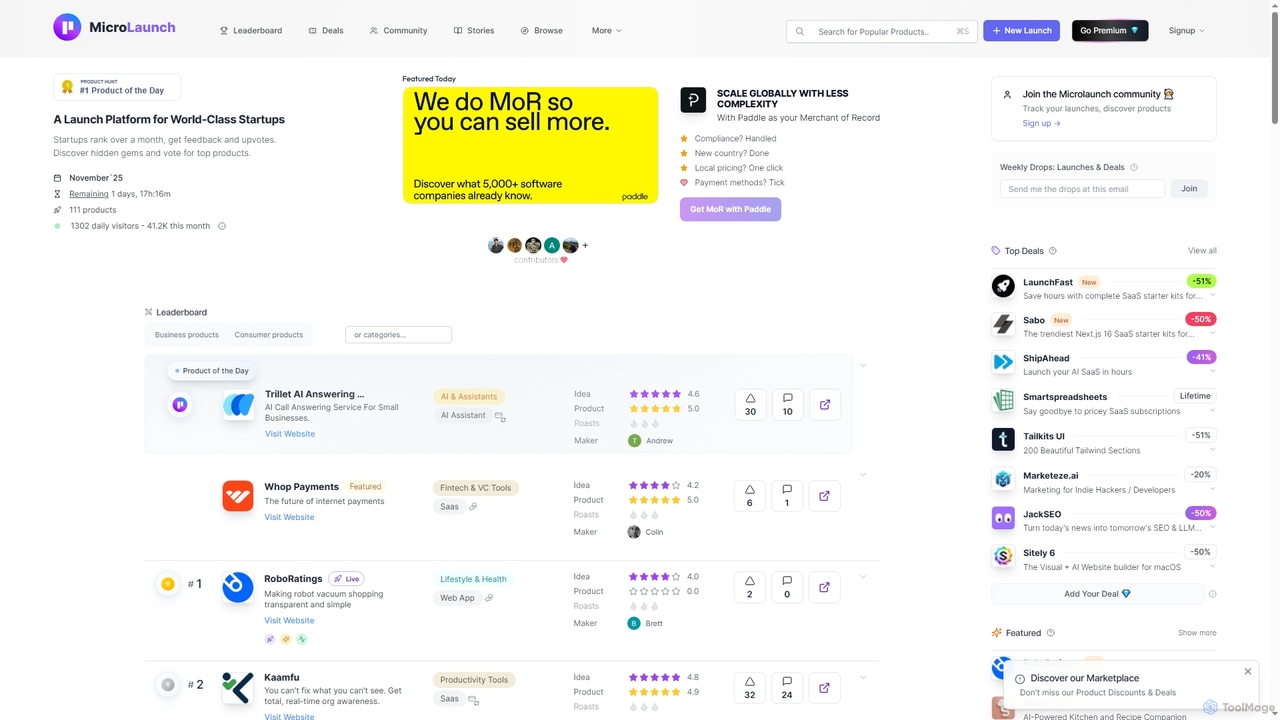
A launch platform and marketplace for startups and tech founders. It helps new products gain visibility, user feedback, and initial sales through a 30-day launch campaign, featured placements, and community engagement.
FeedbackPopular Product Launch AI tools in Marketing include Microlaunch and Testmarket, helping you work more efficiently.

A launch platform and marketplace for startups and tech founders. It helps new products gain visibility, user feedback, and initial sales through a 30-day launch campaign, featured placements, and community engagement.
Feedback
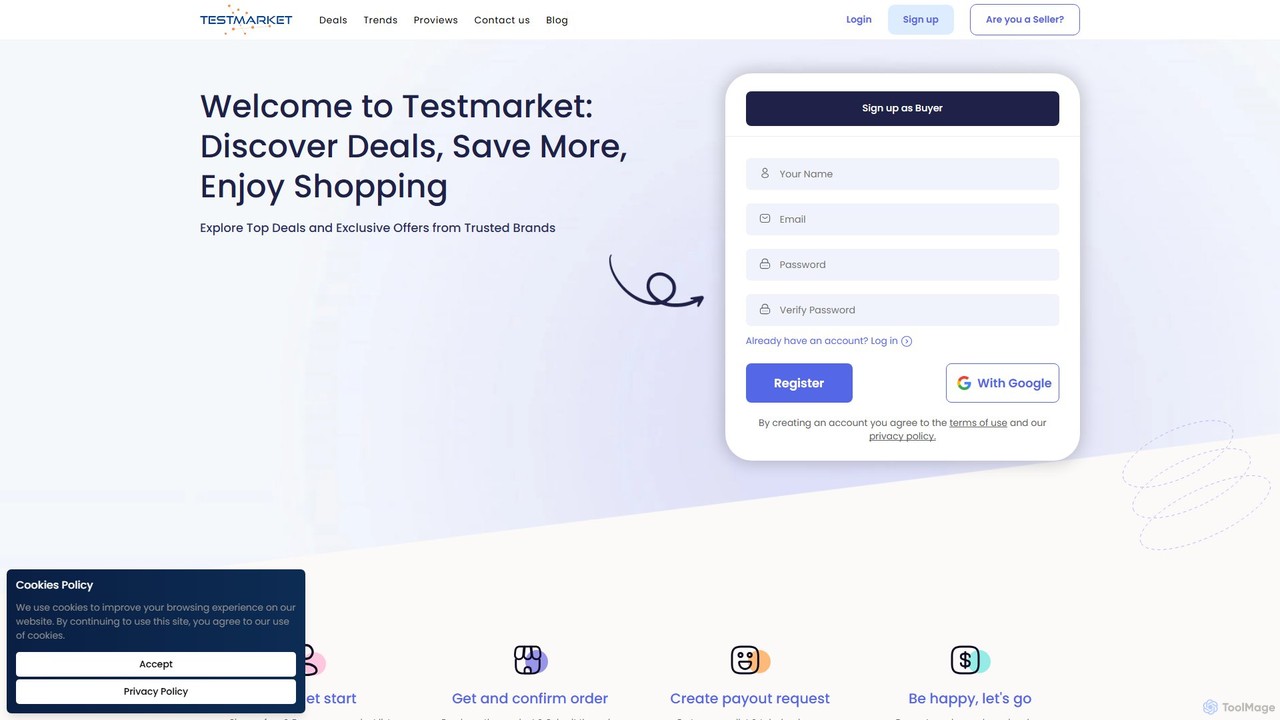
Testmarket is a dual-purpose platform connecting shoppers with brands. Shoppers discover exclusive deals, cashback offers, and free products from major retailers. For sellers, Testmarket leverages AI-powered analytics to enhance brand visibility, optimize product listings with strategic keywords, and drive sales growth. It's a marketplace for product testing and promotion, offering significant savings for consumers and data-driven marketing solutions for businesses.
Marketing AnalyticsAI Product Launch tools are a specialized suite of applications designed to automate and optimize the entire process of bringing a new product to market. They leverage data analysis, natural language generation, and predictive modeling to help teams create compelling launch campaigns, identify target audiences, and track initial performance. As a key component within the broader marketing toolkit, these tools focus specifically on the critical, time-bound activities of a product's initial lifecycle. This targeted approach helps ensure a coordinated and impactful market entry.
These tools are invaluable for tech startups launching a new app, SaaS companies rolling out a major feature update, and e-commerce businesses introducing a new product line. Marketing agencies also use them to streamline launch management for multiple clients, ensuring consistency and efficiency across campaigns.
When selecting an AI Product Launch tool, consider its integration capabilities with your existing CRM and marketing automation platforms. Evaluate the scope of its features—whether it's an all-in-one solution or specializes in one area like content generation. Also, assess the quality of its data analysis and the level of customization available for generated assets to ensure they align with your brand voice.
A marketing manager at a SaaS company is tasked with launching a major feature update. Instead of spending weeks manually drafting copy and planning, they use an AI Product Launch tool. By inputting the feature specifications and target audience, the tool generates a complete multi-channel campaign, including a landing page, an email nurture sequence for the waitlist, and a full month's worth of social media content. This process reduces planning time by over 70% and ensures consistent messaging across all platforms, leading to a more coordinated and impactful launch.
A startup founder with a limited budget needs to create a professional press kit to announce their new mobile app. Using an AI Product Launch tool, they provide a brief description of the app, its key features, and founder bios. The AI then generates a comprehensive press kit, including a compelling press release formatted for distribution, a detailed FAQ for journalists, and several variations of company descriptions. This allows the founder to produce high-quality, consistent media materials in hours instead of days, significantly improving their outreach efficiency.
A product marketing manager is preparing to launch a new e-commerce platform. To gain a competitive edge, they use an AI tool to analyze the recent launches of three key competitors. The tool scrapes and analyzes news articles, social media posts, and customer reviews related to those launches. It provides a summary report highlighting competitors' messaging, channel focus, media reception, and customer sentiment. These insights allow the manager to identify gaps in the market and refine their own launch strategy to be more distinctive and effective.
An e-commerce brand is launching a new limited-edition sneaker. To build anticipation and gauge demand, they use an AI-powered launch tool to create a smart waitlist page. The tool not only captures emails but also implements a viral referral system, rewarding users with earlier access for sharing the link. The AI analyzes sign-up data to identify potential influencers and provides a dashboard to track the waitlist's growth and referral effectiveness. This creates significant buzz and a large, engaged audience before the product is even available for purchase.
A product manager needs to create a comprehensive GTM strategy for an upcoming software release. They use an AI launch tool as a strategic partner. By providing the tool with product documentation, market research findings, and competitor data, the AI helps structure the GTM document. It suggests key sections, drafts initial content for target audience personas, value propositions, and pricing recommendations, and identifies potential marketing channels. This AI assistance accelerates the drafting process, allowing the product manager to focus on refining the strategy rather than starting from a blank page.
A global marketing team is launching a new consumer electronic device in five different countries simultaneously. Using an AI Product Launch tool with localization features, they can quickly adapt their core launch messaging. The tool not only translates press releases and social media copy but also adjusts for cultural nuances and local idioms, based on its training data. This ensures that the launch campaign resonates with each local market, avoiding awkward translations and accelerating the international rollout process significantly compared to relying solely on manual translation agencies.
AI Product Launch tools are specialized software applications that use artificial intelligence to streamline and enhance the process of bringing a new product to market. They automate tasks such as creating marketing copy, generating go-to-market strategies, analyzing competitor launches, and managing pre-launch campaigns. Unlike general marketing tools, they are specifically designed to handle the unique, time-sensitive activities associated with a product's initial debut.
To choose the right tool, consider these factors:
The key difference is focus and scope. General AI Marketing platforms are broad, designed for ongoing activities like SEO, long-term content marketing, lead nurturing, and social media management. AI Product Launch tools are highly specialized. They focus on the specific, project-based tasks required for a successful market entry, such as generating a GTM strategy, creating a press kit, and analyzing initial launch traction. A launch tool is for a time-bound event, while a marketing platform is for continuous operations.
AI Product Launch tools can automate a variety of critical tasks, including:
Several roles and organizations benefit significantly from these tools. Startup founders and small teams can produce professional-grade launch campaigns without a large marketing department. Product marketing managers can accelerate their strategic planning and content creation processes. E-commerce entrepreneurs can quickly generate assets for new product drops. Finally, marketing agencies can scale their operations by managing multiple client launches more efficiently and consistently.