Sell The Trend
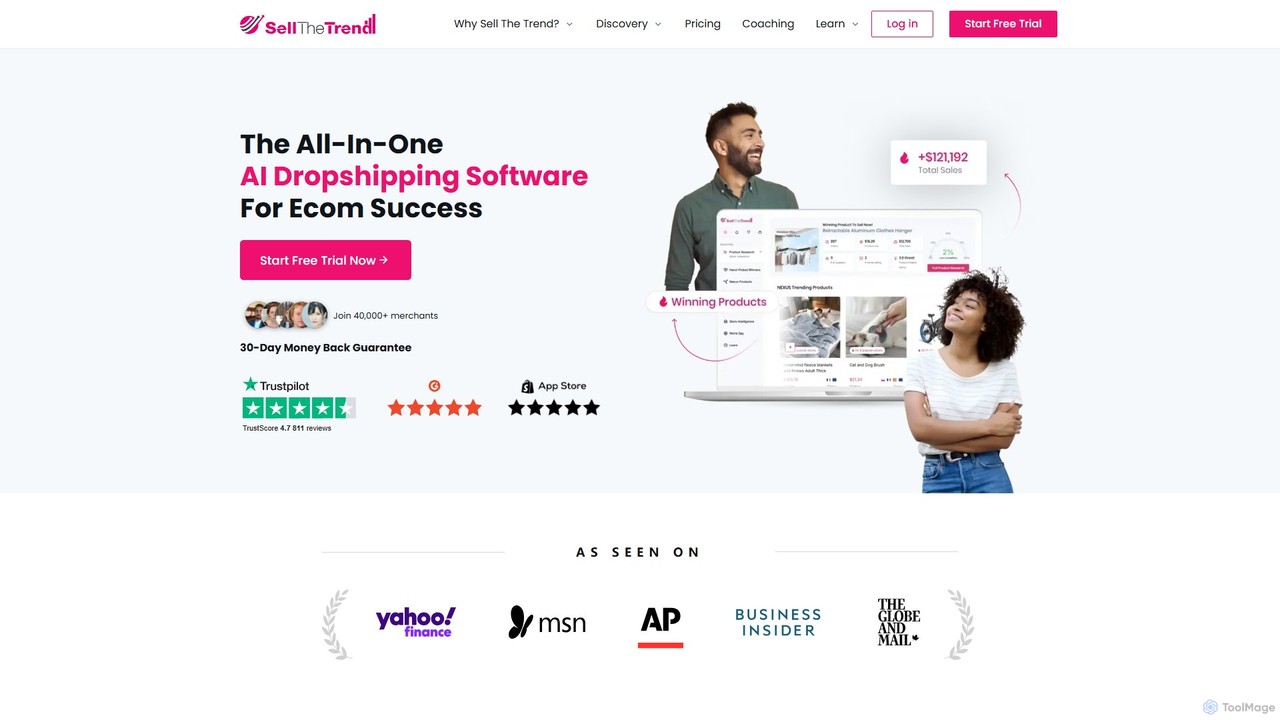
Sell The Trend is an all-in-one AI-powered dropshipping platform. It helps e-commerce entrepreneurs discover winning products, analyze market …
Sell The Trend is an all-in-one AI-powered dropshipping platform. It helps e-commerce entrepreneurs discover winning products, analyze market trends, spy on competitors, and automate store operations, from product import to order fulfillment.
PPSPY
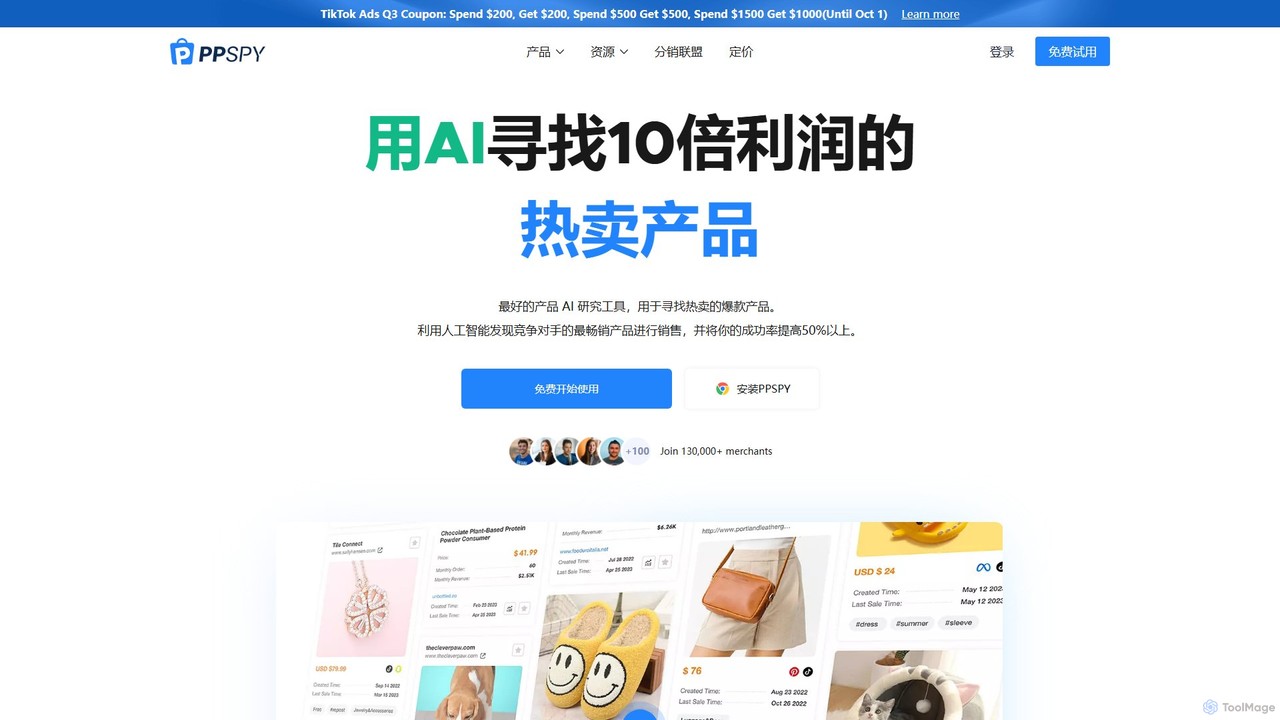
PPSPY is an AI-powered Shopify spy and data analysis platform for e-commerce merchants. It helps users discover winning …
PPSPY is an AI-powered Shopify spy and data analysis platform for e-commerce merchants. It helps users discover winning products, monitor competitor sales, analyze market trends, and uncover traffic strategies. By leveraging AI-driven algorithms, PPSPY provides actionable insights to increase success rates and find high-profit products, making it an essential tool for Shopify business growth.
Push Lap Wholesale
Push Lap Wholesale is an AI-powered sourcing tool designed for Amazon FBA and FBM sellers. It streamlines product …
Push Lap Wholesale is an AI-powered sourcing tool designed for Amazon FBA and FBM sellers. It streamlines product research by enabling bulk scanning of supplier lists (UPC/ASIN) to quickly identify profitable items. Featuring a powerful profit calculator, competitor analysis, Keepa chart integration, and a Chrome extension, it helps sellers make data-driven decisions to boost their e-commerce success across major Amazon marketplaces.
dscopilot
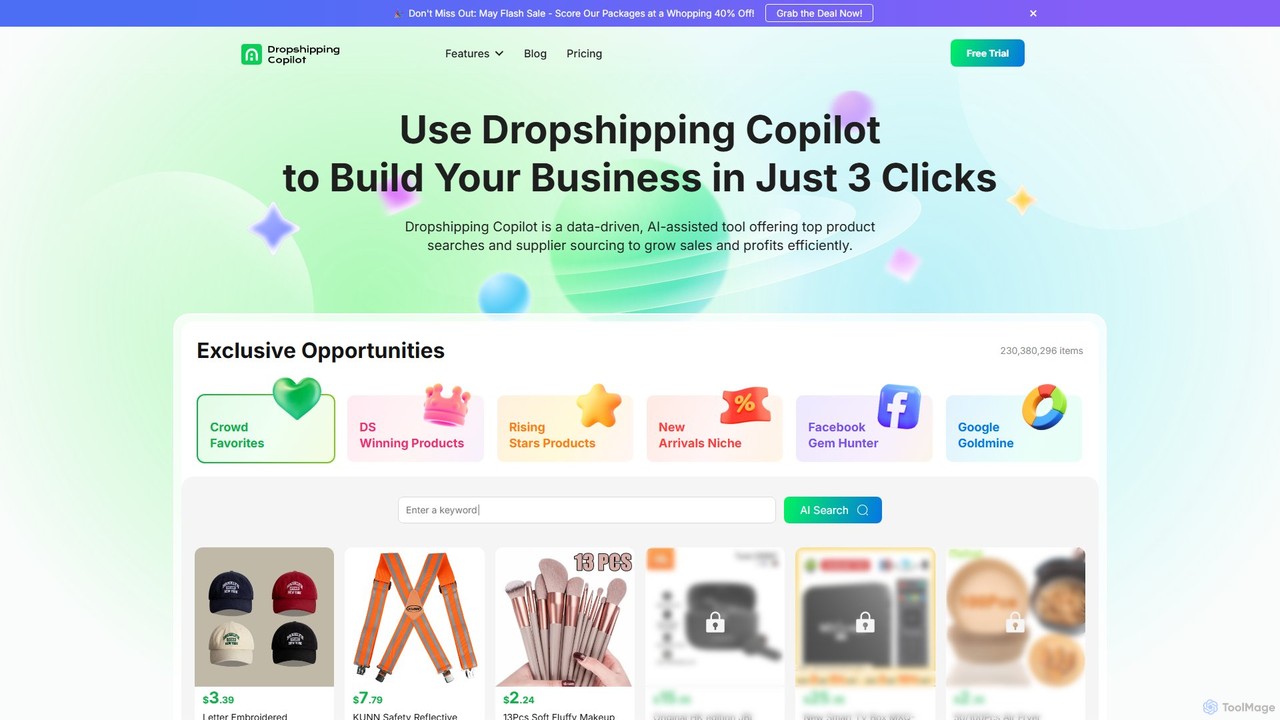
dscopilot is an AI-powered dropshipping assistant that helps e-commerce entrepreneurs find winning products, source reliable suppliers, and automate …
dscopilot is an AI-powered dropshipping assistant that helps e-commerce entrepreneurs find winning products, source reliable suppliers, and automate store operations. It leverages real-time data from AliExpress to provide market insights, optimize product listings, and maximize profitability for Shopify stores.
About Product Research
AI Product Research tools are a specialized category of marketing software that automates the discovery and validation of profitable product ideas. These tools leverage machine learning to analyze vast datasets from e-commerce platforms, social media, and search engines to identify market trends, competitor strategies, and consumer needs. They empower entrepreneurs and product managers to make data-driven decisions, reducing the risk associated with launching new products. By processing information at a scale impossible for manual analysis, these tools uncover hidden opportunities and predict potential demand with greater accuracy.
Core Features
- Trend Identification: Automatically detects emerging product trends and consumer interests by analyzing search queries, social media buzz, and sales data.
- Competitor Analysis: Tracks competitors' product listings, pricing strategies, sales volume, and customer reviews to identify market gaps.
- Profitability Calculation: Estimates potential revenue, profit margins, and sourcing costs for product ideas based on current market data.
- Niche Discovery: Sifts through broad categories to find underserved or low-competition market segments with high demand.
- Keyword & SEO Analysis: Identifies high-traffic keywords and search terms that customers use to find products, optimizing listings for visibility.
Use Cases
These tools are essential for e-commerce sellers on platforms like Amazon and Shopify, dropshippers seeking the next viral product, and product managers at established companies validating new feature ideas. Startups also use them extensively for market validation before investing in development, ensuring their concept meets a genuine market need.
How to Choose
When selecting an AI Product Research tool, consider the data sources it covers (e.g., specific e-commerce sites, social platforms). Evaluate the depth of its analytical features—does it offer simple trend spotting or in-depth sentiment analysis? Also, check for integration capabilities with your existing sales channels and the tool's overall ease of use, especially for users without a data science background.
Product ResearchUse Cases
Identify Winning Products for E-commerce
An Amazon FBA seller aims to find a new product with high demand and low competition. They use an AI Product Research tool to analyze sales data, keyword search volume, and review sentiment across thousands of Amazon listings. The tool identifies a growing trend for 'sustainable pet toys' with high search volume but only a few dominant sellers. It provides profitability estimates, including sourcing costs and FBA fees, confirming the niche's viability. The seller confidently sources a product, knowing it's backed by data, not just intuition.
Validate a New SaaS Feature Idea
A product manager at a SaaS company is considering adding an 'AI-powered analytics' feature. Before allocating development resources, they use a product research tool to monitor competitor feature releases and analyze customer feedback from platforms like G2, Capterra, and Reddit. The tool aggregates mentions of 'analytics' and 'reporting' linked to competitors, revealing a common pain point: users want more predictive insights, not just historical data. This data validates the feature's direction and helps the PM build a stronger business case, ensuring the new feature will address a proven market need.
Discover Untapped Dropshipping Niches
A dropshipper wants to move beyond saturated markets and find a unique niche. They use an AI research tool that analyzes trends on social platforms like TikTok and Pinterest, alongside sales data from AliExpress. The tool flags a surge in interest for 'customizable neon signs for home offices.' It shows high engagement rates on social media but low competition on major e-commerce sites. The tool also identifies potential suppliers on AliExpress with good ratings. This allows the dropshipper to quickly set up a store targeting this emerging niche before it becomes mainstream.
Monitor Competitor Pricing and Listing Strategies
An established online retailer needs to maintain a competitive edge in the crowded electronics market. They configure an AI product research tool to continuously monitor the top 5 competitors for their best-selling products. The tool tracks daily price changes, promotional activities (e.g., '20% off' banners), and updates to product titles or descriptions. It sends an alert when a key competitor lowers the price of a comparable smart watch. This allows the retailer's marketing team to react swiftly, either by matching the price or launching a counter-promotion, preventing a loss of market share.
Analyze Customer Sentiment to Improve a Product
A company selling kitchen gadgets notices declining ratings for their popular blender. They use an AI research tool to aggregate and analyze thousands of customer reviews from their website, Amazon, and social media. The tool's sentiment analysis feature identifies a recurring negative theme: customers love the blender's power but complain that the lid is difficult to clean. This specific, data-backed insight allows the product development team to focus directly on redesigning the lid for the next product iteration, addressing a key customer pain point and improving future product ratings.
Optimize Product Listings with SEO Keywords
A Shopify store owner selling handmade leather goods wants to improve their search visibility on Google. They use an AI product research tool that includes an SEO analysis feature. By inputting their main product, 'leather wallet,' the tool generates a list of high-volume, long-tail keywords like 'men's minimalist leather wallet' and 'personalized RFID blocking wallet.' It also analyzes top-ranking competitor listings to suggest optimal title structures and description formats. The store owner updates their product pages with these data-driven keywords, leading to a significant increase in organic traffic and sales within a few weeks.