Marketing Best in category 5 results Survey AI Tool

Popular AI tools in the Survey field of Marketing include Survicate、Polling.com、Affiniv、getaftercare、Ngsurvey, etc., helping you quickly improve efficiency.

Ngsurvey

Ngsurvey

Ngsurvey is an enterprise-ready, on-premise survey software powered by AI. It offers secure, multi-channel data collection, advanced AI-driven …

4.9K
Survicate

Survicate

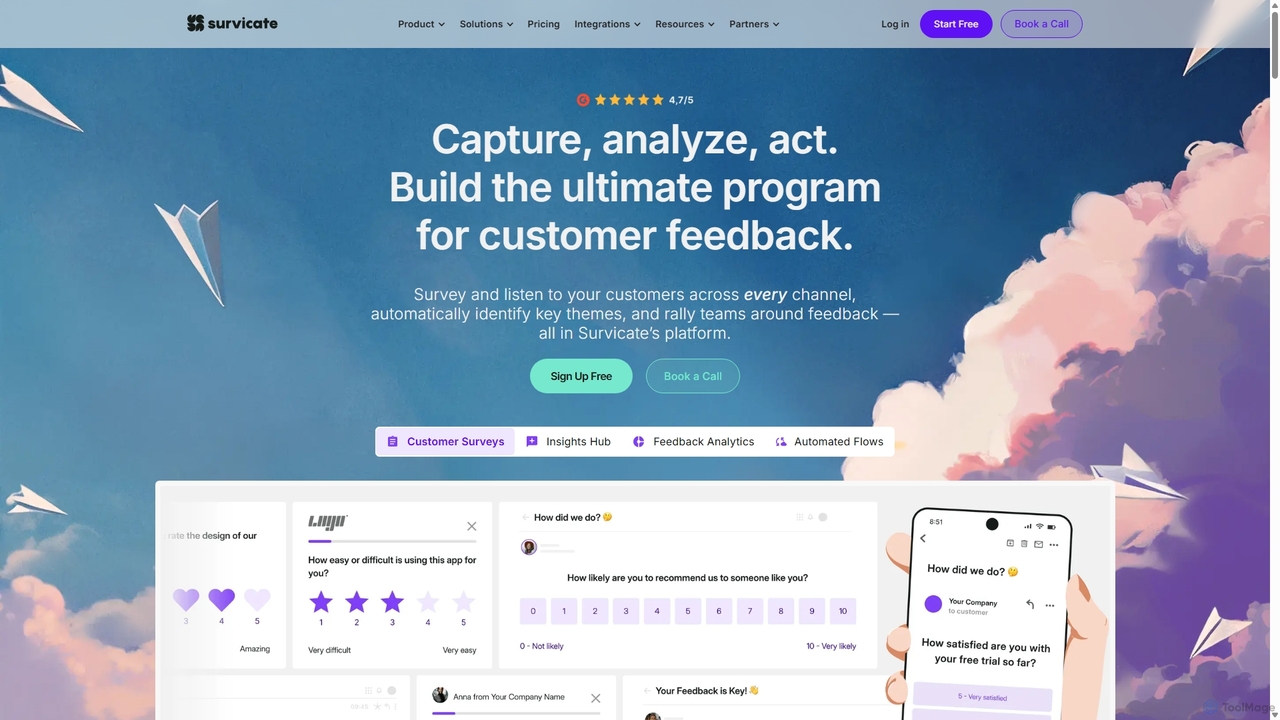
Survicate is an all-in-one customer feedback platform that helps businesses capture, analyze, and act on user insights. It …

379.0K
Polling.com

Polling.com

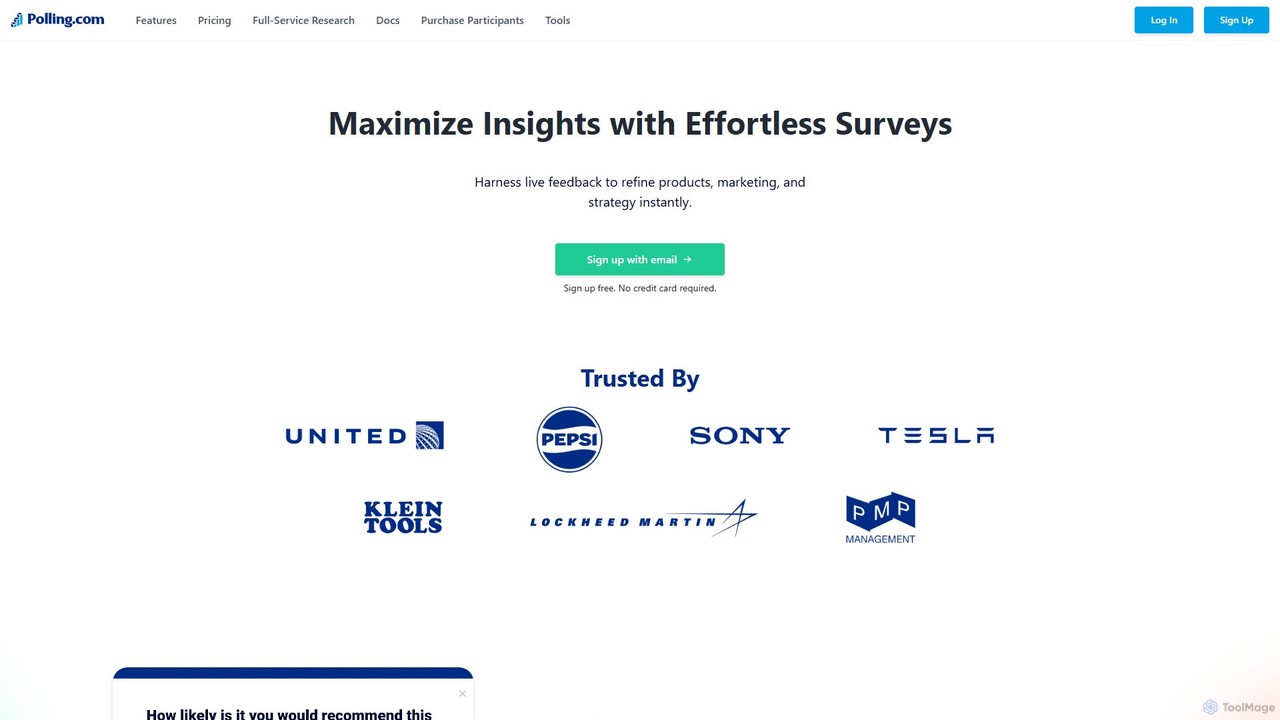
Polling.com is an AI-powered survey and poll creation platform designed to gather instant, actionable feedback. It enables users …

26.8K
getaftercare

getaftercare

getaftercare is an AI-powered survey platform that supercharges your research by asking intelligent follow-up questions to open-ended responses. …

5.5K
Affiniv

Affiniv

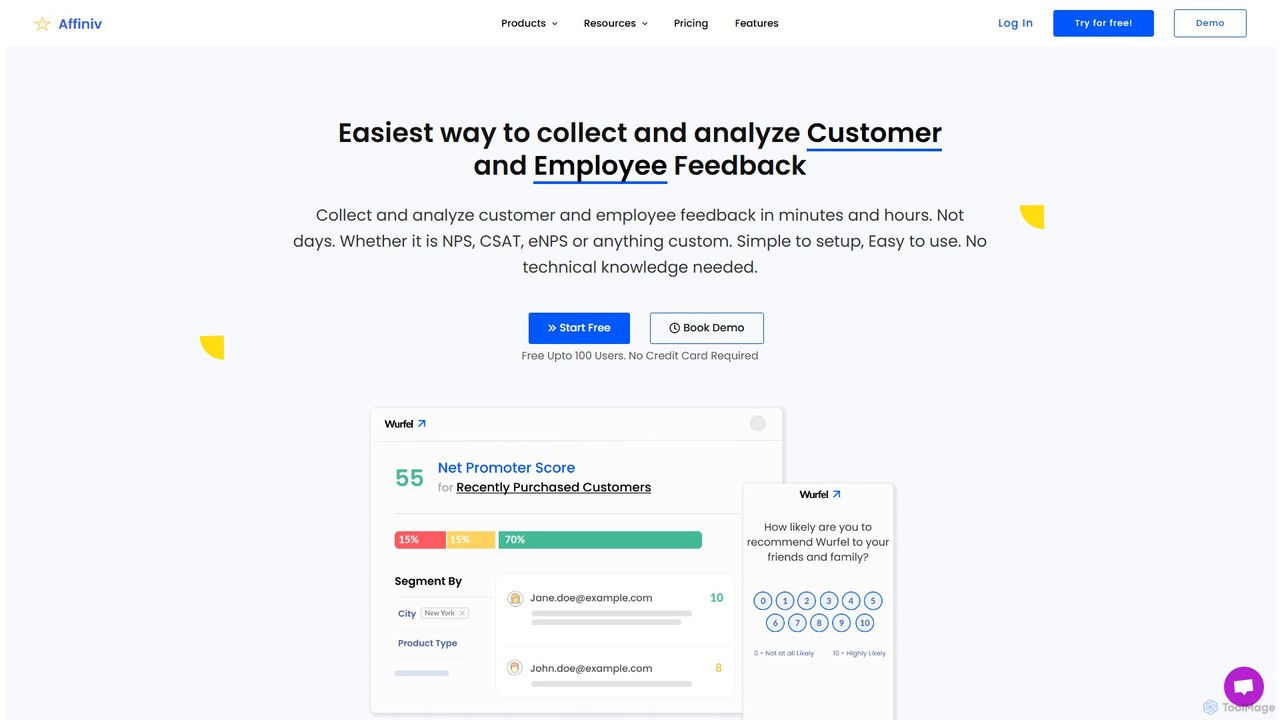
Affiniv is an AI-powered, all-in-one platform for collecting and analyzing customer and employee feedback. It simplifies the process …

8.5K

About Survey

AI Survey tools are applications that use artificial intelligence to design, distribute, and analyze surveys. These tools leverage Natural Language Processing (NLP) to automatically generate relevant questions and, more importantly, to interpret open-ended text responses for sentiment and key themes. This enables organizations to extract deep, actionable insights from qualitative feedback in market research, customer experience, and employee engagement. Unlike traditional platforms, AI survey tools can transform vast amounts of unstructured text data into structured, easy-to-understand reports, significantly reducing manual analysis time.

Core Features

  • AI Question Generation: Automatically suggests unbiased and contextually relevant questions based on the survey's objective.
  • Sentiment Analysis: Analyzes text responses to determine the underlying emotion (positive, negative, neutral) of the respondent.
  • Thematic Analysis: Automatically identifies, groups, and quantifies recurring topics and themes from open-ended comments.
  • Predictive Insights: Uses machine learning to forecast trends or identify factors that influence outcomes like customer churn or employee satisfaction.
  • Dynamic Survey Logic: Adapts the question flow in real-time based on a respondent's previous answers for a more personalized experience.

Use Cases

These tools are widely used in marketing, product management, and human resources. For example, market researchers use them to quickly understand consumer opinions from thousands of comments, while product teams analyze user feedback to prioritize feature development. HR departments deploy them to measure employee sentiment and identify cultural issues from engagement surveys.

How to Choose

When selecting an AI Survey tool, consider the depth of its analytical capabilities—does it offer just sentiment analysis or also topic modeling? Evaluate its integration options with your existing CRM or data tools. Assess the balance between AI automation and your need for manual control over the analysis. Finally, ensure the tool complies with data privacy regulations like GDPR and CCPA.

SurveyUse Cases

1

Automating Customer Feedback Analysis

A product manager for a SaaS company needs to understand user sentiment after a major feature launch. Instead of manually reading thousands of open-ended survey responses, they use an AI survey tool. The tool automatically processes all text feedback, performs sentiment analysis, and clusters comments into key themes like 'UI Improvement,' 'Performance Bugs,' and 'Feature Requests.' This provides a clear, data-driven summary of user feedback within minutes, enabling the product team to quickly identify critical issues and prioritize the development backlog without days of manual work.

2

Enhancing Market Research with Deeper Insights

A market research firm is conducting a study on consumer attitudes towards sustainable packaging. They use an AI survey tool to analyze open-ended questions about what 'eco-friendly' means to consumers. The AI not only identifies common keywords like 'recyclable' or 'plastic-free' but also uncovers nuanced themes, such as concerns about 'greenwashing' or a desire for 'refillable options.' It can also correlate these themes with demographic data, revealing that younger audiences are more focused on compostable materials. This level of analysis provides the firm's clients with much richer, more strategic insights than a simple word cloud could offer.

3

Measuring and Improving Employee Engagement

An HR department runs an annual employee engagement survey for a company with over 5,000 employees. The survey includes critical open-ended questions about company culture and management. An AI survey tool is used to analyze the thousands of anonymous comments. It identifies key drivers of dissatisfaction, such as 'lack of career growth opportunities' in the engineering department and 'poor work-life balance' in the sales team. The report provides actionable insights, allowing HR to develop targeted initiatives for specific departments instead of implementing generic, company-wide policies that may not address the root causes.

4

Dynamic Lead Qualification Surveys

A marketing team wants to improve its lead qualification process on their website. Instead of a long, static form, they implement a dynamic AI survey. The survey starts with a broad question, like 'What is your biggest marketing challenge?'. Based on the user's text response, the AI identifies their primary need (e.g., 'lead generation' or 'brand awareness') and then asks relevant, follow-up questions. This conversational approach feels more engaging to the user and provides the sales team with highly qualified, context-rich leads, improving conversion rates.

5

Generating Academic Research Questionnaires

A university researcher is designing a complex survey for a social sciences study. To ensure the questions are unbiased and effectively capture the required data, they use an AI survey tool. The researcher inputs their core hypotheses and variables. The AI then suggests a variety of validated question formats, flags potentially leading or ambiguous phrasing, and helps structure the survey's logic flow. This process accelerates the design phase and enhances the methodological soundness of the questionnaire, reducing the risk of collecting flawed data that could compromise the research findings.

6

Optimizing Post-Event Feedback Collection

An event manager needs to quickly process feedback from hundreds of conference attendees. They send a short survey with open-ended questions like 'What was the most valuable session?' and 'What could be improved for next year?'. An AI survey tool ingests all responses and generates a visual dashboard. This dashboard highlights the most praised speakers, identifies common logistical complaints (e.g., 'Wi-Fi issues,' 'long registration lines'), and summarizes suggestions for future events. This allows the event team to get a comprehensive overview instantly and make data-driven decisions for their next conference planning cycle.

SurveyFrequently Asked Questions