RealEye
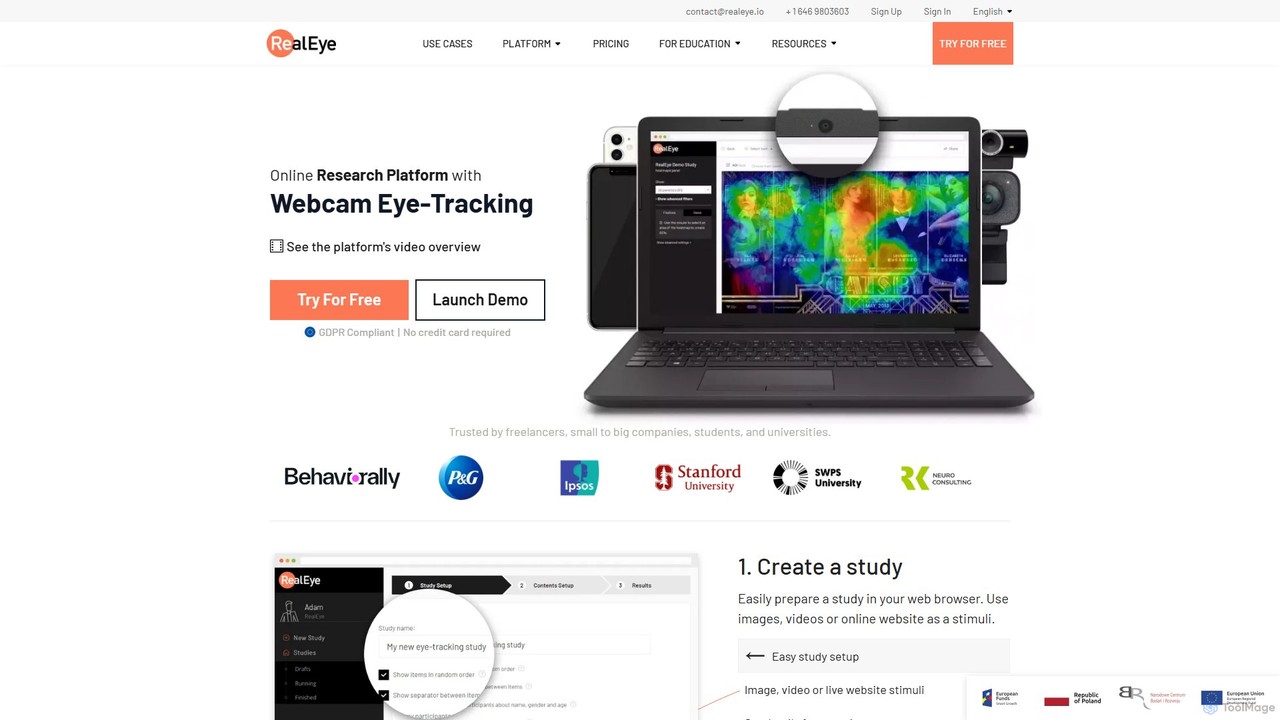
RealEye is an AI-powered online research platform that uses standard webcams for eye-tracking and facial coding. It enables …
RealEye is an AI-powered online research platform that uses standard webcams for eye-tracking and facial coding. It enables researchers, marketers, and designers to conduct user studies remotely, generating heatmaps, gaze plots, and emotional analysis to understand user attention and behavior on websites, images, and videos without needing expensive hardware.
AnswerTime
AnswerTime is an AI-powered platform that automates user research interviews. It allows you to conduct multiple in-depth, asynchronous …
AnswerTime is an AI-powered platform that automates user research interviews. It allows you to conduct multiple in-depth, asynchronous conversations simultaneously, gathering high-quality qualitative insights in hours instead of weeks. The AI agent asks questions, probes for deeper responses, and keeps the conversation on track, freeing up your team's time.
Voicepanel
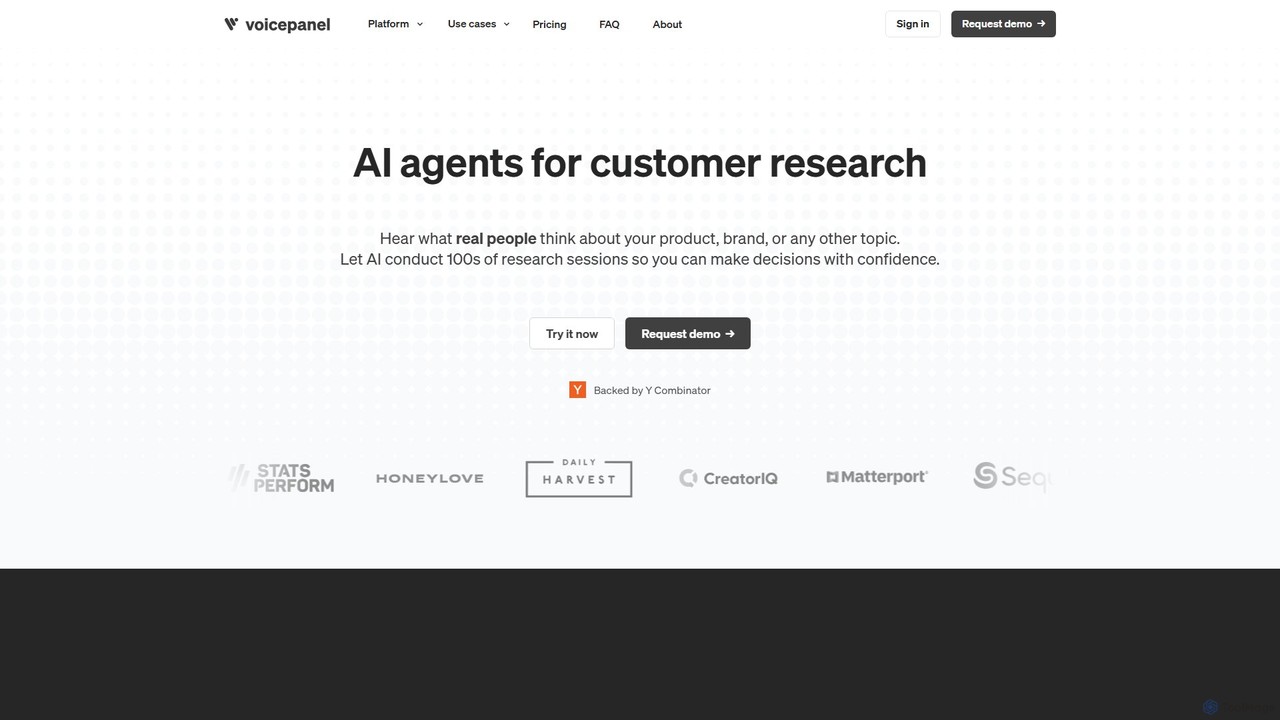
Voicepanel uses AI agents to conduct in-depth customer research interviews at scale. Replace static surveys with dynamic voice …
Voicepanel uses AI agents to conduct in-depth customer research interviews at scale. Replace static surveys with dynamic voice and video conversations to gather nuanced feedback on products, concepts, and branding. The platform automates the entire research process, from recruiting participants to analyzing responses, delivering actionable insights 10x faster and at a fraction of the cost of traditional methods. Backed by Y Combinator, it's designed for product, marketing, and research teams to make decisions with confidence.
About User Research
User Research AI tools are a category of intelligent solutions designed to automate and enhance the process of understanding user behavior, needs, and motivations. Leveraging advanced AI techniques like natural language processing and machine learning, these tools efficiently collect, analyze, and synthesize qualitative and quantitative data. They empower businesses to gain deeper, faster insights into their target audience, informing product development, marketing strategies, and user experience design within the broader field of Marketing.
Core Features
- Automated Data Collection: Tools can automatically gather user feedback from surveys, interviews, social media, and online reviews.
- Sentiment Analysis: AI algorithms analyze text and speech data to identify user emotions, attitudes, and opinions towards products or services.
- Behavioral Pattern Recognition: Machine learning identifies recurring user behaviors and trends from interaction data, such as website clicks or app usage.
- Persona Generation: AI assists in creating detailed user personas based on aggregated data, including demographics, goals, and pain points.
- Insight Synthesis: Automatically identifies key themes, opportunities, and pain points from large datasets, summarizing findings for actionable recommendations.
Applicable Scenarios
Product managers and UX designers use these tools to validate new features, understand usability issues, and prioritize development backlogs based on real user feedback. Marketing teams leverage them to refine messaging, identify market gaps, and understand customer perception of brands and campaigns.
How to Choose
When selecting User Research AI tools, consider the specific research methods you employ (e.g., surveys, interviews, usability testing) and the types of data you need to analyze (text, audio, video, behavioral). Evaluate the tool's integration capabilities with existing platforms, its ability to handle data privacy and compliance, and the clarity of its insight generation. Assess the level of automation versus human oversight required, and ensure it aligns with your team's expertise and budget.

User ResearchUse Cases
Automate Survey Feedback Analysis
A product team launches a new feature and collects thousands of open-ended survey responses. Instead of manually reading each one, they use an AI user research tool to automatically categorize feedback, identify common themes, and perform sentiment analysis, saving hundreds of hours and quickly pinpointing critical issues and popular requests.
Extract Key Insights from User Interviews
UX researchers conduct dozens of qualitative interviews. An AI tool transcribes the audio, identifies key topics, extracts quotes, and summarizes common pain points and desires across all interviews. This allows researchers to quickly synthesize findings and present actionable recommendations to stakeholders, accelerating the design process.
Analyze Social Media for Market Trends
A marketing strategist wants to understand public perception of a new product category. An AI user research tool monitors social media, forums, and review sites, identifying trending topics, competitor mentions, and unmet customer needs. This provides real-time market intelligence to inform product positioning and content strategy.
Identify Usability Issues in Digital Products
A UX designer needs to pinpoint friction points in a mobile app. By integrating an AI user research tool with analytics, they can analyze user session recordings, click paths, and heatmaps. The AI automatically flags common navigation errors, drop-off points, and areas of confusion, providing data-driven insights for interface improvements.
Generate Data-Driven User Personas
A startup is defining its target audience. They feed demographic data, survey responses, and behavioral analytics into an AI user research platform. The tool processes this diverse data to automatically generate detailed user personas, complete with goals, pain points, and preferred communication channels, providing a solid foundation for product and marketing efforts.
Benchmark Competitive User Experience
A business wants to compare its user experience against competitors. An AI user research tool can analyze public reviews, app store comments, and social media discussions related to competitor products. It identifies their strengths and weaknesses from a user perspective, highlighting areas where the business can differentiate or improve its own offerings.