DrawPost
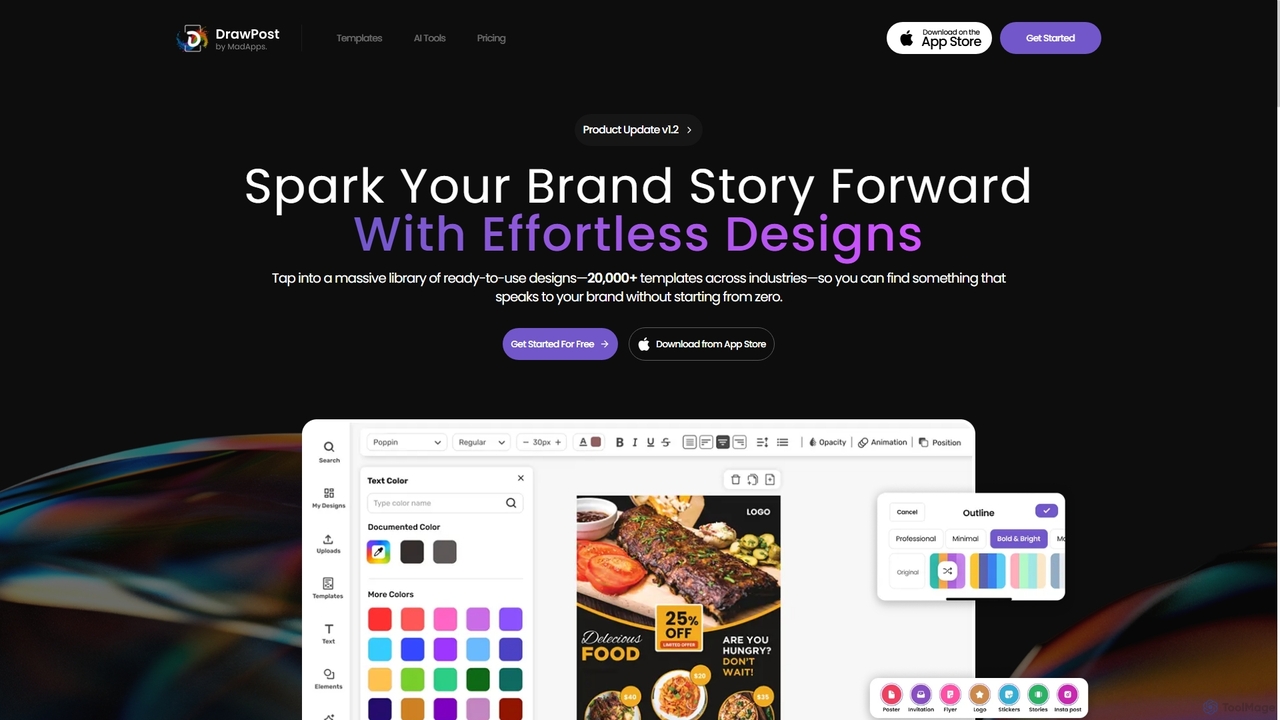
DrawPost is an AI-powered design tool that empowers creators to produce stunning visuals effortlessly. With access to over …
DrawPost is an AI-powered design tool that empowers creators to produce stunning visuals effortlessly. With access to over 20,000 templates and smart AI features like image generation, background removal, and instant text styling, it simplifies graphic design for social media, marketing, and personal projects. Available on web and mobile, DrawPost helps users craft professional designs quickly, without watermarks, and with options for team collaboration and brand consistency.
VDraw
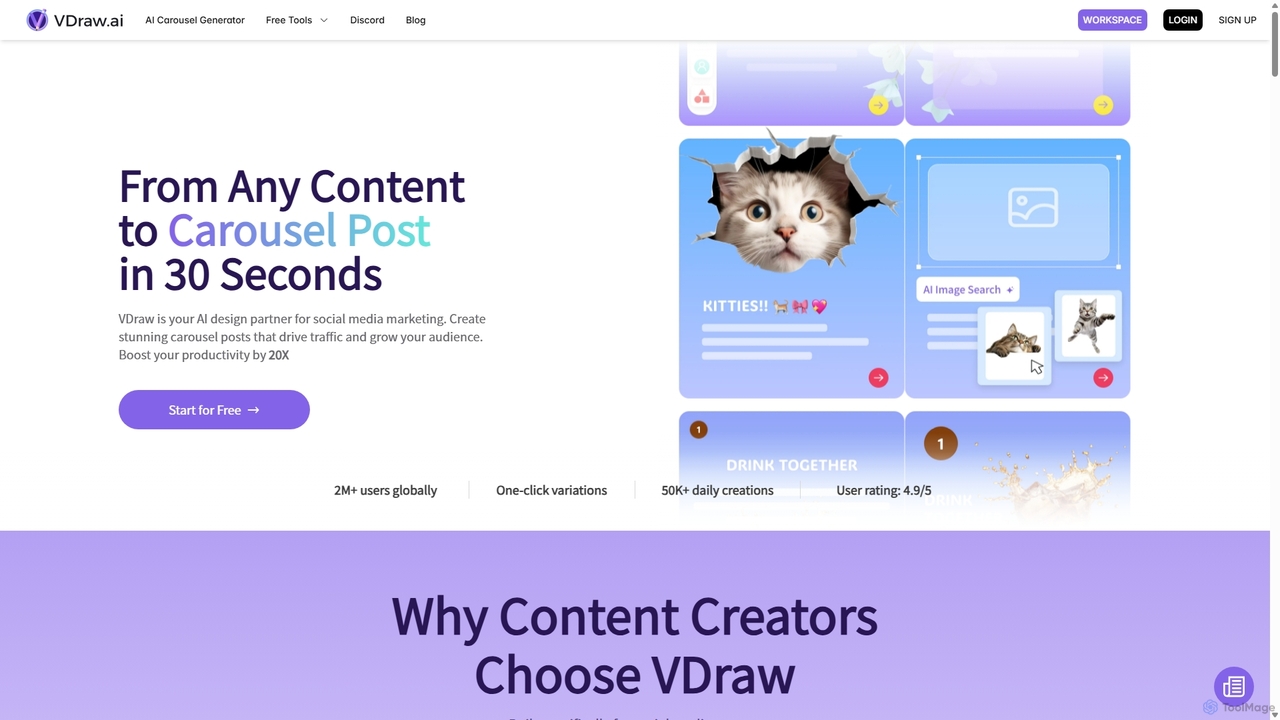
VDraw is an AI-powered design partner that transforms any content—text, links, or PDFs—into stunning social media carousel posts …
VDraw is an AI-powered design partner that transforms any content—text, links, or PDFs—into stunning social media carousel posts in seconds. It offers over 1000 customizable templates, AI-driven content extraction, and a suite of tools for creating infographics, charts, and summaries, helping creators boost productivity and audience engagement without needing design skills.
qr_art
qr_art is an AI-powered tool that transforms standard QR codes into stunning, scannable works of art. By combining …
qr_art is an AI-powered tool that transforms standard QR codes into stunning, scannable works of art. By combining advanced image generation models with QR code technology, it allows users to embed functional QR codes seamlessly into beautiful images described by text prompts, enhancing marketing and branding efforts.
About Visual Marketing
AI Visual Marketing tools are a specialized category of marketing software that leverage artificial intelligence to create, analyze, and optimize visual content. These tools utilize generative models and computer vision to automate the production of images, videos, and ad creatives designed to capture audience attention. Their primary value lies in scaling content creation, personalizing visual communication, and providing data-driven insights into which visual elements drive engagement. This allows marketing teams to move beyond manual design and make more effective, visually-driven decisions.
Core Features
- AI Ad Creative Generation: Automatically produces multiple variations of ad images and videos based on brand assets and campaign goals.
- Visual Performance Analytics: Analyzes which colors, compositions, and elements in an image or video lead to higher conversion rates.
- Dynamic Visual Personalization: Adapts visual content in real-time for different audience segments across email, web, and ads.
- Brand Consistency Monitoring: Scans marketing materials to ensure logos, fonts, and color palettes align with brand guidelines.
Use Cases
These tools are essential for e-commerce brands, digital advertising agencies, and corporate marketing departments. They are used to generate high volumes of social media ad creatives for A/B testing, create personalized product visuals for email campaigns, and analyze competitor visual strategies to gain a competitive edge.
How to Choose
When selecting a tool, consider its specific generation capabilities (image vs. video), the depth of its analytics features, and its integration options with your existing marketing stack (e.g., CRM, ad platforms). Also, evaluate its ability to maintain strict brand consistency through features like brand kits and asset management.

Visual MarketingUse Cases
Automated Ad Creative Generation for E-commerce
An e-commerce marketing manager needs to run A/B tests for a new product line on social media. Instead of briefing a design team, they use an AI visual marketing tool. They upload a single product photo and provide several ad copy headlines. The AI generates over 50 ad creative variations in minutes, featuring different backgrounds, layouts, and call-to-action button styles. This allows the team to test numerous visual concepts simultaneously, quickly identifying the highest-performing ads and optimizing their ad spend for better ROI.
Generate High-Converting Ad Creatives
A performance marketer for an e-commerce brand needs to run A/B tests on social media. Instead of waiting for a designer, they use an AI Visual Marketing tool to upload product images and key messages. The AI generates over 50 ad variations with different backgrounds, layouts, and call-to-action styles in minutes. The marketer can then analyze performance data directly in the tool to identify the visual elements that drive the most clicks and conversions, optimizing future campaigns based on these data-driven insights.
Personalized Video Outreach Campaigns
A B2B company's sales team wants to increase engagement with high-value prospects. Using an AI visual marketing tool, they create a master video template. The tool then connects to their CRM, automatically inserting each prospect's name, company logo, and relevant industry statistics into the video. This process generates thousands of personalized videos that are sent via email. The result is a significantly higher open and response rate compared to generic video messages, as each prospect receives a video that feels uniquely created for them.
Personalize E-commerce Product Visuals
An email marketing manager for an online fashion retailer wants to increase engagement. They integrate an AI Visual Marketing tool with their customer data platform. When a user who previously viewed blue dresses receives an email, the tool dynamically generates a banner image featuring those specific dresses on a model that matches the user's demographic profile. This level of visual personalization significantly increases click-through rates compared to generic, static email banners.
Virtual Product Photoshoots for Furniture Brands
A furniture company wants to showcase its new sofa collection in various home settings without the high cost of physical photoshoots. They use an AI visual marketing tool to upload 3D models of their sofas. Then, they generate hundreds of photorealistic lifestyle images by placing the sofas in different AI-generated interior scenes, such as a 'minimalist Scandinavian living room' or a 'cozy rustic cabin'. This allows them to create a diverse and extensive product catalog for their website and social media at a fraction of the cost and time of traditional photography.
Automate Social Media Video Production
A social media manager for a SaaS company needs to produce a steady stream of short-form videos for TikTok and Reels. They input a blog post URL or a short script into an AI Visual Marketing tool. The AI automatically selects relevant stock footage, adds text overlays, generates a voiceover, and applies brand-approved animations and music. This process reduces video production time from hours to minutes, enabling a consistent and high-volume content schedule.
Predictive Analysis of Campaign Visuals
An advertising agency is preparing a major digital campaign for a client. They have developed five different visual concepts for the main ad. Before spending the budget on media buys, they upload all five visuals to an AI tool. The tool analyzes each image against a massive dataset of past ad performances and provides a predictive engagement score for each, highlighting elements like color contrast, human faces, and text placement that are likely to drive clicks. The agency uses this data to select the two most promising concepts for A/B testing, increasing the campaign's chance of success from the start.
Ensure Brand Consistency Across Channels
A brand manager at a large corporation is responsible for maintaining a cohesive brand identity. They use an AI Visual Marketing tool to audit all digital assets used by regional teams. The AI scans websites, social media posts, and digital ads, flagging any visuals that use incorrect logos, outdated color palettes, or off-brand fonts. This automated monitoring system helps enforce brand guidelines at scale, ensuring a consistent customer experience everywhere.
Maintaining Brand Consistency Across Global Teams
A multinational corporation struggles with maintaining a consistent visual brand identity across its regional marketing teams. They implement an AI visual marketing tool that acts as a central asset hub. When a regional marketer creates a new social media post, the AI automatically scans it for compliance. It checks if the correct logo version is used, if the colors match the official brand palette, and if the typography adheres to guidelines. If any discrepancies are found, the tool flags them and suggests corrections, ensuring all public-facing materials are perfectly on-brand, regardless of who created them.
Analyze Competitor Visual Strategy
A marketing strategist at a competitive CPG company wants to understand what visual trends are resonating in their market. They use an AI tool to analyze the social media ads of their top three competitors over the last quarter. The AI identifies recurring themes, dominant color schemes, and types of imagery (e.g., user-generated content vs. studio shots), and correlates these visual elements with public engagement metrics. This provides actionable intelligence for planning their own visual campaigns.
Rapid Ideation for Social Media Content
A social media manager for a fast-fashion brand is under pressure to produce fresh, engaging visual content daily. They use an AI visual marketing tool for rapid brainstorming. By inputting trending topics, product names, and campaign themes like 'Summer Festival Vibes', the AI generates dozens of image concepts and short video storyboards. This provides a constant stream of creative inspiration, allowing the manager to move from idea to a finished, on-brand visual in under an hour, keeping their content calendar full and their audience engaged with timely posts.
Optimize Website Visuals for Conversion
A conversion rate optimization (CRO) specialist for a travel website wants to improve booking rates on landing pages. They use an AI Visual Marketing tool that provides predictive attention heatmaps for their hero images. Before running an expensive A/B test, they can upload several image options and the AI will predict where users are most likely to look. This allows them to select images where the main subject and call-to-action fall within key attention zones, increasing the likelihood of user engagement.